Capacitor Heat Pump Cost Guide for 2026
Learn the true capacitor heat pump cost breakdown, including part prices, installation labor, warranties, and regional variation. Get practical estimates and tips to plan your heat pump capacitor replacements in 2026.


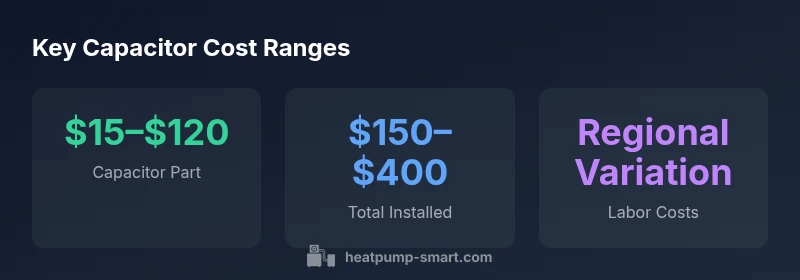
Capacitor replacement costs for heat pumps typically range from about $15 to $120 for the part, with installation bringing the total to roughly $150–$400. The exact figure depends on capacitor size, motor type, refrigerant compatibility, and local labor rates. Heatpump Smart Analysis, 2026 notes price variability across brands and regions.
What a capacitor does in a heat pump
A capacitor in a heat pump is a critical electrical component that helps start and run the compressor and other motors within the system. When a capacitor fails or loses capacitance, the system may struggle to start, run inefficiently, or experience intermittent outages. For homeowners, understanding the role of capacitors is key to diagnosing problems early and avoiding extended outages. From a cost perspective, capacitor issues are generally one of the more affordable fixes within the broader scope of heat‑pump maintenance. In many cases, a failed capacitor is a standalone repair rather than a full system replacement. According to Heatpump Smart Team, capacitor health is a leading indicator of overall reliability and operating cost over the life of a heat pump. A healthy capacitor ensures quick start times, steady motor torque, and efficient energy use, all of which contribute to lower energy bills and fewer unexpected service calls.
In residential systems, you’ll typically encounter run and start capacitors. The run capacitor stays in the circuit during normal operation, while the start capacitor provides a brief surge to start the compressor. If either fails, you may notice slow starts, short cycling, or a drop in heating or cooling performance. Understanding this distinction helps when discussing capacitor heat pump cost with technicians and when evaluating quotes. In short, a capacitor is a small component with a potentially outsized impact on efficiency and reliability, making cost-conscious maintenance a smart choice for homeowners and property managers alike.
Takeaway for homeowners: a small fix can prevent a larger, costlier breakdown. Proactive checks during regular HVAC maintenance can catch capacitor degradation early, reducing the risk of expensive repairs later on.
What drives capacitor costs
Capacitor costs across heat pumps are driven by several key factors. First, the capacitor’s electrical rating (voltage and microfarad value) must match the compressor and motor configuration. Higher capacity or specialized capacitors for high‑efficiency units typically cost more, but they also offer longer life and better performance. Second, the brand and whether you use original equipment manufacturer (OEM) parts or aftermarket equivalents affect price and warranty coverage. OEM parts often carry better warranty protection but can be pricier. Third, the overall system design and refrigerant compatibility influence labor complexity. If a unit requires additional electrical work, wiring modifications, or a refrigerant check to ensure compatibility, labor costs rise. Finally, regional labor rates, permitting requirements, and access issues (e.g., attic or crawlspace installations) can push the total cost higher or lower. From Heatpump Smart Analysis, 2026, the cost of the capacitor part itself stays relatively consistent, but the installed price can vary widely depending on these factors.
Practical tip: Always ask for a breakdown that separates the part price from labor, and request OEM parts for warranty coverage when feasible. This transparency helps you compare quotes accurately and reduces the risk of hidden costs later on.
How to estimate your total capacitor-related costs
Estimating the total capacitor-related cost for your heat pump involves several steps. Start by identifying the exact capacitor type and rating your system requires—this information is usually found on the existing part or in the equipment manual. Next, obtain at least three quotes from licensed HVAC technicians, specifying whether the quote includes diagnostic work, removal, disposal of the old part, and any necessary wiring or recharging of refrigerant. Consider both the part price and the labor rate, then add any travel charges if the technician is far from your location. Don’t forget to factor in potential disposal fees and new wiring or fusing components if your install requires upgrades. Finally, check for warranties and date the part is installed to ensure you’re covered should another failure occur.
When planning your budget, include a buffer for unexpected complications, such as needing a full motor replacement or additional electrical upgrades. Heatpump Smart Analysis, 2026 highlights that quotes can differ significantly by region and by whether a tech uses OEM parts. This is why getting multiple quotes and confirming the scope of work is essential for an accurate capacitor heat pump cost estimate.
Common scenarios and cost ranges
Several common scenarios affect capacitor heat pump cost. A straightforward replacement of a failed part with OEM equipment typically sits at the lower end of the range, around $150–$300 when labor is moderate and access is straightforward. If the capacitor is part of a more complex start‑up issue or if wiring modifications are required, total costs can approach $400 or more. In cases where a system is older and other components are near failure, technicians may present a broader range that includes parts and labor for a potential upgrade, rather than a simple replacement. Seasonal demand and travel time can also push costs higher, especially in peak heating seasons or remote areas. Across these scenarios, the influence of labor rates and the exact capacitor rating remains a dominant factor in the final capacitor heat pump cost.
Tip for shoppers: Ask for a scope of work that explicitly lists each cost component and whether the price includes disposal of the old part and any required tests after installation.
Maintenance to reduce future capacitor failures
Preventive maintenance can help extend capacitor life and stabilize long‑term costs. Schedule annual or biannual HVAC checkups with a licensed technician who will inspect electrical connections, capacitor health, and motor insulation. Clean contact points and verify tight connections to minimize arcing and corrosion, two common causes of capacitor failure. Keep the outdoor unit free of debris and ensure the surrounding area has adequate airflow. If your system operates in a high‑humidity or coastal environment, pay special attention to moisture ingress that can degrade electrical components. A proactive maintenance plan can reduce the likelihood of sudden capacitor failures and the associated costs by catching issues before they become costly problems.
From Heatpump Smart’s perspective, a modest maintenance budget pays back in energy efficiency, reliability, and reduced downtime. A well‑maintained system runs more consistently, which translates to a lower effective capacitor heat pump cost over the system lifetime.
DIY considerations and when to call a pro
DIY handling of electrical components in a heat pump is not recommended for most homeowners due to the risk of electric shock and refrigerant handling requirements. Capacitors store charge even after power is removed, and improper handling can damage the system or void warranties. If you notice symptoms of capacitor failure—slow starts, frequent short cycling, or a non-starting compressor—shut off power and call a licensed HVAC technician. A professional can safely test the capacitor with a meter, verify the correct rating, and ensure the refrigeration circuit remains leak‑free. If you have intermediate electrical knowledge and the system is clearly accessible, you can inspect external wiring visually, but avoid opening the electrical cabinet unless you’re qualified. Professional service remains the safer and more reliable route for capacitor heat pump cost management.
Financing options, warranties, and hidden costs
When evaluating capacitor-related costs, consider warranty coverage. Some OEM parts come with a warranty that covers the capacitor for a set period, which can reduce long‑term costs if another failure occurs. Financing options or energy‑efficiency rebates may be available, depending on your locale and utility programs. Always confirm whether quotes include diagnostic fees, disposal, and any required recharging of refrigerant after replacement, as these items can significantly affect the final price. Also ask about extended warranties and service plans that cover labor and parts. Understanding these factors helps you manage capacitor heat pump cost more predictably and minimize surprise charges over time.
Summary of what to watch for when budgeting
- Always separate part price from labor when reviewing quotes.
- Favor OEM parts and ask about warranty coverage for the capacitor.
- Get multiple quotes to account for regional variation.
- Include a small contingency for unexpected electrical upgrades.
- Invest in regular maintenance to extend capacitor life and efficiency.
Capacitor heat pump cost components
| Cost Component | Low Estimate | High Estimate | Notes |
|---|---|---|---|
| Capacitor part | 15 | 120 | OEM parts vary by value |
| Labor (diagnosis) | 40 | 120 | Tech time to diagnose/replace |
| Labor (installation) | 15 | 60 | Wiring/mounting, cleanup |
| Total installed cost | 150 | 400 | Parts + labor included |
| Fees & disposal | 0 | 40 | Disposal and disposal-related charges |
Your Questions Answered
What factors affect capacitor heat pump cost?
Capacitor heat pump cost is driven by the capacitor’s rating (voltage and microfarad), whether OEM parts are used, labor rates, and any required electrical or refrigerant work. Regional pricing and access to the unit also influence the total.
Costs depend on capacitor rating, parts choices, and local labor rates.
Are capacitors covered under warranty?
Many OEM capacitors come with a warranty that covers defects for a set period. Warranty terms vary by manufacturer and installer, and some labor may be covered if the replacement is performed by an authorized technician.
Check the part warranty and the installer’s warranty for both parts and labor.
Can I replace a capacitor myself?
Replacing a capacitor involves working with live electrical components and refrigerant circuits. It’s risky and can violate local codes or void warranties. Hire a licensed technician for safety and compliance.
Avoid DIY for capacitor replacements due to safety and code considerations.
How often do heat pump capacitors fail?
Capacitors can fail due to aging, heat, or power surges. Typical equipment life suggests failures may occur over years, but regular maintenance reduces the risk and helps catch issues early.
Capacitor failures are less predictable, but maintenance lowers risk.
Is a capacitor replacement cheaper than a full upgrade?
In most cases, replacing a failed capacitor is cheaper than upgrading the entire heat pump, especially if the rest of the system is still under serviceable warranties or in good condition.
Capacitor replacement is usually cheaper than a full system upgrade.
“Capacitor health is a leading indicator of heat pump reliability and total operating costs. Timely replacement can prevent bigger, costlier failures.”
Top Takeaways
- Budget for both parts and labor when planning capacitor heat pump cost
- Know the cost range ($15–$120 for parts, $150–$400 total)
- Ask for OEM parts for warranty protection
- Regional labor rates can swing the final price significantly