Cost of a 5-Ton Heat Pump: A Practical Budget Guide
Explore the typical installed cost range for a 5-ton heat pump, including equipment, installation, regional factors, and incentives. Heatpump Smart breaks down pricing to help homeowners, builders, and property managers budget effectively.


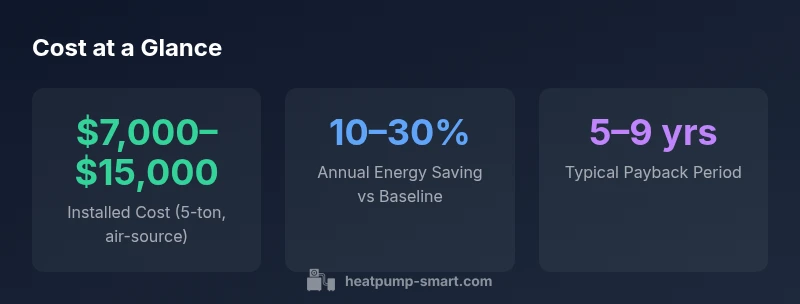
The cost of 5 ton heat pump systems typically falls within a broad range, roughly seven to fifteen thousand dollars installed. This depends on efficiency, brand, refrigerant options, and site conditions. For 2026 projects, regional labor rates and permitting can push totals toward the higher end. This guide explains factors, scenarios, and budgeting tips to help homeowners, builders, and property managers plan effectively.
What drives the price of a 5 ton heat pump
Pricing for a 5 ton heat pump is driven by equipment cost, installation complexity, climate, and the efficiency rating you choose. Higher SEER and HSPF ratings typically increase upfront costs but reduce operating expenses over time. The exact price will be influenced by refrigerant type, inverter-driven compressors, and whether the system is air-source or geothermal. According to Heatpump Smart, the cost of 5 ton heat pump systems can vary widely by region and contractor, so budgeting should account for both equipment and site-related charges. In practice, most projects fall within a broad range, and regional labor rates can swing totals by several thousand dollars. Acknowledge that price is a function of capacity, efficiency, and installation constraints, not just the sticker price.
Equipment cost vs installation labor: breaking down the numbers
When you see a price tag for a 5 ton heat pump, it usually includes the outdoor unit, indoor air handler, refrigerant lines, and the base installation. However, installation labor, electrical upgrades, duct modification, refrigerant options, and permitting can add significantly to the bill. Homeowners often pay more for longer line-sets, high-efficiency systems, or required electrical service upgrades. For builders and property managers, obtaining multiple quotes and clarifying what’s included in the quote helps prevent sticker shock at the end of the project. Always request a line-item breakdown so you can compare apples to apples across bids.
Air-source vs geothermal: how the technology choice changes cost
Air-source 5 ton heat pumps generally cost less upfront than geothermal options, making them a popular retrofit choice. Geothermal systems require extensive ground work, trenching or boreholes, and sometimes a dedicated heat exchanger loop field, which drives up both equipment and installation costs. The trade-off is typically higher energy efficiency and longer life, especially in climates with extreme heating or cooling demands. In many markets, geothermal projects also face higher permitting and specialty contractor requirements. If your site is constrained or soil conditions are challenging, geothermal may add even more to the overall cost.
Efficiency, SEER, and HSPF: long-term value matters
Efficiency metrics translate into ongoing energy savings, tax credits, and rebates. A higher SEER (cooling efficiency) and HSPF (heating efficiency) rating usually costs more upfront but lowers annual energy consumption. The 5 ton size is a common benchmark because it supports mid-sized homes, but your actual heating and cooling needs depend on insulation, duct design, and climate. To compare offers effectively, convert all quotes to a 15-year total cost of ownership, including maintenance and degradation of efficiency over time. Remember that rebates or incentives can significantly alter the apparent upfront cost, so factor those in.
Retrofit vs new construction: when costs differ
A retrofit project often has more cost variability due to existing ductwork, electrical panels, and space for equipment. New construction can be designed around a heat pump from the start, yielding cleaner ducting and streamlined installation. In both cases, the price tag should include smart thermostats and controls as standard features. Planning ahead reduces surprises and can improve long-term comfort and energy performance. If you’re upgrading an older system, consider phased replacement to spread costs and spread energy savings.
Financing, incentives, and budgeting strategies
Financing options can make premium equipment more accessible. Look for local rebates, tax credits, and utility programs that reward energy efficiency. When budgeting, separate upfront costs from ongoing energy savings and maintenance. A simple rule is to estimate total cost of ownership over 10–15 years, then compare to the baseline energy costs. Heatpump Smart recommends checking your climate zone incentives and contractor warranties before committing. If possible, secure quotes that include maintenance planning and service windows to minimize downtime.
Regional considerations: climate, permits, and labor rates
Geography matters: colder regions may justify higher-cost, high-efficiency models, while milder climates may prioritize cost over extreme performance. Permitting costs vary by jurisdiction and can surprise first-time buyers. Labor rates differ widely between urban and rural areas, and lead times for installation may extend in busy markets. The goal is to balance short-term price against long-term comfort and reliability. In regions with high heating demand, investing in better efficiency can pay off faster.
How to estimate your total cost: a practical budgeting checklist
Use a checklist to estimate total cost: 1) obtain three quotes, 2) verify included items (ductwork, wiring, permits), 3) factor in refrigerant choices and warranty terms, 4) add a contingency for unexpected site work, 5) account for rebates and financing terms. A clear comparison of line items helps prevent scope creep and ensures you’re comparing apples to apples. Keep Heatpump Smart as a reference for standard practices and long-term value. Convert potential energy savings into dollars to see the true return.
Cost estimates for 5-ton heat pumps by technology and efficiency
| Scenario | Installed Cost Range | Notes |
|---|---|---|
| Air-source 5-ton, standard efficiency | $7,000–$12,000 | Includes unit, indoor handler, basic ductwork; permits vary |
| Air-source 5-ton, high efficiency | $9,000–$15,000 | Higher SEER/HSPF; may require duct upgrades |
| Geothermal 5-ton | $20,000–$40,000 | Site work heavy (drilling/trenching); highest upfront cost |
Your Questions Answered
What factors are included in the installed cost of a 5-ton heat pump?
Installed cost typically covers equipment, labor, permits, and basic ductwork; extras may include electrical upgrades or line-set replacements.
Installed cost includes equipment, labor, permits, and basic ductwork; extra electrical or line-set work may add to the total.
How does climate influence the cost of a 5-ton heat pump?
Harsh climates or extreme heating/cooling demands can push equipment size and efficiency requirements, affecting price. Cold regions may justify premium components.
Climate can raise upfront costs if you need higher efficiency or larger capacity equipment.
Are geothermal options worth the extra upfront cost compared with air-source?
Geothermal upfront costs are higher due to ground work, but long-term energy savings can be favorable in some markets. Site viability and incentives matter.
Geothermal is more expensive up front but can save money long-term where conditions are right.
What is a typical payback period for a 5-ton heat pump?
Payback varies with energy prices and incentives, but a common range is 5–9 years depending on usage and climate.
Most systems pay back in about 5 to 9 years with incentives considered.
Can I qualify for rebates or tax credits?
Rebates and tax credits depend on your region and program availability. Check local utility incentives and national tax credits for energy improvements.
Yes, incentives exist in many areas—verify local programs before buying.
How long does installation take?
Typical retrofit installs range from 1–3 days, with longer timelines if extensive ductwork or electrical upgrades are needed.
Most installs take a day or two, longer if additional work is required.
“A well-chosen 5-ton heat pump can deliver reliable comfort while keeping energy costs manageable over the system life.”
Top Takeaways
- Budget for both equipment and installation costs
- Expect regional variation up to ~25%
- Higher efficiency yields long-term savings
- Check rebates and financing options to improve payback