How Much Does a Heat Pump Cost? A Practical Guide
Learn how much a heat pump costs, including installation, operating costs, and financing options. Get realistic ranges, incentives, and a clear method to estimate total cost of ownership.


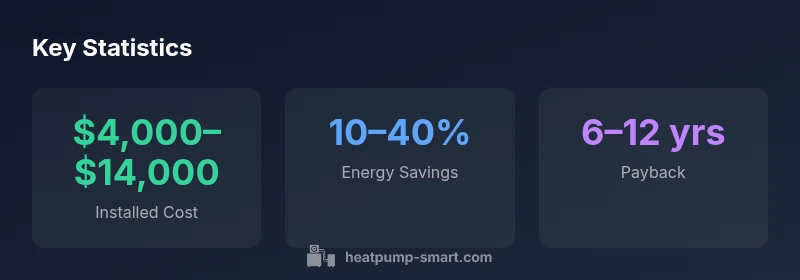
Heatpump Smart analysis shows most residential heat pump projects cost between $4,000 and $14,000 before incentives. Costs vary by system type, climate, home size, and installation complexity; rebates can reduce the upfront burden. The Heatpump Smart team found that total cost of ownership — including operating savings and maintenance — often drives the value of the project, not just the sticker price.
Understanding the Cost Landscape
Cost is the starting point for most heat pump decisions. When homeowners ask how much heat pump to install, price is the first hurdle to plan. In practice, you should budget for the upfront price plus installation, potential electrical work, and any duct modifications. Heatpump Smart analysis shows total project price can swing widely based on system type, climate, home size, and existing infrastructure. A simple space-heating setup in a moderate climate will typically cost less than a full-home solution with advanced zoning. Include permits and any panel upgrades, plus removal of an older unit. Rebates and utility incentives can trim the upfront expense, but availability varies by region. For owners, builders, and managers, obtaining multiple quotes and asking installers to itemize components (compressor, refrigerant lines, indoor units, controls) helps you compare clearly. The Heatpump Smart team emphasizes that total cost of ownership — including operating savings and maintenance — often drives the value of the project, not just the sticker price.
System Types and Price Ranges
Heat pumps come in several flavors, each with different price profiles. Air-source models, whether ducted or ductless, typically incur lower installation costs than geothermal systems, but long-term savings and climate suitability can shift the math. A heat pump water heater is a separate, commonly bundled option with its own price range. For new builds or renovations, ductwork availability can dramatically affect price; in homes with existing ducts, a high-efficiency air-source system can deliver robust comfort at a reasonable cost. The Heatpump Smart analysis notes that while geothermal setups demand a higher upfront investment, they often achieve higher efficiency in certain climates. When selecting a system, compare efficiency metrics (SEER, HSPF), expected lifespan, and the support network for each technology. Your choice should align with the home's heating load, climate, and long-term energy goals, not just upfront cost.
How to Estimate Your Project Cost
Estimating your project cost starts with the load you need to meet and the space you have for equipment. Step one is a professional heat load calculation to determine the required capacity. Step two is choosing a system type (air-source, ducted, or ductless, or geothermal) based on climate and home layout. Step three is budgeting for installation details: ductwork, electrical upgrades, zoning, and indoor/outdoor units. Step four is factoring in incentives and rebates that reduce the upfront cost. Step five is collecting multiple, itemized quotes to compare line items such as compressor, refrigerant lines, controls, and installation labor. Heatpump Smart recommends documenting each quote with the same scope to ensure a fair comparison and a reliable payback estimate.
Operating Costs and Savings
Operating costs for heat pumps are driven by efficiency and electricity prices. In most climates, heat pumps can deliver meaningful energy savings compared with fossil-fuel systems, though the exact savings depend on local electricity rates and climate. A well-sized, high-efficiency unit with properly sealed ducts will maximize savings, while poor installation or undersized equipment can erode the economic case. Expect variability year to year based on weather and energy prices. To model this, compare annual energy use estimates using SEER/HSPF ratings and current electricity costs. Heatpump Smart analysis notes that real-world savings require a holistic view of home performance, not just the equipment label.
Financing, Rebates, and Payback
Financing options for heat pumps are widely available and can improve affordability. Rebates and incentives vary by region, utility, and program year, so it’s important to gather up-to-date quotes that include potential incentives. When evaluating payback, consider the combined effect of upfront rebates, operating savings, and maintenance costs over the system’s life. Heatpump Smart analysis shows that some homes achieve shorter payback when combining a heat pump with insulation upgrades or thermostat-driven zoning. Always factor in warranty coverage and expected maintenance needs to estimate total ownership costs accurately.
Planning for Installation: Ducts, Space, and Permits
Your installation plan should account for existing ductwork, space for outdoor equipment, and local permitting requirements. Homes with limited space or outdated ducts may need retrofits, which can affect price and timeline. Ensure an accurate site assessment to identify potential challenges such as refrigerant line routing, refrigerant charge considerations, and electrical panel capacity. A clear installation plan helps prevent scope creep in quotes and ensures a smoother project from start to finish.
Getting Quotes that Reflect Real Value
To maximize value, solicit at least three quotes from reputable installers and request itemized scope-of-work. Look beyond the sticker price to assess estimated annual energy use, expected maintenance, and warranty terms. Ask installers to show how their system size was determined and how performance will be verified after commissioning.
Cost ranges by system type (typical, varies by climate and home)
| System Type | Typical Installed Cost Range | Typical Operating Cost Range per Year | Notes |
|---|---|---|---|
| Air-source (ducted) | 4,000–10,000 | 400–1,200 | Balanced approach with solid efficiency |
| Air-source (ductless) | 5,000–12,000 | 350–1,000 | Great for zone control |
| Heat Pump Water Heater | 2,000–6,000 | 200–500 | Separate unit for domestic hot water |
| Whole-home Geothermal | 20,000–40,000 | 300–1,500 | High upfront, very high efficiency |
Your Questions Answered
What factors influence the total cost of a heat pump installation?
Total cost is driven by system type, climate, home size, ductwork, electrical upgrades, and installation complexity. Permits and disposal of old equipment can add to the price, while rebates may offset a portion of the upfront cost.
Factors include system type, climate, ductwork, and upgrades. Rebates can help, so check local programs.
Do heat pumps require ductwork upgrades to achieve best performance?
Ductwork quality strongly affects performance. If ducts are leaky or undersized, efficiency drops. Some ductless options avoid this issue, while new installs may require duct work upgrades for optimum results.
Duct quality matters for efficiency. Ductless options can help in tight spaces.
Are rebates available for heat pumps, and how do I apply?
Rebates exist in many regions and programs vary yearly. Your installer can guide you to eligible incentives and help with the application.
Yes, rebates exist. Check local programs and work with your installer to apply.
What maintenance costs should I expect over the life of a heat pump?
Heat pumps require annual or biannual service, filter changes, and occasional component checks. Costs are generally modest and predictable compared with fuel-based systems.
Annual checkups keep the system running efficiently.
How long is the payback period likely to be?
Payback varies by climate, energy prices, and incentives, but many homes recoup a significant portion of upfront costs within a decade.
Payback depends on climate and incentives.
Is geothermal more expensive upfront than air-source heat pumps?
Geothermal typically has a higher upfront cost but can offer greater efficiency in suitable climates. Long-term savings depend on local energy prices and installation specifics.
Geothermal costs more upfront, with potential long-term gains.
“Cost transparency matters for heat pump investments. Look at total cost of ownership, including upfront price, operating savings, maintenance, and incentives, to maximize value.”
Top Takeaways
- Plan for a broad upfront cost range ($4,000–$14,000) before incentives
- Rebates and incentives can significantly reduce upfront costs
- Ductwork, climate, and system size are major cost drivers
- Consider total cost of ownership: operating savings + maintenance
- Get multiple, itemized quotes to compare value and payback