Cost of Pool Heat Pump: Prices, Payback & Savings in 2026
Understand the cost of pool heat pump systems, including upfront installation, ongoing operation, payback timelines, and strategies to maximize energy savings for homeowners, builders, and managers in 2026.


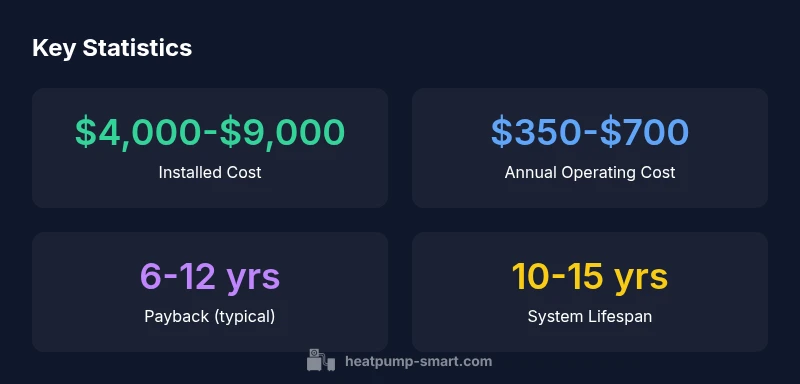
Establishing a budget for a pool heat pump begins with a price range: most installed systems run between $4,000-$9,000, depending on pool size, climate, and electrical work. Additional costs include permits and installation labor. Heatpump Smart Analysis, 2026 notes that operating savings over time help offset upfront expenses, especially in warmer climates.
What determines the cost of a pool heat pump
Understanding the cost of pool heat pump starts with several interrelated factors. Climate and pool type influence not only the required heating capacity but also the equipment size, which directly drives upfront costs. A larger pool or higher temperature rise demands a bigger unit, which can push the installed price higher. The efficiency rating, typically expressed as COP and EER, affects both initial price and long term operating costs. Higher COP units cost more upfront but provide larger savings over time through lower electricity use. Installation complexities such as the need for electrical upgrades, new gas lines, or additional ducting in a pool house also add to the total. Permitting, inspection fees, and local taxes vary by jurisdiction and can create unexpected costs if you do not plan ahead. Finally, the choice of supplier, warranty terms, and after sales support influence total ownership costs. When evaluating bids, request itemized quotes that separate equipment, labor, and any sitework.
Cost ranges to expect by region and pool size
Prices for pool heat pumps vary by region due to climate, labor costs, and permitting requirements. In many markets installed prices fall roughly in a mid range band with smaller warmer countries tending toward the lower end and cooler regions toward the higher end. Pool size also matters; a standard residential in ground pool may require a unit in the mid range while large or irregularly shaped pools require higher capacities and more installation work. Homeowners should expect regional variability with a handful of suppliers offering package deals that include installation. To plan accurately request a written estimate that includes equipment cost, labor, electrical upgrades, permits, and service after installation. Heatpump Smart analysis suggests building a contingency of 10–15 percent for site specific challenges especially in older properties or retrofit projects.
Upfront costs equipment installation permits
Upfront costs consist of the heat pump unit itself, any necessary auxiliary equipment such as controllers or bypass valves, and the installation labor. The heat pump size and efficiency rating determine the price of the unit; higher efficiency models cost more upfront but deliver larger savings over the system life. Installation costs include electrical work such as breaker wiring and disconnect, possibly a dedicated circuit, and any required plumbing or pool equipment integration. Permits and inspections add to the bill in many jurisdictions; failure to obtain required permits can lead to fines and delays. If your pool is existing, the installer may need to modify plumbing routes or upgrade electrical panels, which increases both time and cost. Some projects require site specific drivings such as trenches or crane services for rooftop or distant locations. Ask for a clear breakdown and compare quotes that include or itemize potential add ons like a timer, heat pump cover, or weatherproof enclosure.
Operating costs and efficiency considerations
Once installed the ongoing cost of running a pool heat pump depends on electricity prices, pool usage, and climate. Efficiency ratings, COP and EER, indicate how much heat is produced per unit of electricity and hence how much energy is consumed to reach the desired water temperature. A unit with a higher COP generally delivers the same warmth with lower energy bills; however it may have a higher upfront price. In mild climates heat pumps can be particularly economical while extremely cold regions may require auxiliary heating elements or different systems. Reducing heat loss through pool covers, windbreaks, and good pool enclosure can dramatically lower running costs. Regular maintenance such as cleaning filters and ensuring refrigerant levels are correct helps the system run at peak efficiency. Seasonal use patterns such as extended swim seasons or nocturnal heating influence annual costs and should be modeled in your budget.
Estimating payback and ROI
Payback is the period required to recoup the upfront investment from energy savings. To estimate payback compare the installed cost to the expected annual operating savings. Account for electricity price projections, pool usage patterns, and local climate. Build a scenario that assumes several years of average weather plus a potential increase in energy costs. Take into account any rebates, incentives, or financing options available in your area. If a pool is used heavily year round the payback window shortens; with seasonal use it stretches. It is helpful to run multiple scenarios, one for temperate climates with moderate use and another for longer hotter seasons. This helps homeowners, builders, and property managers understand how aggressive a payback target should be and whether a more aggressive approach such as a larger unit or supplemental heating is warranted.
Sizing efficiency and choosing the right model
Sizing the heat pump correctly is essential to balance upfront costs with long term savings. An undersized unit will constantly run at full capacity increasing wear and electricity use; an oversized unit will short cycle and fail to dehumidify effectively. A professional should perform a load calculation based on pool volume, desired temperature rise, wind exposure, and shading. Look for units with high COP ratings and variable speed compressors for better efficiency and quieter operation. Features such as intelligent controls, demand response compatibility, and robust corrosion protection add to the price but may reduce long term maintenance and replacement costs. Warranty terms and service networks matter; choose a supplier with local service coverage and transparent maintenance plans.
Maintenance warranties and long term costs
Routine maintenance helps prevent costly failures and ensures consistent performance. Expect periodic checks of refrigerant levels, condenser cleanliness, electrical connections, and control systems. A solid warranty, particularly for the compressor and coil, can save substantial future expenses. Keep humid environments in mind; pools near coastal climates may require corrosion protection and protective enclosures. Additionally, annual tune ups may add to operating costs but often extend the equipment life and preserve efficiency. Keep a simple maintenance schedule that pairs with pool seasonality to avoid service gaps.
Financing rebates and strategies to maximize value
Many homeowners and operators can lower the effective cost of pool heat pumps through rebates, financing options, or utility programs. Check federal, state, provincial, and local incentives; some programs offer cash rebates or tax credits for energy efficient equipment installation. Compare financing terms including interest rates, payback horizons, and any fees to identify the most favorable option. Ask installers about bundled packages that include extended warranties or maintenance discounts. Finally consider schedule and location choices to minimize labor costs such as off season installations or working with multi unit property projects where contractors provide volume pricing.
Estimated installed costs by region for pool heat pumps
| Region | Typical installed cost | Notes |
|---|---|---|
| North America | $4,000-$9,000 | Includes unit, labor, and basic permits |
| Europe | €3,500-€7,500 | Pricing varies by climate and installers |
| Australia/NZ | AU$6,000- AU$12,000 | Includes electrical work and installation |
| Asia | ¥30,000-¥90,000 | Varies by country and contractor |
Your Questions Answered
What is the typical cost range to install a pool heat pump?
Most installations fall in the $4,000-$9,000 range, depending on pool size, climate, and electrical work. Costs can vary by region and contractor. Always request a detailed, itemized bid.
Most installations fall between four and nine thousand dollars, depending on pool size and local labor.
How long does installation take?
In most cases installation takes a day or two, but complex retrofits can extend to three days.
Most installs take one to three days.
Are rebates or incentives available for pool heat pumps?
Rebates and incentives may be available in some regions; check local utility programs and energy efficiency schemes.
There can be rebates in some areas.
What size heat pump do I need for my pool?
Sizing should be done by a professional using pool volume, desired temperature rise, and climate data. Incorrect sizing can reduce efficiency.
Let a professional size it for you.
How can I reduce the ongoing running costs?
Use a pool cover, optimize heating times, and invest in a high COP unit. Regular maintenance helps keep efficiency high.
Cover your pool and maintain the system.
“A high efficiency pool heat pump can provide reliable heating with lower energy use, especially in temperate climates.”
Top Takeaways
- Budget for upfront and ongoing costs.
- Choose high efficiency models to reduce operating costs.
- Expect regional price differences and permitting fees.
- Explore rebates and financing to improve payback.