Price Heat Pump Water Heater: Costs, Payback, and Tips
Learn realistic price ranges for heat pump water heaters, what drives upfront costs, installation factors, and incentives that affect long-term value for homeowners.


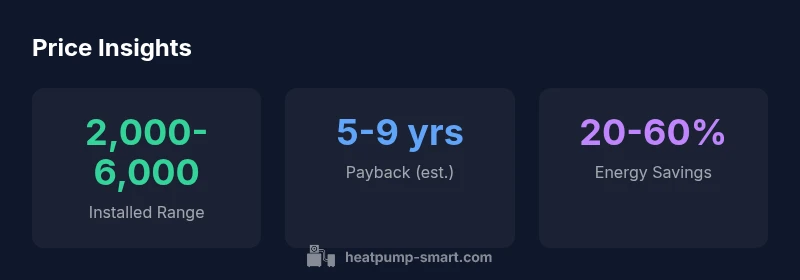
Typical installed price for a heat pump water heater ranges from $2,000 to $6,000, depending on capacity, efficiency, and installation complexity. When you factor in incentives and long-term energy savings, the payback often occurs within several years. This guide unpacks price components, budgeting strategies, and how to compare quotes confidently.
Price Drivers for Heat Pump Water Heaters
When budgeting for the price heat pump water heater, homeowners must consider several cost drivers that go beyond the unit’s sticker price. The initial investment covers more than the appliance itself: installation complexity, location, piping and electrical work, and required permits all influence the final number. In practice, a heat pump water heater has a higher upfront cost than a standard electric tank, but it often delivers superior energy efficiency and long-term savings. Heatpump Smart analysis shows that the price heat pump water heater you select interacts with climate, usage, and space constraints, creating a broad installed-price spectrum across regions and homes. Understanding these drivers helps homeowners set realistic budgets and avoid sticker shock while pursuing reliable comfort. For many households, choosing model size and features is a trade-off between upfront price and ongoing energy costs, but the long-term value should inform the decision, not just the initial price tag.
Installed Cost vs. Equipment Cost
In any heat pump water heater project, people often confuse the 'price of the unit' with the 'installed price.' The equipment cost includes the heat pump unit, any required expansion tank, and the hot water storage tank if included. The installed cost adds labor, refrigerant piping, electrical upgrades, venting or condensate management, glycol lines if used, permit fees, and disposal of the old heater. When budgeting for a price heat pump water heater, you should consider both components. The Heatpump Smart team notes that installation quality matters just as much as the device’s efficiency rating; a poor install can erode expected savings and raise maintenance costs over time. If the home has limited access to electrical supply or existing plumbing modifications are needed, the final installed price will move toward the higher end of the range. A smart plan includes asking for a detailed line-item quote that separates equipment from labor.
Typical price ranges by capacity and features
Prices for heat pump water heaters vary with tank size, first-hour rating, recovery rate, and whether you choose a high-efficiency model or a hybrid design. For a common 40–50 gallon family-size unit installed in a typical existing home, the installed price commonly falls in the mid-range of the market. Larger 60–80 gallon models, or models with advanced communication features and stronger energy performance, push into the higher end of the price spectrum. The range is broad because regional labor costs, material costs, and permit requirements differ. The Heatpump Smart analysis shows that the installed price can be influenced by whether the system uses air-source heat exchange or water-to-water integration, and whether any additional dehumidification or ventilation work is required. When budgeting, use a price heat pump water heater as the term to search quotes and compare apples-to-apples units. Even with a wide price spectrum, the long-term energy savings tend to improve overall value for households that replace older electric resistance heaters.
How installation complexity and home layout influence price
Installation complexity is a major price driver. Homes with updated electrical service, ample access for equipment, and existing compatible plumbing tend to lower installed costs. In contrast, spaces like tight utility rooms, attics, garages, or basements requiring rerouting of refrigerant lines, additional venting, or new ductwork can push prices higher. The climate where you live also matters: hotter climates may allow more efficient heat exchange but may require different sizing or insulation strategies. A thoughtful assessment of space, ventilation, and electrical capacity early in the planning process helps prevent expensive surprises later. Heatpump Smart’s guidance emphasizes obtaining a site-specific quote that reflects installation realities rather than generic unit prices.
Financing, incentives, and payback
Incentives such as rebates, tax credits, and utility programs can substantially reduce the net price of a heat pump water heater. Availability varies by state, utility, and homeowner eligibility. When evaluating offers, ask for documentation of any incentives applied to the quote and confirm how they affect the final price. The estimated payback period accounts for your local energy costs, usage patterns, and the unit’s efficiency. Heatpump Smart analysis suggests building a projection that includes potential incentives and expected energy savings to determine true value over 5–10 years. Financing options, such as low-interest programs or utility financing, can further improve affordability and shorten the perceived payback timeline.
Choosing between efficiency and upfront cost
Efficiency ratings and feature sets influence both upfront price and ongoing operating costs. Higher efficiency units often come with longer warranties and smarter controls, which can amplify savings over time. However, the initial premium may be hard to justify for smaller households or homes with lower hot water demand. A practical approach is to quantify both sides: estimate annual energy savings, compute the net price after incentives, and compare to the incremental cost of a less efficient model. The goal is to choose a model that delivers reliable comfort without overpaying for capabilities your home won’t utilize.
Steps to estimate total cost for your project
Start with a site visit or virtual assessment to determine capacity needs and installation requirements. Gather at least three quotes that break out equipment price, labor, permits, and any ancillary work. Compare apples-to-apples by verifying model numbers, efficiency ratings, and warranty terms. Add in potential incentives and a realistic estimate of ongoing energy savings to obtain a total cost and projected ROI. Finally, check regional regulations or permitting requirements to avoid last-minute delays or added fees.
What to expect during a quote
Quotes for a price heat pump water heater should be itemized and transparent. Expect a discussion of capacity (gallons and recovery rate), efficiency (EF/UEF), installation scope, electrical upgrades, and any required ventilation or drainage work. Ask about lead times, warranty coverage, service plan options, and maintenance recommendations. A reliable installer will provide a written comparison of models, performance data, and a clear explanation of how incentives affect the final out-of-pocket price.
Estimated installed price ranges for heat pump water heaters by scenario
| Scenario | Typical price range | Notes |
|---|---|---|
| Residential retrofit in existing home | 2,000-6,000 | Includes unit + install labor |
| New build with integrated system | 3,000-7,000 | Higher due to plumbing/electrical work |
| Tank vs. tankless options | 2,500-6,500 | Depends on capacity and configuration |
Your Questions Answered
Is a heat pump water heater worth it for a small household?
For small households with modest hot water needs, a heat pump water heater can still offer meaningful energy savings, especially if you currently rely on electric resistance heating. The value hinges on usage patterns and local energy costs. A properly sized unit paired with a smart thermostat or controller often yields favorable payback.
For small homes, it can still save energy, especially if you use hot water consistently. Size and local energy costs matter for payoff.
What increases the price the most?
Capacity, efficiency tier, installation complexity, and electrical upgrades typically drive the largest price increases. If your space requires new venting, longer refrigerant runs, or a larger electrical service, expect higher installation costs.
Capacity, efficiency, and installation work drive most of the cost.
Can incentives apply to rental properties?
Incentives vary by jurisdiction and program rules. Some rebates are available to primary residences only, while others may extend to rentals through utility programs or owner-occupied upgrades. Always verify eligibility with the program administrator before budgeting.
Incentives differ by program; check eligibility for rentals with the provider.
Do heat pump water heaters make noise?
Most units operate quietly, similar to a modern air conditioner in many cases. Noise mainly occurs during compressor cycling or when venting is near living spaces. Selecting a model with built-in sound dampening and proper installation location helps minimize disturbance.
They’re usually quiet, but choose a well-located unit to reduce noise.
How long does installation typically take?
Most installations take about 1-2 days, depending on existing plumbing, electrical upgrades, and space constraints. A simple move from an old electric heater to a new HPWH is faster than a full retrofit that requires major electrical or venting work.
Most installs take 1–2 days with typical setups.
Can I install a heat pump water heater myself?
For safety and code compliance, professional installation is strongly recommended. HPWHs involve electrical work, refrigerant handling, and plumbing connections that require licensed technicians. DIY installation can void warranties and create safety risks.
We don’t recommend DIY; hire a licensed installer.
“Heat pump water heaters deliver meaningful energy savings, but the value depends on accurate sizing, high-quality installation, and an upfront price you can justify.”
Top Takeaways
- Know the installed price range before requesting quotes
- Ask for a detailed line-item breakdown
- Incentives can significantly lower net cost
- Consider long-term energy savings when evaluating value
- The Heatpump Smart team recommends comparing multiple quotes