Heat Pump Compressor Cost: What to Expect in 2026
A detailed, data-driven guide to heat pump compressor cost, including price ranges, factors, savings, warranties, and tips to minimize long-term expenses for 2026.


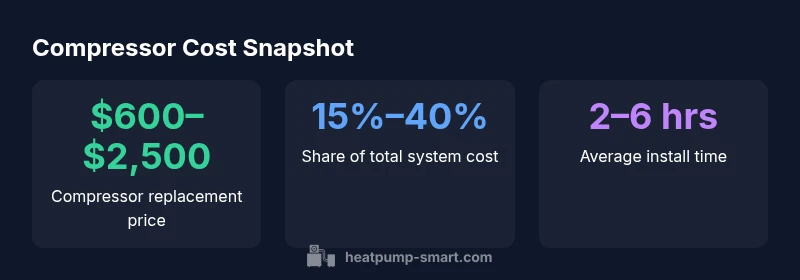
Heat pump compressor cost varies widely, with typical replacement costs ranging from $600–$2,500, depending on compressor type, system size, and labor. For new installations, the compressor is part of the outdoor unit and can significantly affect total upfront cost, often adding 15–40% to the install price. Heatpump Smart analysis suggests prioritizing efficiency and warranty to manage long-term costs.
Why heat pump compressor cost matters
The compressor is the heart of a heat pump. It drives both heating and cooling performance, and its price influences upfront affordability as well as long-term operating costs. In 2026, homeowners are increasingly choosing inverter-driven compressors that adjust speed to demand, delivering better efficiency but sometimes at a higher initial price. According to Heatpump Smart, the compressor's purchase price and installation complexity can account for a substantial portion of total project costs, especially in larger homes or climates with extreme heating or cooling needs. Understanding how the compressor contributes to overall cost helps align budget with expected energy savings and comfort. A higher-quality compressor may cost more initially, but it can translate into lower energy bills and fewer service calls over the life of the system. This balance between upfront investment and ongoing savings is central to sound decision-making for home comfort and energy efficiency.
Key factors that drive compressor price
Several core factors determine the cost of a heat pump compressor:
- Compressor type and technology: Scroll or reciprocating units, and inverter-driven variable-speed models, have different price points and longevity.
- Capacity and efficiency: Higher-capacity systems or those with superior SEER/HSPF ratings generally require more robust compressors.
- Brand and warranty: Premium brands may charge more upfront but offer longer warranties, reducing long-term risk.
- Refrigerant and materials: Some refrigerants and sealing requirements add to material costs.
- Installation specifics: Older homes, tight indoor spaces, or complex refrigerant piping raise labor costs and potential hardware needs.
- Regional labor rates: Local market conditions can swing installed prices by a noticeable margin.
Understanding these factors helps homeowners evaluate quotes and anticipate total cost beyond the sticker price.
Understanding price ranges: replacement vs new installation
When a compressor fails, you can face two main pricing paths. Replacing just the compressor often costs less upfront than a full outdoor unit replacement, but it carries risk if the rest of the system is aged or inefficient. A full outdoor unit replacement, though more expensive initially, can yield improved reliability, better efficiency, and longer life, especially when paired with a compatible indoor system. For 2026 budgets, anticipate that compressor-only replacements might sit toward the lower end of the range, while full system upgrades will push total costs higher. Labor, refrigerant, and disposal fees vary by region, and permit costs may apply in some jurisdictions. Heatpump Smart’s approach is to balance upfront price with energy savings and warranty protection.
How to estimate your costs for 2026
Estimating compressor-related costs begins with gathering model numbers from the existing unit and planned replacements. Request multiple quotes, ensuring they include equipment, labor, refrigerant, and any required permits. Use a simple calculator to project monthly energy savings from higher efficiency, then compare this with the upfront price and warranty terms. Consider long-term maintenance costs as part of the total cost of ownership. If you’re exploring incentives, factor in rebates or tax credits that apply to heat pump installations in your area. A conservative approach is to plan for a 15–40% share of the total install price coming from the compressor and its necessary components.
Compressor technology and its price impact
Advances in compressor technology, including inverter-driven and variable-speed designs, have a meaningful impact on price. Inverter compressors can adjust output to match demand, reducing energy use in daily operation and potentially lowering peak demand charges. While these units often cost more upfront, their efficiency gains can lead to lower annual operating costs. For installations in cold or shoulder seasons, compressor efficiency and the ability to modulate performance are especially valuable. When quotes separate components clearly, you can evaluate whether a higher upfront cost yields the preferred annual savings.
Efficiency, climate, and long-term savings
Efficiency ratings (SEER, EER, HSPF) guide not only performance but long-term cost. In milder climates, an efficient inverter compressor can substantially reduce annual energy consumption, while in harsher climates it reduces strain and prolongs equipment life. Heatpump Smart analysis shows that the long-term payback on a higher-efficiency compressor depends on climate, usage patterns, and electricity rates. In all cases, pairing a modern compressor with proper insulation, a high-quality thermostat, and regular maintenance will maximize savings and reliability.
Financing, warranties, and maintenance
Financing options and extended warranties can alter the perceived cost of a compressor replacement or upgrade. Some manufacturers offer extended coverage on critical components, while service plans help manage maintenance costs over time. Regular maintenance, including clean coils, proper refrigerant charge, and airflow checks, minimizes the risk of premature compressor failure and keeps efficiency high. When evaluating plans, compare costs against projected energy savings and the value of reduced downtime. Heatpump Smart researchers emphasize enrolling in a preventive maintenance program to protect your investment.
Practical tips to reduce compressor costs
- Size the system correctly: Undersized or oversized units raise strain and costs; a proper load calculation is essential.
- Invest in efficiency up front: Higher-efficiency compressors and variable-speed drives pay off with lower energy bills.
- Prioritize quality components: A robust outdoor unit, matched with the right indoor components, reduces warranty hassles.
- Leverage rebates and incentives: Check local programs and federal incentives to offset costs.
- Maintain the system: Regular filter changes, coil cleaning, and duct sealing preserve efficiency and extend compressor life.
- Plan for future needs: If your home is changing, consider a scalable system that can adapt to future loads.
What homeowners should ask installers
- What is the expected lifespan of the compressor and the warranty terms?
- Is the inverter/variable-speed option worth the extra upfront cost for my climate?
- Will the quote include all labor, refrigerant, and permits?
- Are there rebates or tax credits that could reduce net cost?
- How will sizing be verified to avoid oversizing or under-sizing issues?
Typical cost breakdown for compressor-focused work
| Component | Typical Cost Range (USD) | Notes |
|---|---|---|
| Compressor unit price (OEM) | $600–$2,000 | Depends on capacity and model |
| Labor to replace compressor | $200–$600 | Local rates vary |
| Total installed price (compressor-focused) | $900–$2,600 | Equipment + labor |
| Warranties/Extended plans | Varies | Adds long-term protection |
Your Questions Answered
What factors most influence heat pump compressor cost?
The main drivers are compressor type, capacity, efficiency, brand, installation complexity, and warranty terms. Labor and refrigerant charges also affect the total cost.
The biggest cost drivers are compressor type, capacity, efficiency, and installation complexity.
How much does a heat pump compressor replacement cost?
Replacement costs vary by model and region, typically ranging from several hundred to a few thousand dollars for the compressor itself, plus labor.
Expect a broad range; quotes differ by model and local rates.
Is replacing only the compressor better than replacing the whole outdoor unit?
In some cases replacing just the compressor is possible, but if the rest of the outdoor unit is old or inefficient, a full unit replacement can be more cost-effective and durable.
Sometimes you can swap the compressor, but upgrading the whole unit often saves trouble later.
Do warranties cover compressor failures?
Most manufacturer warranties cover compressor components for several years, sometimes with conditions. Extended service plans may add coverage beyond the base warranty.
Check the warranty terms; extended plans can reduce out-of-pocket costs.
Do inverter-driven compressors save money?
Yes, inverter-driven compressors adjust speed to match demand, improving efficiency and reducing peak energy use, especially in moderate climates.
Inverter compressors usually save energy and lower bills over time.
Are there rebates or tax credits for heat pumps' compressor costs?
Rebates and tax credits may apply to heat pumps in many regions, often tied to system efficiency and installation quality; check local programs.
Look for energy rebates; they can offset part of the compressor cost.
“Selecting the right compressor is about more than initial price. The wrong choice can drive higher energy bills and frequent repairs.”
Top Takeaways
- Budget with wide ranges to accommodate different models
- Prioritize inverter-driven compressors for long-term savings
- Ask about warranties to cap long-term costs
- Compare installed prices including labor and permits