Heat Pump AC Unit Cost in 2026: A Comprehensive Guide
Explore realistic heat pump ac unit cost ranges for 2026, including installed price bands, operating savings, rebates, and budgeting tips for homeowners, builders, and property managers.


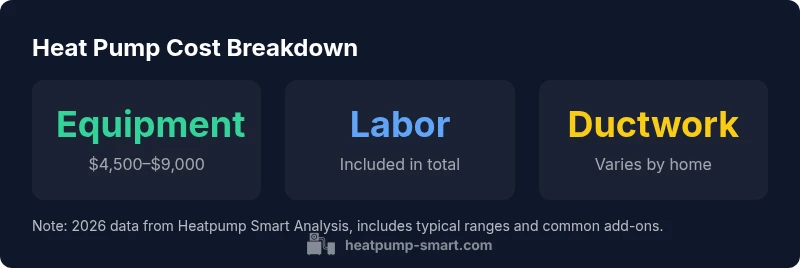
According to Heatpump Smart, the installed cost of a typical heat pump ac unit in 2026 ranges from $4,500 to $9,000 for a single-zone system, with complete installation typically between $6,000 and $14,000. Costs vary by capacity, efficiency (SEER), ductwork needs, refrigerant lines, permits, and local labor rates. This is a baseline for budgeting.
What affects the cost of a heat pump ac unit?
The price you’ll pay for a heat pump AC unit in 2026 is driven by multiple moving parts. The core equipment cost depends on the model you choose—air-source vs. geothermal, single-zone vs. multi-zone, and the SEER efficiency rating. More efficient units (higher SEER) reduce operating costs but come with a higher upfront price. Installation complexity is another major factor: if your home has no existing ductwork, you may Face significant adds for duct fabrication or a ductless mini-split solution. The length and routing of refrigerant lines, electrical upgrades (breaker panels, wiring gauges), and necessary permits can all nudge the total higher. Climate affects both equipment choice and labor needs; milder climates might require smaller outdoor units, while cold regions may need supplementary heating features. For budgeting purposes, consider both upfront costs and long-term energy savings when evaluating heat pump ac unit cost.
Cost ranges by system type
Costs vary notably by system type. A straightforward single-zone air-source heat pump with standard ductwork typically falls into the mid-range of installed prices. Multi-zone or ductless systems spread costs across zones but can reduce ductwork needs or tailor comfort, sometimes increasing the upfront price. Geothermal systems, while highly efficient, often command higher installation costs due to ground loops and trenching. When planning, distinguish between equipment price, labor, ductwork adjustments, and electrical upgrades. Getting three written quotes helps identify where costs cluster and which add-ons are truly necessary for your home. In all cases, look for reputable installers who provide transparent breakdowns and written warranties.
Ductwork, installation, and permitting
Ductwork quality and compatibility with your chosen heat pump model are pivotal to both performance and cost. If you already have a well-sealed, appropriately sized duct system, installation tends to be quicker and cheaper. Otherwise, you may need duct sealing, size verification, and potential alterations to accommodate higher airflow with new equipment. Permits and electrical work add time and expense but are essential for safety and compliance. In some cases, a partial retrofit (upgrading a portion of ducts or installing a zoned system) can optimize costs while preserving comfort. The key is to avoid cutting corners on airflow paths or electrical safety—these choices impact efficiency and long-term reliability.
Operating costs and savings
Operating costs depend on local electricity rates and the system’s SEER rating. While the upfront cost is a major consideration, the long-term energy savings can be substantial, especially in homes with older or inefficient cooling setups. Expect a range of potential savings that varies by climate, insulation, and usage patterns. High-SEER models paired with efficient heat pumps can significantly reduce monthly energy bills, and many homeowners recover part of the initial investment through reduced cooling costs over several years. Remember that rebates and incentives can meaningfully shorten the payback period and improve overall value.
Rebates, incentives, and financing options
Federal, state, and utility rebates can lower the effective heat pump ac unit cost, but eligibility depends on local programs and the unit’s efficiency. Many homeowners combine rebates with financing options to spread upfront costs. To maximize savings, factor in potential tax credits and utility programs when budgeting and request installer documentation that proves unit efficiency and eligibility. Heatpump Smart recommends checking current programs early in the planning phase, as some incentives have annual caps or time-limited eligibility.
How to get accurate quotes and plan a budget
Start with an energy audit or home assessment to determine the right size and system type for your space. Ask installers for a complete proposal that itemizes equipment cost, labor, ductwork, permits, electrical upgrades, and any add-ons. Request a performance-based quote that shows predicted SEER, HSPF (if applicable), and expected annual savings. Compare at least three quotes and confirm warranty terms, service schedules, and maintenance requirements. Finally, factor in potential future upgrades or added comfort features, such as smart thermostats, zoning, or air purification.
Maintenance and longevity
Regular maintenance extends the life of a heat pump and preserves efficiency. Schedule seasonal inspections, clean outdoor coils, replace or clean air filters, and check refrigerant levels if advised by the contractor. Lifespan typically ranges in the low to mid-teens, depending on usage, climate, and how well the system is maintained. A well-maintained heat pump can deliver dependable cooling for years, with rebates and financing helping to offset the initial heat pump ac unit cost over time.
Comparison of heat pump system types
| Model Type | Installed Cost Range | Typical Lifespan | Typical SEER Range |
|---|---|---|---|
| Air-source single-zone (ducted) | $4,500–$9,000 | 12–15 years | 14–20 SEER |
| Air-source multi-zone (ducted) | $7,000–$14,000 | 12–15 years | 16–20 SEER |
| Ductless mini-split (single-zone) | $3,500–$8,000 | 12–15 years | 16–34 SEER |
Your Questions Answered
What is the typical heat pump ac unit cost including installation?
A typical installed cost for a single-zone heat pump AC unit in 2026 ranges from about $4,500 to $9,000 for equipment and $6,000 to $14,000 including professional installation. The exact amount depends on zone sizing, ductwork, and SEER rating.
Typically, you’ll see installed costs between four and fourteen thousand dollars depending on scope and efficiency.
Are heat pumps more expensive upfront than traditional AC units?
Yes, heat pumps usually cost more upfront than conventional air conditioners due to higher efficiency equipment and, in some cases, added ductwork or installation complexity. The long-term energy savings can offset the difference, especially with rebates.
They often cost more upfront, but you can recoup the difference with energy savings and rebates.
Do rebates affect the total cost and how do I claim them?
Rebates and tax incentives can significantly reduce the net heat pump ac unit cost. To claim them, obtain documentation from your installer and verify eligibility with local programs before purchase.
Rebates help lower your total cost; check eligibility with local programs and ask your installer for documentation.
How long does installation typically take?
Installation generally takes from a day to a few days, depending on system type, ductwork status, and electrical upgrades. Complex retrofits can extend timelines.
Most installs take a day or two, but complex retrofits may take longer.
Is a ductless mini-split cheaper than a full ducted system?
Ductless mini-splits can be cheaper in retrofit scenarios or for zone-based cooling, but they may carry higher per-zone costs if multiple units are needed. They offer flexibility and reduced ductwork requirements.
Ductless can be cheaper per zone in some cases, but costs can add up if you need several units.
What maintenance helps maximize efficiency and lifespan?
Regular filter changes, coil cleaning, and seasonal professional inspections help sustain efficiency and extend system life. Watch refrigerant levels if advised by your installer and seal ducts to minimize losses.
Keep filters clean, schedule seasonal checks, and seal ducts to maintain efficiency.
“Heat pumps deliver year-round comfort with strong efficiency, but upfront costs require deliberate planning and a clear understanding of incentives.”
Top Takeaways
- Budget with both upfront costs and long-term energy savings in mind
- Ask for a transparent, sectioned quote from installers
- Factor rebates and financing into your payback period
- Ductwork quality strongly affects total cost and efficiency
- Choose a system with a realistic maintenance plan and warranty