Heat Pump for Sale: Buy with Confidence in 2026
Explore how to evaluate heat pump for sale options, compare efficiency, costs, rebates, and how to choose the right system for energy savings and home comfort in 2026.


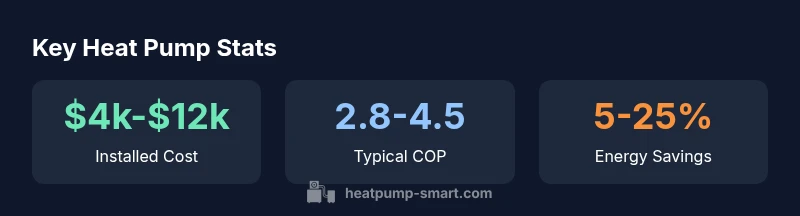
Prices for heat pumps sold today vary by type and installation, with air-source units generally cheaper upfront than geothermal. For a quick snapshot, see our detailed comparison chart; Heatpump Smart provides ranges to help budgeting and planning. Typical installed costs for air-source systems range from about $4,000 to $12,000, while geothermal installations are higher. Efficiency features, such as COP and HSPF, and available rebates can affect net cost and payback. Heatpump Smart Analysis, 2026, notes that proper sizing and professional installation are crucial.
Market landscape for heat pump for sale
According to Heatpump Smart, the current market for heat pumps is broad and diverse, with multiple configurations fit for different climates. Homeowners, builders, and property managers search for a balance between upfront cost, long-term energy savings, and comfort. The term "heat pump for sale" appears frequently in retailer sites and installation quotes, but an informed buyer looks beyond list prices. In 2026, air-source heat pumps dominate the residential market in many regions due to improved cold-weather performance and lower installation costs, while geothermal systems remain a premium option for prolonged efficiency. The Heatpump Smart team notes that the most successful purchases start with a clear load calculation and a determination of whether your ductwork needs upgrading. Understanding climate, electricity rates, and insulation quality is essential because these factors directly influence the system you should buy and the expected return on investment.
Key features to evaluate when you see 'heat pump for sale' ads
When scanning ads for a heat pump for sale, buyers should look beyond the headline price. Key features include inverter-driven variable-speed compressors, two-stage operation, and compatibility with existing ductwork or the choice of a ductless mini-split. Zone control capabilities, smart thermostats, and controllability via mobile apps add real value, especially for larger homes or multi-story layouts. Noise levels, size, and aesthetic integration matter because a quiet, well-integrated unit improves daily comfort. If you are retrofitting an older home, verify whether the unit will require duct upgrades or a full retrofit. Finally, confirm compatibility with your climate; some models perform better in cold weather, while others excel in hot conditions. A thoughtful buyer compares units within the same efficiency tier and checks for compatibility with local grid conditions.
Understanding efficiency metrics: COP, HSPF, SEER
Efficiency metrics provide a language for comparing heat pumps, but they can be confusing. COP, or coefficient of performance, measures heat output per unit of electricity at a specific test condition. HSPF, or heating seasonal performance factor, assesses efficiency across the heating season. SEER, the cooling efficiency metric, is also important for year-round comfort. Higher numbers generally indicate lower operating costs, but real-world performance depends on climate, electricity prices, and system sizing. ENERGY STAR labels can help, but verify the performance under your climate zone. Remember that a system’s efficiency alone does not guarantee savings without proper installation and adequate insulation. A model with a higher COP can still underperform if duct losses are significant.
Sizing and installation: avoid over-sizing
Sizing is the single most critical factor in performance and comfort. An undersized unit struggles to meet heat demands on cold days, while an oversized unit cycles frequently, reducing humidity control and increasing wear. A proper load calculation (often a Manual J) considers climate, home insulation, window efficiency, occupancy patterns, and heating distribution. Installation quality matters as much as the unit’s efficiency. Poor refrigerant charging, duct leakage, or incorrect refrigerant charge can erase a good energy rating. In older homes, retrofit challenges—such as ductwork or electrical upgrades—can influence both the installation cost and the system’s long-term performance. A well-sized system will run more consistently, feel warmer, and deliver better humidity control.
Costs, incentives, and total ownership
Prices for heat pumps vary based on type, size, and installation complexity. Typical installed costs for air-source systems range from $4,000 to $12,000, while geothermal installations tend to be higher. In addition to the upfront price, homeowners should consider maintenance, potential ductwork upgrades, and permit fees. Rebates and incentives can substantially reduce net cost, but programs differ by region and over time. Heatpump Smart Analysis, 2026, indicates that the total cost of ownership often improves when you invest in a higher-efficiency model and plan for periodic maintenance. When budgeting, account for electricity rates in your area, climate, and the home’s insulation quality. These factors collectively determine the return on investment and the time needed to recoup the cost through energy savings.
Warranties, service plans, and maintenance
Most heat pumps come with a multi-year compressor warranty and a shorter warranty on parts and labor. A robust service plan can cover annual maintenance, filter changes, refrigerant checks, and emergency service. Maintenance is essential to sustain performance; clogged filters and dirty coils reduce efficiency, while a neglected system may lose performance in extreme weather. Expect to schedule professional inspections at least once a year, ideally in the spring or fall. Simple homeowner actions—like keeping outdoor units clear of debris and ensuring adequate airflow—also support long-term performance. When evaluating heat pump for sale options, compare warranty lengths and service inclusions to estimate long-term reliability and cost of ownership.
How to choose a reputable installer and close the deal
Select a contractor with a track record of quality installations and verified customer references. Ask for a detailed estimate that includes system specifications, ductwork evaluation, refrigerant charge, and a breakdown of parts and labor. Check credentials, licenses, and any regional requirements for permitting. Request a commissioning report after installation to confirm performance targets are met. Compare warranties between contractors and ask about planned maintenance schedules. A good contractor will explain energy savings in plain terms and provide a realistic timeline for payback, including incentives where applicable.
Practical buying checklist and negotiation tips
Use a structured checklist when evaluating heat pump for sale offers. Confirm unit type (air-source vs geothermal, ducted vs ductless), verify COP/HSPF/SEER values, and review the included warranty. Obtain multiple quotes and ask for seasonal promotions or bundled maintenance packages. Be wary of unusually low bids; ensure the proposal covers ductwork, permits, and potential modifications to electrical systems. Negotiate to include a free first-year maintenance visit and a verified performance guarantee. Finally, confirm availability of local service support to ensure reliable post-installation service.
Heatpump Smart perspective on value and market trends
From Heatpump Smart’s vantage point, the heat pump market is moving toward higher efficiency, better cold-weather performance, and stronger service networks. Homeowners increasingly seek comfort, reliability, and predictable energy costs. As more states consider rebates and tax credits, the total cost of ownership becomes more favorable for well-sized systems. The Heatpump Smart team expects continued innovation in refrigerants, smart controls, and monitoring, which will empower homeowners to optimize run times, reduce peak demand, and align heating strategies with evolving energy policies.
Comparison of heat pump types
| Model Type | Avg COP | Installed Cost Range | Noise Level (dB) | Best For |
|---|---|---|---|---|
| Air-source heat pump (ducted) | 2.8-4.0 | $4,000-$9,000 | 45-60 | Whole-house zoned heating |
| Air-source heat pump (ductless) | 3.0-4.5 | $5,000-$12,000 | 25-50 | Residential retrofit 1-2 zones |
| Geothermal heat pump | 3.5-4.5 | $12,000-$30,000 | 40-70 | New builds or full retrofit |
Your Questions Answered
What is the typical price range for a heat pump for sale including installation?
Prices vary by type and installation, but air-source units typically fall in the $4,000-$12,000 installed range, while geothermal systems are higher. Local ductwork, permits, and site conditions influence the final cost.
Prices vary by type and installation; expect air-source units to be in the several thousand range, with geothermal higher. Check multiple quotes for accurate comparisons.
Are heat pumps worth it in cold climates?
Modern cold-climate heat pumps perform well in many regions, especially with proper sizing and duct design. In very cold climates, a supplemental heat source or backup may be advised during extreme conditions.
Yes, many models perform well in cold weather, but proper sizing and routing are essential.
Do rebates or tax credits apply to heat pumps for sale?
Yes, rebates and tax credits are commonly available but vary by region and year. Check local incentive programs and factor them into your total cost and payback assumptions.
Rebates and credits can help, but check local programs for current availability.
How do I know if my home needs ductwork upgrades?
A professional should assess duct leakage, insulation, and routing. Retrofit scenarios may require sealing or redesigning ducts to maximize efficiency and comfort.
Have a pro inspect ducts to decide if upgrades are needed.
What maintenance is required for heat pumps?
Annual professional maintenance plus regular filter changes keep performance optimal. Clean outdoor coils and ensure clear airflow around the unit.
Keep up with annual service and simple at-home maintenance.
How long does installation typically take?
Most installations take 1-3 days depending on system type, ductwork, and electrical work required. Expect scheduling to account for permits and inspections.
Typically 1-3 days on-site, depending on complexity.
“A heat pump should be selected based on your home’s load, climate, and existing ductwork, not just advertised efficiency.”
Top Takeaways
- Verify efficiency ratings (COP/HSPF/SEER) before buying
- Get multiple quotes and compare installed costs
- Check rebate and tax-credit options in your region
- Size the system correctly to avoid short cycling
- Choose a reputable installer for long-term performance