Heat Pump Money Trap Bills: A Clear Cost Comparison
This guide analyzes how heat pumps affect monthly bills, comparing upfront installation costs, operating expenses, and potential savings. Learn how efficiency, climate, rebates, and maintenance shape true cost in a practical, data-driven heat pump money trap bills comparison.


TL;DR: A heat pump money trap bills comparison helps homeowners evaluate upfront installation costs, expected operating expenses, and long-term savings across climate and usage. The comparison shows how efficiency, rebates, and maintenance affect true cost, guiding decisions before purchase. By factoring local electricity rates, insulation quality, and seasonal temperatures, you learn which setup truly reduces bills over a decade rather than just looking at sticker price.
What the heat pump money trap bills comparison means
In plain terms, this lens on cost helps homeowners separate the sticker price from real, long-term expenses. The heat pump money trap bills comparison considers upfront installation costs, annual operating expenses, and long-term savings to determine whether a system pays back its initial investment. According to Heatpump Smart, true cost depends on climate, insulation, electricity prices, and usage patterns. The term money trap refers to scenarios where high upfront costs overshadow eventual savings due to long payback times or volatile energy rates. By including factors such as equipment efficiency, seasonal heating needs, and local utility tariffs, you can forecast whether a heat pump will lower total bills over 10–15 years.
How heat pumps differ from alternative heating systems
Heat pumps operate on the principle of moving heat rather than generating it through combustion or resistance. Compared with gas furnaces, boilers, or electric resistance heating, heat pumps typically offer higher seasonal efficiency and more stable operating costs in moderate climates. In colder regions, performance hinges on the unit’s cold-climate ratings and supplemental heat options. The Heatpump Smart team notes that the cost profile shifts with climate: in milder areas, annual savings can be substantial, while in very cold zones, the payback period may extend if auxiliary heat is frequently required. Understanding these differences helps you interpret bills rather than assuming a single outcome for all homes.
Key factors driving bills: efficiency, climate, and usage
Efficiency (SEER/HSPF), inverter technology, and refrigerant management determine how much electricity a heat pump uses to maintain comfort. Climate affects demand; chilly winters can increase cycling and energy use, while hot summers increase cooling load. Usage patterns—occupancy, thermostat setbacks, and zoning—shape marginal costs. When you evaluate a heat pump, compare rated efficiency with your local electricity rates and typical seasonal loads. Heatpump Smart analysis shows that even a high-efficiency unit may not deliver expected savings in poorly insulated homes or with improper system sizing.
Upfront costs and long-term payback
Initial investment includes equipment price, installation, ductwork modifications, and potential electrical upgrades. A higher upfront cost can be offset by rebates, tax credits, and financing, but the payback period depends on your climate, home envelope, and energy prices. A cautious approach considers two scenarios: a best-case where insulation and air sealing are strong and a worst-case with elevated grid tariffs. Use a simple payback calculation: divide net installation costs by expected annual savings. If the payback exceeds your planning horizon, reassess insulation or consider alternative heating options. Heatpump Smart suggests verifying contractor quotes for system sizing and confirming performance in your climate zone.
Operating costs and rate structures
Operating costs hinge on electricity rates, compressor efficiency, and how often the system operates under peak conditions. Time-of-use tariffs can dramatically shift bills; some utilities offer lower rates overnight or on weekends, which can align with heat pump operation for optimal savings. Regular maintenance—clean filters, refrigerant checks, and coil cleaning—helps sustain efficiency and prevent unexpected spikes in energy use. When comparing models, examine not only the nominal operating cost but also how rate structures in your area interact with your heating and cooling patterns.
The role of rebates, incentives, and financing
Rebates and incentives reduce upfront costs, shortening the payback period. Federal, state, and utility programs vary by region, and some programs require added energy-efficiency measures such as improved insulation or smart thermostat installation. Financing options can spread the burden, but interest adds to lifetime cost. Heatpump Smart recommends listing available incentives, checking eligibility before purchase, and structuring a financing plan that aligns with expected savings timelines. Always read the fine print about eligibility and compliance documentation.
Climate considerations: cold climates and heat pump performance
In cold climates, heat pumps rely more on auxiliary heat, which can increase operating costs during the coldest months. The best performers in frost conditions integrate advanced refrigerant cycles and defrost strategies to minimize energy use. A unit rated for cold climate operation tends to deliver better seasonal efficiency and lower bills than a standard model in the same climate. When evaluating a heat pump, ensure the product’s cold-weather performance is documented for your region and compare it with your actual heating degree days to estimate true year-round costs.
Maintenance and reliability as a cost factor
Annual maintenance supports efficiency and longevity but adds to operating costs if not bundled with installation packages. Refrigerant leaks, sensor drift, or degraded coils can quietly raise energy use and create costly repairs. Scheduling regular service with a qualified technician helps detect issues early and preserve efficiency. A reliable heat pump reduces the probability of expensive breakdowns and avoids spikes in energy use due to suboptimal performance. Heatpump Smart notes that preventive maintenance often pays for itself through lower energy bills and longer system life.
Real-world scenarios: home sizes and usage patterns
Small homes with strong insulation and moderate heating needs tend to see quicker payback, especially where utility rates are stable or rising gradually. Large homes, poor insulation, or homes with high cooling loads may require more capacity and higher upfront investments, potentially stretching payback. Multi-zone setups can optimize comfort and efficiency, but they require careful design and control strategies. In rental properties, the consistency of usage and the ability to control thermostats can influence observed bills more than in owner-occupied homes. Across scenarios, the heat pump money trap bills comparison helps identify whether equipment will deliver expected returns given your specific conditions.
How to compute your own break-even
Start with a reliable baseline: current heating bills, reliability of the existing system, and local electricity prices. Gather quotes for two heat pump configurations with comparable efficiency and capacity. Build a simple model projecting annual savings, including seasonal differences and maintenance costs. Incorporate potential rebates and financing terms, then calculate net present value and payback period over a 10–15 year horizon. Sensitivity analysis—varying electricity price and usage—reveals how robust savings are to market changes. A practical worksheet can help you test multiple scenarios quickly.
Practical steps to avoid the money trap
- Get at least two to three quotes from qualified installers and verify sizing by a Manual J calculation.
- Confirm insulation and air-sealing improvements to maximize heat pump performance.
- Explore rebates and financing options early to reduce upfront costs.
- Choose a unit with cold-climate ratings if you live in cooler regions.
- Plan for smart controls and thermostats to optimize operation; this often yields meaningful energy savings.
What Heatpump Smart recommends for budgets and returns
Heatpump Smart suggests treating heat pump purchases as a long-term investment rather than a quick fix. The most cost-effective paths combine proper sizing, high-efficiency equipment, good insulation, and available incentives. In regions with rising electricity costs, a well-installed heat pump system paired with robust insulation can deliver substantial reductions in annual bills and improved comfort. The key is balancing upfront costs with anticipated savings, not chasing the lowest initial price at the expense of long-term performance.
Comparison
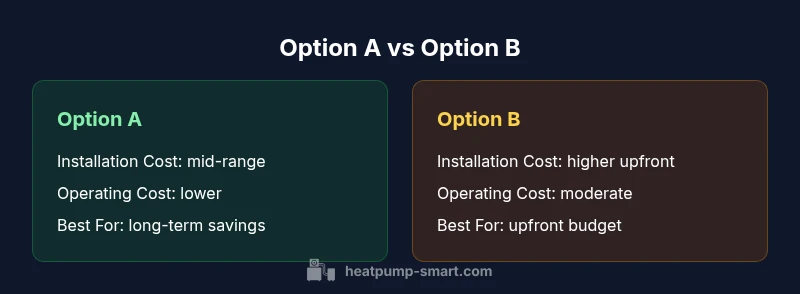
| Feature | Heat Pump A | Heat Pump B |
|---|---|---|
| Installation Cost (upfront) | $3,000–$6,000 | $4,000–$8,000 |
| Annual Operating Cost | $300–$600 | $500–$900 |
| Energy Efficiency (SEER/HSPF) | High (SEER 16–20 / HSPF 8–10) | Moderate (SEER 14–16 / HSPF 7–8) |
| Maintenance | Low maintenance typically | Moderate maintenance |
| Best For | Homes prioritizing long-term savings | Budget-conscious installs with simpler ductwork |
Advantages
- Potentially lower long-term bills with high efficiency
- Access to rebates and tax credits
- Predictable energy costs when rates are stable
- Improved home comfort and dehumidification
- Quiet operation and compact indoor units
Disadvantages
- High upfront costs can be a barrier
- Savings depend on climate and electricity prices
- Complex rate structures may complicate billing
- Reliant on service quality and refrigerant management
Heat pumps are generally worth it for long-term savings when properly sized, insulated, and located in climates favorable to electric heating.
A well-designed heat pump setup can reduce annual bills and improve comfort. However, the payback period hinges on insulation, local energy rates, and rebates. If these align, heat pumps offer a favorable balance of upfront investment and ongoing savings.
Your Questions Answered
What is the heat pump money trap bills comparison?
It is a framework to evaluate upfront costs against long-term operating savings, taking climate, insulation, and rate structures into account. It helps you avoid paying more upfront for limited return over time.
It compares upfront costs with long-term savings to avoid overpaying for energy.
Do rebates cover most of the upfront costs?
Rebates and incentives can reduce upfront costs, but coverage varies by program and region. Check eligibility early and factor any rebates into the payback calculation.
Rebates help, but availability varies by area.
How does climate affect heat pump bills?
Climate determines heating versus cooling demand. In mild climates, savings are often higher; in very cold regions, auxiliary heat may raise operating costs and extend payback.
Climate largely shapes how much you’ll save or spend.
What role does insulation play in the bill outcome?
Good insulation reduces heat loss, allowing the heat pump to run less and rely less on auxiliary heat, directly lowering bills and shortening payback.
Insulation is a critical multiplier for savings.
Is a heat pump always cheaper than current heating?
Not always. It depends on current system, electricity rates, climate, and efficiency. Compare total cost of ownership rather than upfront price alone.
Not always cheaper; consider total cost over time.
How should I calculate my break-even point?
Estimate upfront costs minus rebates, then divide by expected annual savings. Include maintenance and financing costs for a realistic payback period.
Compute payback with a simple formula and include hidden costs.
Top Takeaways
- Assess insulation before buying to maximize savings
- Leverage rebates to shorten payback periods
- Model multiple scenarios to test sensitivity to electricity prices
- Opt for cold-climate rated units in cooler regions
- Balance upfront costs with long-term energy savings