Is Heat Pump Cheaper Than Oil: A Comprehensive Cost Comparison
A detailed, objective comparison of upfront costs, operating expenses, and payback when choosing between heat pumps and oil heating. Learn how efficiency, insulation, rebates, and electricity prices shape long-term savings.


Compared with oil-fired heating, modern heat pumps typically offer lower annual running costs, especially when electricity is affordable and homes are well insulated. Upfront equipment and installation can be higher, and performance may dip in severe cold, but heat pumps generally deliver long-term savings. Heatpump Smart's analysis shows the cost edge is most pronounced in temperate climates with rebates.
Is heat pump cheaper than oil: framing the question
When homeowners ask, is heat pump cheaper than oil, they are really weighing two distinct financial paths: the upfront investment required to purchase and install a heat pump versus the ongoing costs of fuel oil over time. According to Heatpump Smart, the answer is highly context-dependent. In many typical homes, the long-term operating costs of a properly sized heat pump are lower than those of an oil boiler, particularly in regions with moderate electricity prices and strong rebate programs. The question then becomes: what are the major cost drivers, and how do climate, insulation, and usage patterns shift the balance? This article uses a structured comparison to help homeowners, builders, and property managers quantify both sides and determine which option delivers the best value for their specific circumstances. As with any major home improvement, the decision should be grounded in data, not assumptions, and include durable energy performance metrics besides price alone.
Breakdown of upfront costs: equipment, installation, and permitting
The initial investment for a heat pump includes the outdoor and indoor units, refrigerant lines, possible modifications to electrical service, and professional commissioning. Installation complexity can vary widely depending on existing heating infrastructure, ductwork, and electrical capacity. Oil boilers, by contrast, typically require less rigid electrical upgrades and simpler retrofits, which often means a lower upfront cost. However, a full oil system still requires a properly sized tank, fuel delivery setup, and safety considerations. Heatpump Smart notes that while the upfront cost gap exists, many regions offer rebates, tax credits, and utility incentives that can substantially reduce the effective price. Insulation quality and home air sealing influence both the required heat output and the eventual cost of operation, so early envelope improvements can meaningfully shift the math in favor of heat pumps.
Operating costs and efficiency: how COP and electricity price matter
Running costs hinge on the heat pump’s efficiency, expressed as COP (coefficient of performance) or SPFs in certain setups. Every degree of indoor comfort achieved with a heat pump translates to a fixed electrical energy input, multiplied by local electricity rates. Oil costs, on the other hand, hinge on wholesale fuel prices and delivery fees. In regions with stable or falling electricity prices and rising oil prices, heat pumps tend to save money over time. Heatpump Smart emphasizes that seasonal performance matters: heat pumps perform best in temperatures above freezing and can rely on auxiliary heating below that threshold. Even then, total annual energy consumption often stays lower than an equivalent oil system for typical annual heating loads.
Oil price volatility and market dynamics
Oil prices are historically volatile, influenced by geopolitical events, refinery capacity, and demand fluctuations. When oil prices spike, households relying on oil heat experience abrupt cost increases, often within a single season. Heat pumps, which run on electricity, may see less dramatic swings in monthly heating bills if electricity prices remain relatively stable. This volatility difference is a key factor in many analyses comparing long-term costs. Heatpump Smart highlights that regional fuel mixes and the local electricity market shape how pronounced this volatility is in practice for a given home.
System types: air-source vs ground-source and their cost implications
Air-source heat pumps (ASHP) are typically cheaper to install and suited to many climates, making them a common first choice for residential retrofits. Ground-source (GSHP) or geothermal systems often deliver higher efficiency and more stable performance in extreme climates but come with higher installation costs due to ground loop work. The cost gap between heat pumps and oil can therefore vary by system type, local conditions, and available incentives. Heatpump Smart notes that evaluating a mixed or staged approach (e.g., ASHP for most zones with supplemental heat for cold snaps) can optimize both upfront and operating costs.
Sizing, insulation, and installation: how the envelope affects economics
A correctly sized system prevents oversizing, which can waste energy and money, and an well-sealed home reduces heat loss, delivering clearer long-term savings. If a home has poor insulation or leaky ductwork, the immediate cost to push heat may rise, potentially narrowing or delaying the payback period. Conversely, a tightly sealed home with modern windows and efficient heat distribution allows a heat pump to operate closer to its rated COP. Heatpump Smart recommends performing a comprehensive energy assessment before selecting equipment to ensure the system’s performance aligns with actual heating needs.
Payback period: estimating break-even in different scenarios
Payback period calculations compare the upfront cost delta with expected annual savings in energy costs. In practice, payback is influenced by climate, insulation, local electricity and oil prices, and installed rebates. A typical framework might estimate a break-even range from several years to a couple of decades, depending on the price gap and incentives available. Heatpump Smart advises that payback is rarely a single fixed number; rather, it’s a range that improves as efficiency, performance, and incentives improve. For many households in moderate climates with strong rebates, the payback period sits toward the lower end of the spectrum.
Climate effects: performance in cold weather and backup heating
Cold climates present a particular challenge for heating systems. Air-source heat pumps lose some relative efficiency as temperatures drop, though modern cold-climate models incorporate enhanced refrigerants and defrost strategies to maintain comfort. In the coldest months, many homes rely on auxiliary heat sources, which can raise running costs temporarily. Ground-source systems generally maintain better efficiency in a wider temperature band but at higher installation cost. Understanding how your local climate interacts with the system’s performance is essential to a fair cost comparison. Heatpump Smart notes that ensuring appropriate backup strategies and temperature setpoints can preserve savings across the heating season.
Real-world scenarios: small homes, large homes, and hot water considerations
Smaller homes with good insulation and simpler layouts often see quicker payback due to lower heat loads. Larger homes demand more extensive equipment and sometimes staged or zoned solutions, which can affect both upfront and operating costs. Domestic hot water requirements add another layer: some heat pumps offer integrated water heating or dedicated tanks, which changes both cost and energy usage. In all cases, proper zoning, smart thermostats, and regular maintenance help maximize efficiency and savings. The Heatpump Smart team stresses that a scenario-based analysis yields the clearest picture of long-term economics.
Incentives, rebates, and financing options available in 2026
Government incentives, utility rebates, and financing options can materially alter the cost equation. Programs vary by country, state, and even municipality, but many regions offer rebates that target heat pump equipment, insulation improvements, and heat distribution upgrades. To maximize value, homeowners should combine equipment rebates with any energy efficiency incentives for the building envelope. Heatpump Smart highlights the importance of coordinating incentives with installation timelines to secure the best net cost.
Maintenance, service costs, and lifespan expectations
Maintenance costs for heat pumps are generally moderate and can be predictable with annual tune-ups and filter changes. Oil boilers often require more frequent servicing and more frequent fuel deliveries, especially in regions with long heating seasons. Lifespan for heat pumps commonly exceeds that of many oil boilers under proper care, though performance can degrade as components age. Regular maintenance, refrigerant checks, and ductwork inspections help sustain efficiency and reduce hidden costs over time. Heatpump Smart emphasizes scheduling proactive maintenance to protect the long-term economics.
Comparison
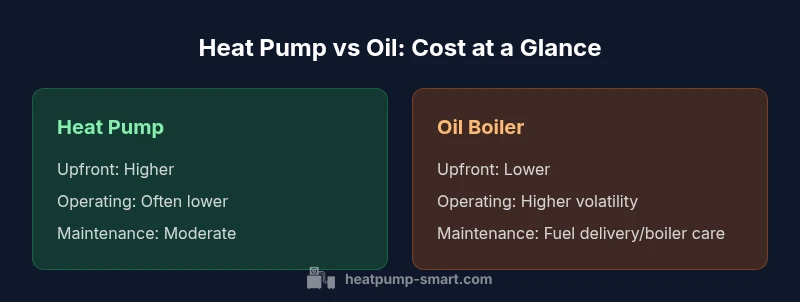
| Feature | Heat Pump | Oil Boiler |
|---|---|---|
| Upfront Cost | Higher upfront installation and equipment cost | Lower upfront cost |
| Annual Operating Cost | Typically lower; electricity-based | Typically higher; fuel-based |
| Maintenance Frequency | Moderate; annual service common | Lower maintenance frequency but fuel system requires fuel delivery and boiler service |
| Dependence on Energy Prices | Electricity prices drive savings | Oil price volatility directly affects fuel costs |
| Performance in Cold Weather | Excellent in mild to moderate cold; some backup needed in extreme cold | Stable performance with consistent fuel supply |
| Lifespan | Typically 15-25 years with proper care | Typically 10-15 years with proper care |
| Best For | Homes with good insulation and access to rebates | Lower upfront cost or limited electrical upgrades |
Advantages
- Lower operating costs over the long term in many scenarios
- Cleaner energy with no combustion emissions on-site
- Potential rebates and incentives reducing net cost
- Improved home comfort with consistent heat distribution
- Quieter indoor operation and fewer maintenance surprises
Disadvantages
- Higher upfront installation and equipment costs
- Performance varies with climate and electricity prices
- Cold climates may require supplemental heating
- Requires professional sizing and potentially electrical upgrades
Heat pumps are typically cheaper to operate than oil in well-insulated homes with reasonable electricity rates.
For most homes in moderate climates, a properly sized heat pump offers lower annual fuel costs and strong long-term savings. Upfront costs and climate considerations matter, but rebates and efficiency gains often tip the balance toward heat pumps. The Heatpump Smart team notes that a site-specific assessment is essential to confirm the payback.
Your Questions Answered
Is a heat pump cheaper than oil in all climates?
No. The cost advantage depends on climate, insulation, and energy prices. In mild climates with rebates, heat pumps tend to be cheaper to run. In very cold areas, performance and backup heating influence the economics. Heatpump Smart recommends a climate-specific assessment.
In many places, heat pumps save money, but very cold regions may require extra heat sources. Check your climate and insulation first.
What factors most affect the payback period?
Payback is driven by upfront costs, annual energy savings, electricity vs oil prices, and available rebates. Home envelope quality and system sizing also significantly influence the time needed to recoup the investment.
Upfront costs, annual savings, and rebates determine how quickly you break even.
Do rebates and incentives significantly change the economics?
Yes. Rebates and incentives reduce the net upfront cost and can shorten the payback period. They vary by location and program, so verify current offers before deciding.
Rebates can make heat pumps a much quicker win. Check local programs.
Can I convert an existing oil boiler to a heat pump?
Conversion is possible in many homes, but it depends on electrical capacity, space for units, and refrigerant considerations. A staged approach or partial upgrades can reduce disruption and expense.
A retrofit is often doable, but you’ll likely need electrical and space planning.
How does insulation affect the cost savings of a heat pump?
Better insulation reduces heat loss, allowing the heat pump to run less and more efficiently. This improves COP and shortens the payback period because you get more warmth per kilowatt hour of electricity.
Good insulation makes heat pumps work harder for less money.
What ongoing maintenance should I expect?
Regular annual servicing, filter changes, and occasional refrigerant checks are typical. Oil boilers require fuel delivery and combustion servicing. Heat pumps usually offer predictable maintenance with an energy-saving payoff.
Keep up with annual checks and filter changes for efficiency.
Top Takeaways
- Assess upfront vs operating costs for your home
- Factor insulation, climate, and energy prices into the decision
- Explore rebates and financing to improve payback
- Choose system type (ASHP vs GSHP) based on climate and property
- Prioritize proper sizing and professional installation to maximize savings