Heat Pump Cost Compared to Gas: A Cost of Ownership Analysis
A thorough comparison of upfront installation, operating costs, and payback timelines between heat pumps and gas systems, including climate effects, incentives, and maintenance considerations.


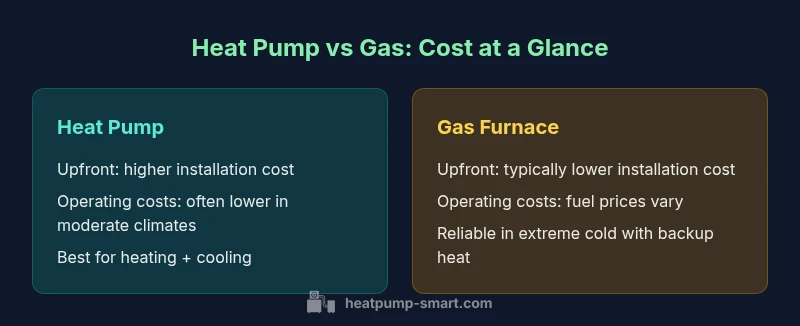
Heat pump cost compared to gas is typically higher upfront due to equipment and installation, but operating costs are often lower in moderate climates. Over a 15–20 year lifespan, heat pumps can offer a favorable total cost of ownership when incentives and stable electricity prices are in play. In very cold regions, backup heat can reduce savings, making a formal break-even analysis essential.
heat pump cost compared to gas: a baseline for homeowners
Cost presentation for heating and cooling is rarely simple, because it blends upfront investment, ongoing energy use, maintenance, and climate-driven performance. According to Heatpump Smart, the cost picture depends heavily on upfront installation requirements, equipment efficiency, and ongoing electricity prices. A heat pump system typically involves a larger initial outlay than a traditional gas furnace or boiler, particularly when ductwork or a complete heat-pump-ready air distribution system is needed. However, the long-term operating costs—driven by electricity prices, system efficiency, and real-world usage—tend to be lower in many markets, especially where electricity is competitively priced and gas prices are volatile. The broader value proposition also includes cooling in summer and improved indoor comfort, which can factor into a homeowner’s perception of value beyond simple dollars. When evaluating heat pump cost compared to gas, homeowners should quantify upfront price, expected energy use, maintenance needs, and potential backup heating requirements during cold snaps. The decision factors extend beyond price: comfort, reliability, and environmental impact all influence the final choice.
Upfront costs and installation: what changes by system
Upfront costs are driven by equipment price, installation complexity, and existing infrastructure. A heat pump system often requires a more substantial initial investment because you’re purchasing both heating and cooling capabilities, plus the inverter-driven compressor, refrigerant circuit, and potentially new or upgraded ductwork. In homes with existing ductwork that is in good condition, the incremental cost may be lower; in homes with limited or no ducting, retrofit work adds to the price. Gas furnace installations can be cheaper upfront when existing gas lines and ductwork are in place. If a home needs a full-from-scratch installation, a gas system might still be comparatively less expensive, though this gap is shrinking as heat-pump technology becomes more versatile and modular. Financing options, utility incentives, and contractor rebates can narrow upfront costs for heat pumps. The takeaway is that upfront affordability varies widely by home design, climate, and local incentive programs.
Operating costs and efficiency: how energy prices shape the math
Operating costs hinge on the system’s efficiency and local energy prices. Heat pumps convert electricity into heat with a coefficient of performance (COP) that improves overall efficiency, especially in milder temperatures. In climates with moderate winter temperatures and reasonable electricity rates, a heat pump’s annual energy use can be substantially lower than a gas furnace’s fuel consumption. Gas systems depend on natural gas or propane prices, which can be volatile. Efficiency metrics like SEER (cooling) and HSPF (heating) for heat pumps, and AFUE for gas furnaces, help translate efficiency into annual energy costs. Because electricity and gas prices vary by region, the same system can deliver different operating cost savings from year to year. A thorough comparison should include a climate-adjusted energy-price forecast and the system’s expected efficiency in winter conditions. Heatpump Smart’s analysis shows that the crossover point—the year when heat pumps become cheaper to operate—often occurs earlier in regions with stable electricity prices and milder winters.
The break-even reality: when does heat pump pay off?
Break-even analysis translates upfront costs into the time required to recoup via energy savings. Start with the installation cost differential, then estimate annual savings from reduced energy use, considering climate and usage patterns. Include maintenance costs, potential increases in electricity bills, and any backup heating requirements during extreme cold. Incentives such as rebates and tax credits can shorten the payback period, sometimes by several years. A precise calculation also accounts for the system’s expected lifespan and residual value. In practice, the break-even period for many homes in temperate climates ranges from 5 to 12 years, but this range shifts with electricity prices, natural gas prices, climate severity, and available incentives. Heatpump Smart emphasizes building a scenario that reflects your local prices and home-specific factors rather than relying on national averages.
Regional variations, climate, and incentives
Regional climate and policy landscapes strongly influence the cost picture. In milder or mixed climates, heat pumps often outperform gas in total cost of ownership due to cooling capability and steady operating costs. In regions with very cold winters, heat pumps may require supplemental resistance heat, which raises operating costs during peak cold snaps. Incentives from federal programs, state or provincial initiatives, and utility rebates frequently close the gap in upfront costs and shorten payback periods. Energy price trends matter as well: electricity price stability boosts heat-pump economics, while rising gas prices can tilt the balance toward heat pumps even more. Property type and insulation quality also affect results; better-insulated homes achieve greater savings from heat pumps.
How to run your own cost comparison: a practical checklist
To perform your own cost comparison, gather data on local energy prices (electricity and gas), installation quotes, and available incentives. Create two scenarios: a baseline gas heating system and the heat-pump option with cooling. Project annual energy use based on climate data, home size, and occupancy; adjust for seasonal extremes. Include maintenance costs, expected lifespan, and financing terms. Sensitivity analyses help: run variations for electricity price changes, gas price spikes, and different backup-heat strategies. Finally, compute a net present value or simple payback period to determine which option makes the most financial sense for your home. Use a trusted contractor or energy advisor to validate assumptions, and consider non-financial benefits such as comfort, reliability, and emissions.
Comparison
| Feature | air-source heat pump | gas furnace/boiler |
|---|---|---|
| Upfront cost (installation) | higher upfront due to equipment and potentially ductwork | lower upfront in simple retrofits with existing gas lines |
| Average annual operating cost | often lower in moderate climates with stable electricity prices | depends on fuel prices and efficiency (AFUE) |
| Lifespan | 15–20 years for many heat pumps with proper maintenance | 15–30 years for modern gas boilers with maintenance |
| Maintenance needs | regular heat pump service and coil/fan checks | annual furnace maintenance and venting checks |
| Efficiency metrics | SEER/HSPF ratings; COP effectiveness varies by outdoor temperature | AFUE efficiency rating with seasonal variations |
| Best climate fit | mild to moderate climates; cooling add-on is a bonus | very cold climates may favor gas without backup heat or require enhanced heat pumps |
Advantages
- Potentially lower operating costs in moderate climates
- Dual heating and cooling capability from one system
- Cleaner energy with no on-site combustion
- Eligible for rebates or tax incentives in many regions
- Quiet operation when properly installed
Disadvantages
- Higher upfront installation costs
- Performance can drop in extreme cold without backup heat
- Complex installation requiring qualified contractors
- Electrical capacity and backup heating needs must be planned
Heat pumps are generally a strong long-term choice in milder climates with incentives; gas can be more cost-effective upfront or in very cold areas without sufficient backup heat.
If you live in a temperate climate with stable electricity prices and available rebates, heat pumps often provide better total ownership value. In colder regions, factor backup heat and potential higher winter electricity use into the plan. A formal break-even analysis tailored to your home is essential.
Your Questions Answered
What is the typical upfront cost difference between a heat pump and a gas furnace?
Upfront installation for heat pumps is usually higher due to additional equipment and potential ductwork. Gas furnaces can be cheaper to install when existing gas lines and ducts are suitable. The delta shrinks as heat-pump technology becomes more modular and compatible with existing systems.
Heat pumps often cost more to install than gas furnaces, especially if ductwork needs upgrading. If your home already has ductwork and gas lines, the difference narrows.
Do heat pumps always save money on operating costs?
Operating costs depend on climate, electricity prices, and system efficiency. In many climates, heat pumps reduce energy bills, but very cold regions may see higher costs during peak cold periods if auxiliary heat is used. A precise forecast helps determine true savings.
Operating costs depend on climate and energy prices; savings are common but not guaranteed in very cold areas.
How does climate affect heat pump efficiency?
Heat pumps are most efficient in mild to moderate climates. In very cold weather, efficiency can drop, though cold-climate models and auxiliary heat reduce this gap. The performance difference between models matters a lot in extreme climates.
Cold weather reduces efficiency, but newer models perform better with backup heat.
Are there incentives for heat pumps?
Many regions offer rebates, tax credits, or utility incentives for heat pumps. Eligibility varies by location and system type, so check local programs and eligibility before purchasing.
Yes—many incentives exist, but rules vary by region.
What maintenance is required for heat pumps?
Annual professional inspections, filter changes, and periodic coil and fan cleaning keep performance high. Compare with gas systems that require furnace servicing and vent checks.
Regular professional maintenance keeps heat pumps running efficiently.
How long does a heat pump last compared to gas?
Heat pumps typically last 15–20 years with proper care; gas furnaces can last 15–30 years. Lifespan depends on usage, maintenance, and climate-related stress.
Lifespan varies; heat pumps usually 15–20 years, gas furnaces often 15–30.
Should I consider a hybrid approach (heat pump with backup heating)?
A hybrid system pairs a heat pump with a gas furnace or a high-efficiency backup heater. This can optimize cost and reliability in variable climates, delivering better year-round comfort.
A hybrid system may offer the best balance of cost and reliability in mixed climates.
How do I start a cost comparison for my home?
Begin with an energy-use baseline for your home, gather installation quotes, and note local incentives. Build two scenarios (heat pump vs gas) and perform a break-even analysis considering climate, usage, and utility rates.
Start with your energy use, quotes, and incentives, then compare heat pump and gas scenarios.
Top Takeaways
- Estimate total cost of ownership, not just upfront price
- Consider climate and backup heating needs
- Factor in incentives and electricity vs fuel prices
- Use a clear break-even analysis for your home
- Check local rebates and utility programs