How Much Does an Air Source Heat Pump Cost in 2026?
Discover the true installed cost of air source heat pumps in 2026, including equipment, installation, rebates, regional price differences, and practical steps to estimate your project for homeowners, builders, and property managers.


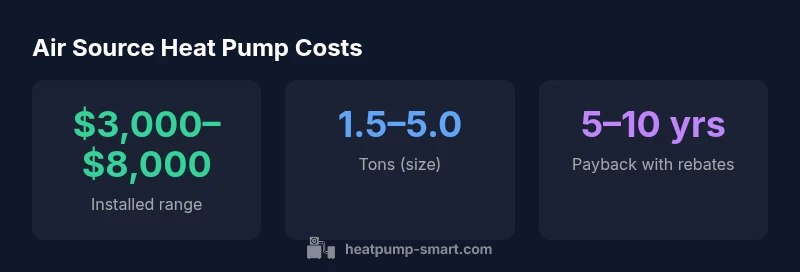
Air-source heat pump installed costs typically range from $3,000 to $8,000 for a standard home, depending on system size, efficiency, climate, and labor rates. Higher-efficiency and ducted configurations push costs toward the upper end, while simpler, smaller installs stay toward the lower end. Rebates and incentives can further reduce net price.
What drives the cost of an air source heat pump?
Pricing for an air-source heat pump isn't a single number. It reflects the balance of equipment price and installation complexity, plus regional labor markets and any retrofit work. A larger, higher-efficiency unit cools and heats more effectively but comes with a higher upfront price. If your home has existing ductwork in good condition, labor costs drop; if ducts need replacement or you require a new indoor air handler, the price climbs. Climate matters too: colder regions may need auxiliary heating during shoulder seasons, affecting both equipment choice and total cost. According to Heatpump Smart, the most meaningful drivers are (a) system size relative to home load, (b) SEER/COP efficiency targets, and (c) the extent of installation work. In practice, homeowners who opt for two-stage or inverter-driven models typically see higher upfront costs but greater long-term energy savings. Small homes with straightforward installs tend to land at the lower end of the cost spectrum, especially when rebates apply. The bottom line is: start with how big the system needs to be and how efficiently you want it to operate, then factor in the local price landscape. The Heatpump Smart team found that regional price differences can swing total installed costs by a few thousand dollars, making quotes essential.
Equipment cost vs installation and labor
A common misunderstanding is to separate equipment costs from installation almost entirely. In reality, the two are intertwined. The price of the outdoor unit and indoor air handler varies with capacity and efficiency, typically representing a substantial portion of overall cost. However, installation - including refrigerant line set runs, electrical work, thermostat integration, and any ductwork modifications - often accounts for a comparable share. If your home already has a compatible ducted system, incremental labor may be lower, whereas retrofit projects can require extensive air sealing, controller integration, and zone controls, boosting labor hours and price. Permits and code compliance add another layer of cost, particularly in multifamily buildings or retrofit projects. Heatpump Smart’s analysis shows that a well-planned install with minimal retrofit generally yields a smoother, more cost-effective experience, while complex retrofits can push total prices higher than the average. Budget for contingencies such as electrical upgrades or refrigerant line work to avoid surprises on installation day.
Climate, home layout, and efficiency impact on price
Climate plays a pivotal role in heat pump cost decisions. Colder climates may drive a preference for high-efficiency models with supplemental heat options, elevating equipment costs. In warmer regions, the heating requirement is less intense, so costs trend toward mid-range equipment and simpler configurations. Home layout matters as well: multi-story homes, long refrigerant runs, or remote zones increase installation time and labor costs. Ducted systems with smart zoning tend to be pricier than ductless mini-splits but can deliver more even comfort and lower operating costs in larger homes. Efficiency targets—measured by SEER and COP—directly influence both price and long-term energy bills. While a higher SEER/COP unit costs more upfront, it typically delivers greater savings over its lifetime, especially in regions with rising electricity rates. The Heatpump Smart analysis highlights that investing in a higher-efficiency model often pays for itself through energy savings, rebates, and improved comfort. Always balance upfront price with long-term value when evaluating options.
Rebates, incentives, and regional price variation
Rebates and incentives significantly influence the net cost of air source heat pumps. Federal, state, and local programs can reduce upfront costs, sometimes by a substantial percentage, depending on your location and the system features. Programs may vary annually, so it’s essential to verify current eligibility before committing. Additionally, many utility providers offer time-of-use rate plans and energy-efficiency rebates that reward higher efficiency or demand-response capable systems. These incentives not only lower the sticker price but can shorten the payback period, increasing the overall value proposition. Regional price variation also matters: labor rates, permit costs, and supply chain dynamics differ across cities and states, which is why two quotes for the same model can diverge by thousands. Heatpump Smart emphasizes building a cost baseline that includes potential rebates and a reasonable range for regional labor when comparing bids.
How to estimate costs and compare quotes
Estimating costs starts with a verified load calculation to determine the correct system size. Get at least three written quotes from reputable HVAC contractors, ensuring each quote includes: equipment price, installation labor, ductwork or rewiring needs, permits, and any disposal fees for the old unit. Ask for a breakdown of the labor hours and materials, plus a timeline for the project. If ductwork is required, request a duct design and leakage test. Incentives should be itemized separately so you can see the net price after rebates. Don’t hesitate to negotiate; installers often have some flexibility on add-ons or preferred equipment. Finally, compare the long-term value: model efficiency, warranty coverage, expected annual operating costs, and maintenance needs. A smart way to compare is to normalize quotes to the same model and configuration, then evaluate the net present value of expected energy savings over 10–15 years. Heatpump Smart recommends focusing on total cost of ownership rather than upfront price alone.
Value beyond price: efficiency, comfort, and longevity
Price is only part of the picture. A well-sized air source heat pump delivers better comfort in winter and summer, smoother temperature transitions, and lower ongoing energy costs than many conventional options. The upfront investment often yields benefits over the system’s lifespan, especially when paired with smart thermostats and properly insulated ductwork. Maintenance costs are typically modest and include annual checks and coil cleaning, optional filter changes, and quick refrigerant checks if needed. When you account for energy savings and potential rebates, many homeowners find that the long-term value justifies the initial cost. Heatpump Smart’s analysis indicates that the most satisfied customers are those who invest in professional sizing, high-quality installation, and a system designed for their climate and usage patterns.
Typical cost components for air source heat pump installations
| Item | Range | Notes |
|---|---|---|
| Equipment price | $2,000–$6,500 | Unit cost varies by model/SEER/COP |
| Labor & installation | $1,000–$2,500 | Ductwork, permits, retrofit work |
| Total installed | $3,000–$8,000 | Typical home installation |
| Rebates & incentives | Varies by program | Local and national incentives |
Your Questions Answered
What components are included in the cost?
Costs typically include the outdoor unit, indoor air handler, refrigerant lines, electrical work, permits, and disposal of the old equipment. Ductwork and controls may add to the total depending on the home's current setup.
The cost covers the unit, installation labor, wiring, and any needed duct or control work.
Do rebates affect the installed price?
Yes. Rebates and incentives reduce the upfront price, changing the net cost. Programs vary by location and year, so check current opportunities during planning.
Rebates can significantly cut your upfront expense.
Is an air source heat pump cheaper than a gas furnace?
Upfront costs for heat pumps are often lower than for gas furnaces, and they provide cooling too. Total cost depends on energy prices, maintenance, and incentives over the life of the system.
Usually cheaper upfront, with potential long-term savings depending on energy costs.
How long does installation take?
Most residential installs take 1–3 days, depending on ductwork, electrical work, and any retrofit needs. Complex retrofits can extend the schedule.
Most installs take a day or two.
What maintenance is required?
Annual system checks and coil cleaning are common maintenance tasks. Filter replacement and refrigerant checks may be needed periodically, depending on use and model.
Regular annual service keeps the system running well.
“Cost is only one side of the equation. Proper sizing, installation quality, and incentives determine the true value an air source heat pump delivers.”
Top Takeaways
- Get multiple quotes to compare costs.
- Consider rebates to reduce net price.
- Size the system correctly to avoid waste.
- Account for ductwork and retrofit needs.
- Factor long-term savings into the value.