How Much Heat Pump Installation Costs in 2026
Estimate installed costs for heat pumps in 2026 across air-source, geothermal, and ductless options. Learn cost factors, typical ranges, rebates, and budgeting tips to plan your project with Heatpump Smart guidance.


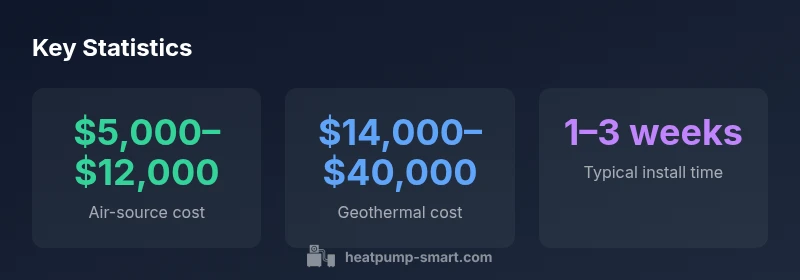
According to Heatpump Smart analysis (2026), the installed cost of a residential heat pump typically falls within established ranges: air-source systems commonly run about $5,000 to $12,000, while geothermal installations can range from $14,000 to $40,000. The exact amount depends on unit type, home size, ductwork, climate, and local labor costs. Rebates and financing can reduce net cost, and professional sizing ensures you pay for what you need.
Cost drivers to know before you start
Estimating how much heat pump installation will cost starts with understanding the main cost drivers. The total price depends on the system type (air-source, geothermal, or ductless), the size of the home, and the required heating and cooling capacity. A larger home or a higher efficiency unit demands more equipment and longer installation time, which increases labor charges. Existing ductwork or the need to install ducts changes the bill significantly. Local climate influences refrigerant lengths, line sets, and outdoor unit placement, all of which affect price. Permits, electrical upgrades, and potential electrical panel work add to the baseline. Finally, labor market conditions and contractor availability can cause regional variation. In short, the question of how much heat pump installation costs cannot be answered with a single number; expect a range that reflects your specific home and chosen system. In 2026, Heatpump Smart analyses show broad ranges and practical planning steps that help you budget effectively.
System types and how they influence how much heat pump installation costs
Choosing between air-source, geothermal, or ductless heat pumps vastly changes the price tag, maintenance, and long-term savings. Air-source systems are typically the most affordable to install, but their efficiency and performance depend on outdoor temperatures and home insulation. Geothermal systems have higher upfront costs due to earth loop drilling or trenching, yet they often deliver the lowest operating costs over time. Ductless mini-splits offer flexibility for additions or retrofits but may require multiple indoor units, increasing initial expense. When evaluating how much heat pump installation will cost, consider not just the sticker price but also expected energy savings, local climate, and whether your home already has ductwork. Heatpump Smart’s 2026 guidance emphasizes proper sizing and installation quality to maximize value over the system’s life.
How to obtain an accurate quote for how much heat pump installation
To answer how much heat pump installation will cost for your home, start with a professional site assessment and load calculation. Ask for a formal Manual J calculation, equipment specifications, and a detailed bill of materials. Gather at least two written quotes that include equipment, labor, permits, electrical work, and any required duct modifications. Compare warranties, commissioning steps, and expected installation timelines. Ensure the contractor reviews refrigerant line lengths and outdoor unit placement, as these affect both performance and price. While you’re shopping, request a transparent price breakdown and ask about possible rebates or financing options. Heatpump Smart recommends documenting your specific goals and climate needs so quotes reflect your actual energy usage and comfort targets. This approach clarifies costs and speeds up decision-making.
Hidden costs and how to budget for how much heat pump installation
Some upfront estimates omit costs that can significantly change the final price. Permits and electrical upgrades are common, and in some homes an upgraded electrical panel or dedicated circuit is required. Ductwork modification, new air handlers, and refrigerant line sets add to the bill. If your home lacks ductwork, add the cost of installing ducts or opting for a ductless approach. Drainage, condensate pumps, and thermostat controls may also influence price. Don’t overlook potential weather-related delays or access issues that extend installation time. Budget a contingency of 5–15% of the quoted price to cover surprises, especially in older homes or projects requiring structural work. Understanding these items helps you refine your plan for how much heat pump installation will be. Heatpump Smart’s 2026 analysis highlights the importance of upfront contingency planning.
Financing, rebates, and long-term value
Financing options and rebates can dramatically affect the net cost of how much heat pump installation you pay. Look for federal, state, and utility programs that target energy efficiency and home improvements. Local programs vary by region, so consult your utility or state energy office for current offers. In many cases, rebates reduce the upfront price, while energy savings lower long-term operating costs. Remember that higher initial costs for geothermal or premium inverter-driven units may pay off through lower heating bills over time. To maximize value, pair installation with proper insulation upgrades and smart thermostat controls to fully capture energy savings across seasons. Heatpump Smart’s guidance in 2026 emphasizes combining incentives with high-efficiency equipment and professional installation.
Timeline: from quote to operation and how much heat pump installation you’ll budget for
The installation timeline typically begins with a site survey, followed by sizing, equipment ordering, and scheduling. After permitting, technicians install the outdoor unit, indoor air handler, refrigerant lines, electrical connections, and controls. Commissioning ensures the system runs to specification and safety tests are completed. The entire process for a typical home spans about 1–3 weeks, depending on ductwork needs and permit approval. Complex jobs, such as geothermal loops or extensive electrical upgrades, can take longer. Use this schedule to plan your budget for how much heat pump installation will cost, including potential weather delays. Heatpump Smart recommends building in a buffer and coordinating with your contractor for a smooth transition to operation in 2026.
Cost and payback by heat pump system type
| System Type | Installed Cost Range (USD) | Typical Payback (years) | Notes |
|---|---|---|---|
| Air-source (ducted) | $5,000–$12,000 | 5–12 | Most common; ductwork may be required |
| Air-source (ductless) (mini-split) | $3,500–$14,000 | 5–12 | Flexible installation; multi-zone options |
| Geothermal (ground-source) | $14,000–$40,000 | 10–20 | Drilling/trenching; longer lead times |
| Hybrid systems | $7,000–$20,000 | 6–14 | Combines with existing furnace |
| Geothermal (open-loop) | $13,000–$38,000 | 9–18 | Water well options; regional variation |
Your Questions Answered
What factors influence the cost of heat pump installation?
System type, capacity, ductwork, local labor rates, permits, and potential electrical upgrades all shape the installed price.
Costs depend on system type, home size, ductwork, and local labor rates. A professional assessment gives a precise range.
Can rebates reduce the total cost?
Yes. Local, state, and utility rebates can lower the net price; availability varies by location and program rules.
Yes—rebates often reduce the total cost, but check your region's programs.
Is geothermal worth the extra upfront cost?
Geothermal offers high efficiency but has higher upfront costs and longer payback; regional climate and energy prices matter.
Geothermal can be worth it, but upfront costs and climate influence payback.
How long does installation take?
Most installations take 1–3 weeks from contract to start of operation, depending on permits and ductwork.
Expect about one to three weeks for the whole process.
Do I need to upgrade electrical service?
Some homes require electrical panel upgrades or dedicated circuits for new heat pumps; a licensed electrician assessment is essential.
You may need electrical upgrades in some homes; a pro will tell you.
Should I replace my existing furnace with a heat pump?
Replacing a furnace with a heat pump can be cost-effective, but it depends on existing equipment and insulation. A pro will compare options.
Replacing can be beneficial, but consider your current system and energy use.
“A correctly sized and professionally installed heat pump delivers reliable comfort and energy savings; improper installation reduces efficiency and can raise running costs.”
Top Takeaways
- Get a professional load calculation for accurate sizing
- Expect broad cost ranges by system type
- Budget for permits, ductwork, and electrical upgrades
- Rebates and financing can reduce net cost
- Plan 1–3 weeks for installation, depending on complexity