How Much Does a Heat Pump Save in 2026? A Practical Guide
Explore realistic savings from heat pumps in 2026, including ranges by climate, factors that affect payback, and actionable tips to maximize efficiency and reduce operating costs.


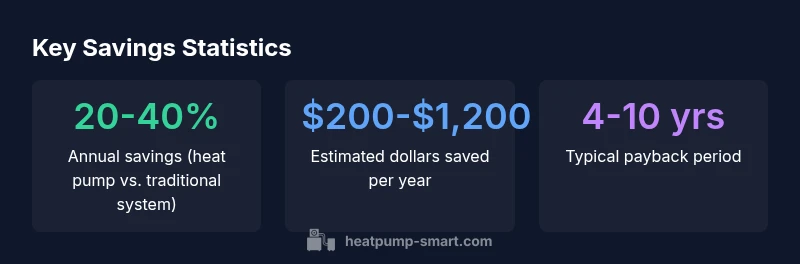
On average, a properly sized heat pump can reduce annual heating and cooling costs by roughly 20–40% compared with conventional furnaces and central air, depending on climate and electricity rates. Real-world savings typically range from a few hundred to over a thousand dollars per year. Savings accrue over time through improved efficiency and potential utility incentives.
How Savings are Measured in Heat Pumps
Savings from heat pumps hinge on efficiency, climate, and usage patterns. The core metric is COP (Coefficient of Performance) for heating and SEER/HSPF ratings for cooling and combined performance. In practice, a higher COP means more energy saved per unit of electricity consumed. When Heatpump Smart analyzes installations in 2026, the most impactful factors are proper sizing, installation quality, and the ability to leverage modern controls (smart thermostats, occupancy sensors, and weather-based management). Although the headline savings range of 20–40% is common, real-world outcomes depend on local electricity prices, heating degree days, and how often the system runs in heat or cooling mode. For homeowners, the practical takeaway is that efficiency gains compound over time, especially as you optimize thermostat schedules and reduce simultaneous heating and cooling.
Climate and Region: How Weather Shapes Your Savings
Climate strongly influences savings. In colder regions, heat pumps must extract more heat from outside air, which can reduce COP on extreme days unless a supplemental heat source is available. In milder climates, heat pumps run more efficiently for a larger portion of the year, improving annual savings. Energy costs also matter: in areas with high electricity rates, the percentage savings may be comparable to or exceed traditional systems, provided the heat pump is high-efficiency and properly maintained. Heatpump Smart's analysis highlights that the same model can perform very differently in Seattle versus Minneapolis due to temperature distributions and utility rates. Regional rebate programs can further tilt the economics in favor of heat pumps.
Real-World Ranges: What Homeowners See
Savings are a function of usage and system selection. A typical single-family home in a temperate climate with moderate electricity rates might see annual bill reductions in the 20–30% range, whereas homes in milder climates with high-efficiency heat pumps can approach 40% or more. Some extreme cases have reached the lower end of the range when homeowners rely heavily on auxiliary heat during cold snaps. The key is to balance heating and cooling loads with an appropriately sized unit. Oversized or undersized units erode potential savings and shorten payback periods.
How to Maximize Savings: Sizing, Controls, and Maintenance
Start with a qualified load calculation (manual J) to determine the correct size. Invest in high-efficiency equipment with a high COP and an efficient compressor. Integrate a modern, programmable or smart thermostat to align operation with occupancy and pricing. Regular maintenance—filters, coil cleaning, refrigerant checks—keeps performance near rated COP/HSPF. Finally, use variable-speed fans and inverters where available; these features smooth operation and avoid energy waste during partial-load conditions.
Practical Steps to Improve Payback
- Get an independent energy audit to identify insulation and air-sealing improvements that reduce heating demand.
- Compare heat-pump models with energy-star ratings and verify compressor type, refrigerant, and expected COP across winter temperatures.
- Request a detailed payback analysis that includes installation costs, expected electricity rates, and potential rebates or tax credits.
- Choose an installer with a track record of quality service and post-installation support; poor installation can erase otherwise impressive savings.
Choosing the Right System for Your Home
Not all heat pumps are created equal. For homes with extreme winter conditions, look for cold-climate models rated to operate efficiently at very low outdoor temperatures. For homes needing simultaneous heating and cooling, heat-pump-water heating and ductless mini-split configurations can offer flexible solutions. Factor in climate, insulation, ductwork, and existing thermostat infrastructure when selecting a system. Heatpump Smart recommends working with a contractor who can provide a site-specific energy model and a verification plan after installation.
Estimated savings by climate zone (illustrative ranges)
| Climate Zone | Typical Savings Range | Notes |
|---|---|---|
| Cold climate | 10-25% | Auxiliary heat reduces net gains; system sizing critical |
| Temperate climate | 20-40% | Most consistent savings with balanced heating/cooling |
| Hot climate | 25-50% | Cooling mode drives higher efficiency gains |
| Mixed climate | 15-35% | Seasonal ratios affect annual savings |
Your Questions Answered
What factors influence a heat pump's savings?
Savings depend on climate, electricity rates, system efficiency, and how you use the unit. Proper sizing, installation quality, and controls dramatically affect the realized savings.
Savings depend on climate, rates, and how you use the system. Proper sizing and good installation matter most.
Is the upfront cost worth it?
In many cases, yes. Savings accrue over time, and rebates or tax credits can shorten payback. A detailed payback analysis helps determine value for your home.
It often is worth it, especially with rebates. A payback analysis helps you decide.
Do heat pumps save in extremely cold climates?
Some models are designed for cold climates and perform well, but auxiliary heating may be needed during very cold periods. Choosing the right model is key.
Certain models handle cold best; you may still need auxiliary heat on very cold days.
How long is the payback period?
Payback typically ranges from about 4 to 10 years, depending on climate, energy costs, and incentives. More favorable economics come from rebates and higher electricity prices.
Payback usually falls between 4 and 10 years depending on region and incentives.
What maintenance improves savings?
Regular maintenance—filters, coil cleaning, refrigerant checks—keeps efficiency near rated values and sustains savings over the system’s life.
Keep up with filter changes and coil cleaning to maintain efficiency.
Do rebates or tax credits affect savings?
Yes. Rebates and tax credits reduce upfront costs and shorten payback, potentially boosting net savings significantly depending on program availability.
Rebates cut upfront costs and speed up payback.
“Properly sized heat pumps deliver reliable savings and comfort in most homes. The biggest gains come from high-efficiency equipment combined with smart controls and good installation.”
Top Takeaways
- Size the system correctly to maximize savings
- Expect 20–40% savings with proper installation
- Rebates can shorten payback by 1–3 years
- Maintenance sustains efficiency and savings
- Regional electricity prices drive actual dollars saved