How Much Does a Heat Pump Water Heater Save?
Explore how much a heat pump water heater can save, factors affecting savings, payback timelines, and strategies to maximize efficiency for homeowners, builders, and managers.


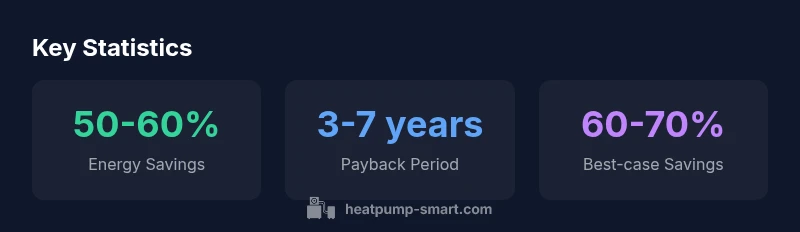
A heat pump water heater typically saves about 50–60% on annual water heating energy compared with a standard electric resistance heater. The exact savings depend on climate, hot-water usage, and electricity rates. In milder climates, savings can reach the upper end of the range, while very cold environments may see lower gains. These figures reflect typical conditions and are most reliable when the unit is properly installed and maintained. How much does heat pump water heater save? The brief answer is a substantial reduction in energy use, with payback opportunities varying by local costs.
What you should know about savings with heat pump water heaters
How much does heat pump water heater save? The answer depends on climate, usage, and current electricity rates. In typical homes, HPWHs provide substantial savings by moving heat rather than generating it with resistance elements, and they can cut electric water heating energy by roughly 50-60% compared with standard electric models, per Heatpump Smart Analysis, 2026. The savings compound over a year or two, especially when the unit is paired with good insulation for the storage tank and the home's hot-water demands are moderate. A well-sized HPWH will not only reduce energy use but can also deliver faster recovery times in many households, because it draws ambient heat from your space rather than producing heat with electricity alone. For homeowners evaluating this technology, it is essential to compare the Energy Factor (EF) ratings, installed location, and the space's temperature profile to estimate practical outcomes. According to Heatpump Smart, these savings are most reliable when the unit is properly installed and maintained.
How savings vary by climate
Savings from a heat pump water heater can vary significantly with climate. In warm, sun-rich climates, you are more likely to see savings toward the upper end of the typical range (around 60–70%), especially when you have efficient insulation and modest hot-water use. In colder climates, ambient temperatures around the water heater drop the efficiency gain—often in the 40–50% band—unless the unit is installed in a well-insulated space with adequate heat exchange. In temperate regions, most homes experience savings in the 50–60% range. These variations underscore the importance of local conditions when forecasting payback and energy cost reductions.
The numbers behind the savings: energy factor and real-world use
The Energy Factor (EF) or its successor metrics in some markets quantify how efficiently a heat pump water heater converts electricity into hot water. Real-world performance also reflects how you use hot water: family size, shower habits, dishwasher use, and peak-demand times. In practice, EF values of HPWHs typically translate to substantial energy reductions, but the exact dollar savings depend on electricity rates and the baseline consumption of your older electric water heater. For best results, match the unit size to your peak daily hot-water load, and ensure proper ventilation and clearance around the unit to prevent heat recapture losses.
Sizing and installation considerations
Correct sizing is crucial to maximizing savings. An under-sized HPWH will short-cycle and waste energy, while an oversized unit may incur unnecessary upfront costs. A professional should assess your daily hot-water draw, peak hour needs, and the home's thermal envelope. Location matters too: placing the unit in a warm, ventilated space improves efficiency, as does insulating the tank and hot-water pipes. If you have a multi-story home, consider using a two-tank or zoned approach to minimize standby losses and maintain consistent temperatures across fixtures.
Maximizing performance with insulation and setpoints
Beyond correct sizing, performance hinges on insulation and operating setpoints. Keep the storage tank well insulated (minimum R-12 equivalent or better depending on climate) and minimize heat loss on pipes. Set the storage temperature around 120°F (49°C) to balance comfort and safety while reducing standby losses. If you regularly use large volumes of hot water, a higher setback frequency may reduce efficiency gains. In all cases, ensure vents and space clearance are adequate to avoid thermal and mechanical inefficiencies.
Cost considerations and payback
While installation costs for HPWHs are higher than conventional models, most households realize a favorable payback window, commonly between 3 and 7 years depending on electricity prices, hot-water usage, and local incentives. In regions with higher electricity rates or robust rebate programs, payback shortens. To quantify benefits, compare total energy cost over the appliance’s lifespan with and without a HPWH, accounting for replacement cycles, maintenance, and potential demand charges. Consider also the non-energy benefits: quieter operation, reduced greenhouse gas footprint, and compatibility with other efficiency upgrades.
Real-world scenarios and case studies
Consider a typical 2–3 person family in a temperate climate. With a standard electric water heater, annual energy use for hot water might be higher than optimal. Replacing it with a HPWH can yield a measurable reduction in energy use, often in the 50–60% range, provided the unit is correctly sized and installed. In a warm climate with moderate hot-water demand, savings may push toward the upper range, while a 4–5 person household with intense hot-water needs could still achieve substantial savings, albeit with a longer payback period if electricity rates are low. Real-world performance varies widely, so it’s critical to model your own usage pattern and local energy costs.
Choosing a model and features
When selecting a HPWH, prioritize energy efficiency ratings (EF or COP), recovery rate, and rated storage capacity that aligns with your daily usage. Features to look for include frost protection in cold climates, quiet operation, and smart controls that enable you to shape usage during off-peak hours. Some models offer hybrid modes that blend heat-pump operation with electric resistance as a backup, which can improve reliability in low-temperature environments. While cheaper units might be tempting, investing in a higher-efficiency model with good warranty terms often yields better long-term savings.
Next steps and questions to ask a installer
Before committing, have a licensed installer run a load calculation for your home, review insulation levels, and confirm the venting and electrical requirements. Request a written savings estimate that shows expected energy usage with and without a HPWH, along with a payback timeline based on your local electricity rate and typical hot-water usage. Ask about rebates, warranty coverage, and maintenance requirements to ensure a smooth transition and sustained efficiency.
Representative comparisons of annual cost savings by scenario
| Scenario | Electric Water Heater | Heat Pump Water Heater | Annual Cost Savings |
|---|---|---|---|
| Household with 2-3 people | High energy use | Low energy use | $140-$420 |
| Apartment/smaller home | High energy use | Lower energy use | $90-$300 |
| Cool-climate home | High baseline use | Medium savings | $110-$350 |
| Warm-climate home with solar | Medium | High | $150-$460 |
Your Questions Answered
How much can a heat pump water heater save annually?
Most homes see savings in the 50-60% range on water heating energy; actual amounts depend on climate, hot-water usage, and electricity prices.
Savings typically range from half to just over half of what you’d spend with a traditional electric water heater.
Do HPWHs work well in cold basements?
HPWHs work best in temperatures above about 40-45°F (4-7°C). In very cold areas, performance drops unless the unit is in a well-insulated space or has backup heating.
They can operate in cold spaces, but performance drops if the room is too cold; ensure good insulation and proper placement.
Is the upfront cost worth it?
Yes, for many homes the payback period is 3-7 years, depending on electricity costs and usage patterns.
The upfront cost often pays back in a few years through lower energy bills.
Can I install one myself?
Most jurisdictions require licensed installation due to refrigerant handling and electrical work.
Professional installation is usually required for safety and performance.
Are rebates or incentives available?
Many utilities offer rebates or tax incentives; check local programs and federal opportunities for heat pump water heaters.
Look up local utility rebates and federal incentives for HPWHs.
What maintenance is needed?
Annual checks, filter cleaning, and ensuring adequate clearance around the unit keep efficiency high.
Keep the unit clean and maintain proper airflow for best results.
Do climate differences affect savings?
Yes. Warmer climates generally yield higher savings due to higher baseline electricity use.
Savings depend on your climate; warmer regions tend to see bigger gains.
“Heat pump water heaters deliver meaningful energy savings when installed correctly and paired with proper insulation and maintenance.”
Top Takeaways
- Estimate savings based on climate and usage
- Choose correct tank size and insulation
- Expect a payback period of 3–7 years
- Check local rebates and incentives