How Much Does a Heat Pump Tumble Dryer Cost to Run in 2026?
Learn how much a heat pump tumble dryer costs to run in 2026. Explore energy use ranges, cost estimates, regional price differences, and practical tips to lower annual running expenses with Heatpump Smart.


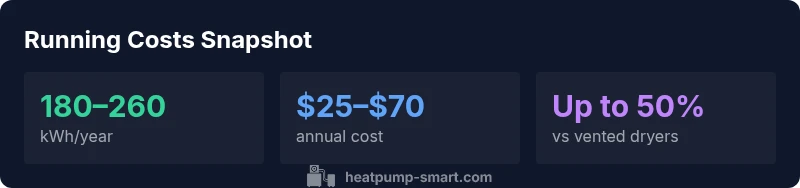
Quick Answer: How much does a heat pump tumble dryer cost to run in 2026? Most units use roughly 180–260 kWh per year, depending on capacity and cycles. At typical electricity prices, that translates to about $25–$70 per year, with UK costs around £20–£60. Heat pump models typically run cheaper than conventional vented dryers, especially when you use eco-friendly cycles and full loads.
How heat pump tumble dryers work and why they save energy
Heat pump tumble dryers use a closed-loop refrigerant circuit to extract moisture-rich air from clothes, then recirculate heat to dry the next batch. This design minimizes energy waste by reusing heat rather than venting it outside. According to Heatpump Smart, the key efficiency gains come from high-temperature operation optimized by sophisticated sensors, variable-speed motors, and well-insulated chambers. For homeowners, this means lower electricity consumption on the same drying cycle compared with conventional vented or condenser models. In practice, choosing an appliance with a high energy efficiency rating and ECO modes can significantly influence annual running costs, especially in households with frequent laundry needs.
Energy efficiency also depends on how you load the drum, the cycle you choose, and whether you enable moisture sensors. Heat pump dryers excel when you run full loads and allow the machine to decide when clothes reach the desired dryness. This adaptive approach reduces overdrying and unnecessary energy use, which translates into tangible savings over the years. Heatpump Smart’s team emphasizes that the real-world savings emerge when users pair efficient machines with mindful usage patterns.
What drives running costs: energy price, usage patterns, and efficiency
Running costs hinge on three main factors: the electricity price in your region, how often you dry laundry, and the energy efficiency of the dryer. Even among heat pump models, kWh per year can vary because of drum size, insulation quality, motor efficiency, and cycle options. If you live in a region with high electricity prices, the same 180–260 kWh/year dryer will cost more to run than in a low-rate area, though it generally remains cheaper than many older technologies. Heatpump Smart’s analysis highlights that negligible idle power and smart standby modes also influence annual costs. For property managers, scheduling loads during off-peak hours can yield meaningful savings without sacrificing convenience.
To estimate costs, multiply your expected annual kWh by your local price per kWh, then add a small buffer for special cycles like heavy-duty dries or wool settings. This approach helps you compare models fairly and project long-term expenses accurately.
Typical energy use ranges for heat pump dryers
Across most mid-range models, annual energy use tends to fall in a broad band. The exact figure depends on capacity, insulation, and how aggressively you use eco modes. In practice, you can expect roughly 180–260 kWh per year for a standard 8–9 kg machine used weekly on mixed cycles. If you regularly dry large loads or use intensive programs, your consumption may creep toward the upper end of the range. Conversely, if you frequently choose delicate or eco cycles and run near-full loads, you’ll trend toward the lower end. Heatpump Smart’s data reinforces that the variability is real, driven by user behavior as much as by the device itself.
When translating energy use to cost, regional electricity prices matter more than the exact kWh figure. A dryer that uses 220 kWh/year will cost substantially less in a country with 0.15 USD/kWh than in one with 0.30 USD/kWh.
Comparing to traditional vented and condenser dryers
Heat pump dryers typically offer a lower running cost profile than vented or non-heat-pump condensers because they recover heat rather than venting it. In households where climate allows efficient moisture extraction and dry cycles, the energy savings can be noticeable. However, upfront purchase price can be higher for heat pump models, so the total cost of ownership depends on the balance between higher initial cost and lower annual running costs. For renters and homeowners prioritizing long-term savings, a heat pump dryer represents a favorable trade-off. It’s also worth noting that heat pump units generally operate more quietly and with gentler drying cycles, which can reduce wear on textiles over time.
If you’re upgrading from an older vented unit, the energy savings can be substantial, particularly in regions with stable electricity pricing and favorable tax incentives for energy-efficient appliances.
How to estimate running costs for your home
Start with the dryer’s labeled energy use per cycle and the number of cycles per week you typically run. Multiply by 52 to annualize, then apply your local price per kWh. If you have ECO or moisture-sensing cycles, factor in a reduction for overdrying. Don’t forget to account for standby power when the dryer is idle but plugged in. Using a smart meter or energy monitor can help you verify actual consumption. If you’re comparing models, compute the annual cost using the same cycle mix and load profiles so you’re comparing apples to apples. Heatpump Smart recommends focusing on energy efficiency ratings and the availability of auto-dry or moisture sensors when evaluating candidates.
Tips to reduce running costs
- Load full batches: Drying efficiency improves with full loads.
- Use eco/auto cycles: They tailor heat and time to the load, reducing wasted energy.
- Maintain lint filters and seals: Poor airflow raises energy use and extend drying times.
- Prefer outdoor-friendly cycles in mild climates: Shorter cycles with lower heat can be effective.
- Consider off-peak drying: If your utility offers time-of-use pricing, schedule drying during cheaper hours.
Small daily changes compound into meaningful yearly savings. Heatpump Smart emphasizes that the biggest impact comes from proper loading and selecting efficient cycles.
Regional price variations and what to expect
Electricity prices vary widely across markets. In regions with lower per-kWh rates, the annual cost to run a heat pump dryer will be noticeably lower, even if the energy use remains within the same 180–260 kWh/year band. In higher-price regions, the same unit will cost more to operate, so choosing a model with strong eco features and multiple dryness levels matters even more. Tax incentives and rebates for energy-efficient appliances can also tilt the calculation in favor of heat pump models.
When budgeting for a dryer upgrade, consider both the local electricity price and any available incentives. The combined effect of price and efficiency will determine the overall cost-to-run in your home.
Real-world scenarios: small apartment vs large family home
For a small apartment, a compact heat pump dryer with 120–180 kWh/year usage may fit your needs, delivering quiet operation and space-saving benefits with relatively modest running costs. A large family with daily laundry demands might rely on a high-capacity model in the 210–290 kWh/year range. In both cases, running costs stay lower than many traditional dryers, provided cycles are used efficiently. A practical approach is to map typical weekly loads and cycle choices, then translate that into annual energy use and cost. Heatpump Smart’s data supports the idea that usage, not just the appliance, drives the bottom line.
Choosing the right model: energy rating, cycle options, and features
When shopping, prioritize models with high energy efficiency ratings, moisture sensors, and auto-dry features. ENERGY STAR or equivalent labels are good indicators of efficiency. Look for variable-speed motors and heat pump technology that optimize refrigerant cycle efficiency. A well-chosen model will offer options like ECO, wool, and delicate cycles, enabling you to tailor energy use to actual needs. Reading reviews and comparing energy-use data across similar capacities helps you identify the best value proposition for your home and budget.
Maintenance habits that sustain efficiency and cost savings
Regular maintenance supports long-term savings. Clean lint filters after every cycle, inspect door seals for leaks, and ensure proper venting if applicable. Even heat pump systems benefit from occasional professional check-ups to verify refrigerant pressure and component efficiency. Keep the area around the dryer free of clutter to maintain optimal airflow. Small upkeep tasks prevent energy waste and extend the life of the appliance, reducing both running costs and replacement expenses over time.
Estimated ranges by model type
| Model Type | Annual Energy Use (kWh) | Estimated Running Cost (per year) | Notes |
|---|---|---|---|
| Standard heat pump tumble dryer | 180–260 | $25–$70 | Variable by model and usage |
| Compact heat pump dryer | 120–180 | $15–$45 | Best for small loads |
| High-capacity heat pump dryer | 210–290 | $40–$85 | Ideal for frequent large loads |
| Eco-dry only models | 150–210 | $20–$60 | Optimized for energy saving |
Your Questions Answered
Do heat pump tumble dryers cost more to buy but less to run than traditional models?
Typically yes on upfront cost, but running costs are lower due to heat recycling. Savings depend on usage patterns and electricity prices. Over several years, many households find running costs offset the higher purchase price.
Usually higher upfront cost, but you’ll save on running costs over time if you use eco modes and full loads.
What factors most influence running costs?
Key factors are energy price per kWh, weekly load size, and chosen drying cycles. Efficiency features like moisture sensors and ECO modes can reduce wasted cycles and overdrying, delivering meaningful annual savings.
Electric price, load size, and cycle choice mostly drive the cost.
How can I estimate running costs for my home?
Use the dryer’s labeled energy use per cycle, multiply by cycles per week, then annualize and multiply by your local kWh price. Include standby power and consider off-peak usage if available.
Multiply yearly kWh by your price per kWh, plus a small standby amount.
Are there incentives to buy energy-efficient heat pump dryers?
Many regions offer rebates or tax credits for energy-efficient appliances. Check local programs and utility tariffs to determine eligibility and value.
Look for rebates or tax credits in your area for energy-efficient appliances.
Do regional price differences affect running costs more than efficiency?
Yes. A dryer with the same energy use will cost more to run in high-price regions. Buying an efficient model helps, but price per kWh largely determines annual cost.
Price per kWh drives cost more than efficiency alone.
What maintenance steps help keep running costs down?
Clean lint filters regularly, keep seals intact, and schedule periodic professional checks for refrigerant and motor efficiency. Proper airflow and clean components reduce cycle lengths and energy use.
Keep filters clean and seals tight to maintain efficiency.
“Energy efficiency is a long-term investment. A heat pump dryer pays back through lower running costs when paired with mindful usage and smart cycle selection.”
Top Takeaways
- Understand the 180–260 kWh/yr range to gauge cost
- Regional electricity price drives the bottom line
- Full loads and eco cycles maximize savings
- Heat pump tech generally costs more upfront but saves over time
- Compare models using energy labels and cycle options