How much does a heat pump dryer cost to run?
Learn how much a heat pump dryer costs to run, compare with traditional electric models, and get practical tips to lower energy bills in 2026. Heatpump Smart analyzes real-world costs to help homeowners estimate saving opportunities.


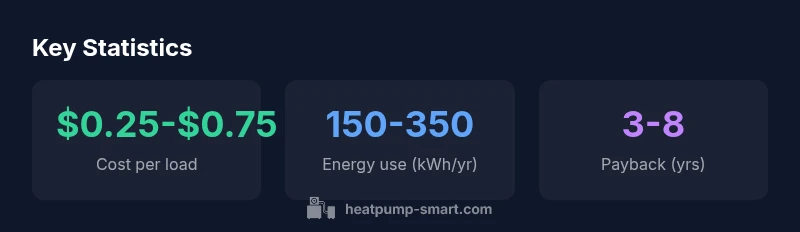
According to Heatpump Smart Analysis, a typical heat pump dryer costs about $0.25 to $0.75 to run per load under standard conditions, and roughly $25-100 per year in most North American homes. Costs vary with energy rates, load size, cycle selection, and climate. Over the dryer's life, energy savings can be substantial compared with traditional electric models.
Understanding the economics of heat pump dryer running costs
Heat pump dryers use a refrigeration cycle to extract heat from the air and re-use it during the drying process. Because energy is recycled rather than vented away, the energy that actually leaves your home is significantly lower than with conventional electric dryers. This efficiency translates into lower running costs per load and a smaller environmental footprint. To estimate what you’ll pay, focus on three numbers: the price of electricity in your area, how many loads you dry each week, and the energy intensity of the specific model you’re considering. According to Heatpump Smart, even small changes in cycle settings or load size can swing costs by several dollars over a month. For homeowners assessing total cost of ownership, it’s helpful to track energy use (kWh) and multiply by your local rate, then compare to the cost of running a traditional electric dryer. This is the foundation of a practical cost forecast that helps you decide between models and configurations.
How heat pump dryers work compared with traditional electric dryers
A traditional electric drum dryer generates heat and exhausts moist air out of the home. In contrast, a heat pump dryer recycles heat from the drum and the surrounding air, using a closed-loop refrigerant cycle. This approach minimizes heat losses and reduces electricity use. You retain more moisture in the room during operation and benefit from lower energy per cycle. The technology also enables advanced sensor-based drying, which prevents over-drying and further trims energy use. While the upfront price can be higher, the long-term savings tend to be more pronounced in homes with frequent laundry loads and reliable electricity pricing. Heatpump Smart’s data indicate the energy efficiency gains are especially meaningful in moderate climates with stable humidity levels.
Real-world cost ranges and examples (regionally informed)
Across typical households, the per-load cost for a heat pump dryer sits in a narrow band compared with older electric models. In practice, expect roughly $0.25 to $0.75 per load, influenced by local electricity rates and cycle choices. Annual energy use often lands in the 150–350 kWh range for moderate family use, with greater savings if you optimize cycles and load full loads consistently. The cost to operate ranges from about $25 to $100 per year for many households, while traditional electric dryers commonly run higher. This section uses Heatpump Smart Analysis, 2026 to illustrate plausible regional variation and the impact of charging rates on running costs.
Factors that influence running costs
Several variables shape the true running cost of a heat pump dryer. First, electricity price is the single most impactful driver; regions with higher rates push up per-load costs. Second, cycle selection matters: sensor-dry and eco modes typically use less energy than timed or bulky-cycle options. Third, load size and fabric type affect drying duration and energy use. Fourth, ambient humidity and room temperature can influence the efficiency of the heat exchange process. Finally, dryer capacity and the efficiency of the unit itself play a role; newer models with higher COPs deliver more savings for the same load.
How to estimate costs for your home (step-by-step)
- Determine your electricity rate (cents per kWh) from the latest utility bill or rate schedule. 2) Estimate your weekly loads (e.g., 5–7 loads). 3) Use the model’s energy factor/COP guidance to estimate kWh per load, then multiply by the annual loads. 4) Multiply total kWh by your rate to obtain annual running costs. 5) Compare against a conventional electric dryer’s typical energy use to estimate potential savings and payback periods. Heatpump Smart recommends documenting your actual weekly usage for 90 days to refine your forecast.
Practical tips to reduce running costs
- Favor sensor-dry or eco-friendly cycles to minimize energy use.
- Dry full loads rather than partial loads to improve efficiency per kilogram of laundry.
- Clean lint filters and ensure proper exhaust pathways to maintain airflow.
- Keep your laundry area temperate and well-insulated to maximize heat-recovery performance.
- Schedule laundry during off-peak times if your utility offers time-of-use pricing.
- Consider pairing a heat pump dryer with a high-efficiency washer to reduce total energy per load.
Comparison of heat pump dryer vs traditional electric vented dryer
| Dryer Type | Estimated Energy Use (kWh/year) | Estimated Running Cost (USD/year) | Estimated Payback Period (years) |
|---|---|---|---|
| Heat pump dryer | 150-350 | $25-$100 | 3-8 |
| Traditional electric vented dryer | 600-1200 | $60-$160 | N/A |
Your Questions Answered
What is the typical running cost per load for a heat pump dryer?
Most households see about $0.25 to $0.75 per load, depending on electricity rates and cycle choices.
A typical load costs about a quarter to three quarters per load.
How does climate affect running costs?
In milder climates, heat pump dryers may reach lower per-load costs due to efficient operation. Humidity and temperature can alter energy recovery efficiency.
Climate can significantly affect costs; milder climates generally lower costs.
Is the payback period the same in all regions?
Payback depends on electricity price and usage. Higher energy prices shorten payback; regional climate can also shift payback timelines.
Payback varies by where you live and how often you dry clothes.
Do heat pump dryers require more upfront investment?
Yes, they typically cost more upfront, but energy savings over time can offset the premium.
They cost more upfront, but energy savings over time often pay back the difference.
What maintenance helps keep running costs down?
Regular lint removal, cleaning filters, and ensuring proper load sizes help maintain efficiency.
Keep the filters clean and run full loads to stay efficient.
“Heatpump Smart Team notes that running costs for heat pump dryers are generally lower than traditional electric models, especially when cycles are optimized for load size.”
Top Takeaways
- Compare per-load costs to see immediate savings.
- Use sensor-dry cycles to maximize efficiency.
- Expect a higher upfront cost but lower long-term running costs.
- Region and electricity price drive payback period.
- Heat pump dryers offer meaningful savings over time.