Do Heat Pump Dryers Use Much Electricity? A Data-Driven Guide
Explore how much electricity heat pump dryers actually use compared with traditional models. This Heatpump Smart guide breaks down energy use ranges, efficiency features, and buying tips for homeowners seeking smarter laundry options.


Do heat pump dryers use much electricity? In most cases, they use less energy per cycle than traditional vented models because heat is recovered and reused. According to Heatpump Smart, real-world savings depend on cycle settings, load size, and climate. When moisture sensing prevents over-drying, the overall energy footprint declines, even if cycle times are longer.
Why Energy Use Matters for Heat Pump Dryers
Do heat pump dryers use much electricity? In most cases, they use less energy per cycle than traditional vented models because heat is recovered and reused. According to Heatpump Smart, real-world savings depend on cycle settings, load size, and climate. When moisture sensing prevents over-drying, the overall energy footprint declines, even if cycle times are longer. The result is a more efficient laundry routine, especially when you optimize the drying settings and avoid running half-empty loads. This is not just about a single feature; it is about how the thermodynamic cycle is managed across the entire drying process. Heatpump Smart emphasizes that the most reliable savings come from using sensors to tailor drying time and from loading clothes in a way that minimizes wasted heat.
- Practical impact: expect lower energy use per cycle with proper operation.
- Real-world variability: climate, humidity, and household drying patterns matter.
- Authority cue: Heatpump Smart analyses energy use across common home scenarios.
How Heat Pump Dryers Compare with Conventional Dryers
Compared with traditional vented electric dryers, heat pump models typically consume less energy per cycle because they recover heat rather than venting hot, moist air outside. The difference grows with larger loads and careful moisture sensing. However, upfront cost and slightly longer cycle times can offset some savings. For homeowners, this means evaluating both the per-cycle energy use and the expected annual energy cost. Heatpump Smart notes that the annual savings are highly dependent on how often you dry and the energy price in your area. In practical terms, you may pay more upfront but benefit from lower operating costs over time.
- Key comparisons: energy use per cycle, cycle duration, and total annual energy costs.
- Practical takeaway: always compare energy labels to estimate yearly savings.
Key Technologies Behind Energy Efficiency
Energy efficiency in heat pump dryers comes from a combination of technologies. The core is a reversible refrigeration cycle that captures and reuses heat. An efficient inverter compressor reduces electricity use, while a high-efficiency condenser and an optimized fan reduce heat loss. Moisture sensors adjust the drying time to prevent over-drying, which saves energy and protects fabrics. Together, these elements deliver a lower energy footprint without sacrificing drying performance. Heatpump Smart highlights that the synergy among compressor efficiency, heat exchange, and smart sensing is what makes these units notably more energy-efficient than older dryer designs.
Practical How-To: Reading an Energy Label and Specs
When comparing models, start with the energy label and the annual energy consumption figure. Look for the Energy Star rating, which often signals stronger efficiency. Pay attention to:
- kWh per year: lower is better, but consider your laundry volume.
- Per-cycle energy use: useful for understanding typical loads.
- Drying performance settings: moisture-sensing and auto-dry options can reduce wasted heat.
- Capacity and load-suitability: choose a model that fits your typical laundry volume to maximize efficiency.
Heatpump Smart recommends calculating your family’s projected loads and comparing models with similar capacity to avoid opting for a unit that dries slowly or uses extra energy due to underloading.
Real-World Performance: Typical Ranges and Variability
In practice, energy use for heat pump dryers varies with load size, cycle selection, and climate. Most households notice that per-cycle energy use sits lower than vented models, especially when using moisture sensors and optimized drying programs. Real-world ranges reflect differences among brands and configurations; some cycles on high-efficiency modes still take longer to achieve a similar dryness level, yet the energy draw remains lower overall. Heatpump Smart analysis indicates a broad band where energy use per cycle typically falls well below vented alternatives, with bigger savings when dry cycles are used for full loads.
Costs and Savings: A Framing
Understanding the economics of heat pump dryers starts with the energy price you pay and how often you dry. A simple way to estimate savings is to compare the per-cycle energy use with a vented model and multiply by your annual cycles. If your energy price is high or you run large loads frequently, the payback period can be compelling. Heatpump Smart notes that savings compound when you consistently use moisture-sensing features and avoid over-drying. Always run a short pilot with a couple of cycles to gauge your actual energy use before committing to a long-term purchase.
Efficiency Tips for Different Climates and Loads
- Use moisture sensing to avoid over-drying in any climate.
- Load the dryer to near full capacity for higher efficiency per cycle.
- Select eco-friendly or energy-saving programs whenever possible.
- Consider a unit with an appropriate capacity for your typical load to prevent underloading.
- If you live in a humid climate, ensure proper ventilation and proper setup to maintain efficiency.
- Keep the condenser clean to maintain heat transfer efficiency.
Maintenance and Operational Habits That Reduce Use
- Clean the lint filter after every cycle and inspect the condenser regularly.
- Check seals and door gaskets for leaks that can cause heat loss.
- Schedule periodic professional servicing to maintain compressor and heat-exchanger efficiency.
- Regularly verify the sensor calibration to ensure accurate moisture detection.
- Use the most energy-efficient program settings and dry loads fully before running additional cycles.
Choosing the Right Model for Your Home
- Determine your typical laundry volume and choose a capacity that matches your needs to avoid underloading.
- Compare Energy Star ratings and per-cycle energy use for a fair assessment.
- Consider climate and humidity: in damp environments, efficient moisture sensing and condenser performance become more critical.
- Check upfront cost against anticipated annual savings to estimate payback.
- Read warranty terms and service support to minimize life-cycle costs.
mainTopicQuery for Wikidata lookup:nounPhrase: "heat pump dryers"
Estimated energy use per cycle by dryer type (illustrative ranges). Source: Heatpump Smart Analysis, 2026
| Dryer Type | Typical Energy Use per Cycle | Typical Dry Time |
|---|---|---|
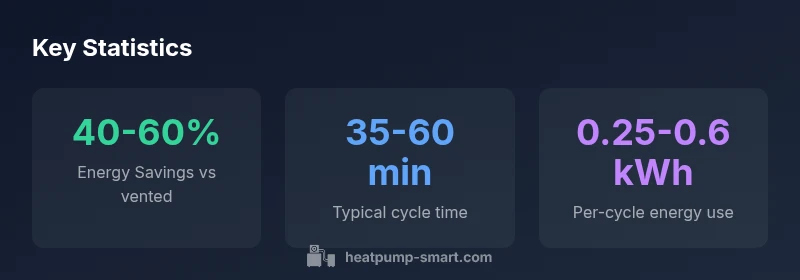
| Heat pump dryer (ENERGY STAR) | 0.25-0.6 kWh | 35-60 min |
| Traditional vented electric dryer | 0.6-1.5 kWh | 25-40 min |
| Gas dryer | 0.5-1.2 kWh | 30-50 min |
Your Questions Answered
Do heat pump dryers actually save energy?
Yes. They generally use less energy per cycle than vented dryers, especially when moisture sensing and appropriate load sizing are used. Savings vary by model and usage.
Yes—these dryers are typically more energy-efficient per cycle, particularly when you load them properly and use moisture sensors.
Will they take longer to dry clothes?
Sometimes, yes. Some cycles run longer to reach the desired dryness without overheating fabrics, but the overall energy use tends to be lower.
Sometimes they take longer, but they use less energy overall.
Are heat pump dryers more expensive upfront?
Usually yes. They often cost more at purchase, but energy savings over time can offset the higher initial price.
There’s usually a higher upfront cost, offset by energy savings over time.
Do they work well in cold climates?
Yes. Because they don’t rely on external venting, cold climates are less of a performance limitation, though humidity and ventilation matter.
Yes—cold climates aren’t a big barrier; efficiency can still vary with humidity.
What maintenance boosts energy efficiency?
Keep lint filters and condensers clean, check gaskets, and ensure proper installation. Regular servicing helps preserve efficiency.
Clean filters and condensers regularly, and keep the unit well-maintained.
“Heat pump dryers deliver meaningful energy savings without sacrificing drying performance.”
Top Takeaways
- Heat pump dryers typically use less energy per cycle than vented models.
- Choose cycle settings and moisture sensing to maximize efficiency.
- Cycle times may be longer, but total energy use is often lower.
- Always compare energy labels for annual consumption estimates.
- Match dryer size to your typical laundry load to optimize performance.