How Much Is an Octopus Heat Pump? A Practical Price Guide
Learn the true cost of an octopus heat pump, including unit vs installed prices, key cost drivers, financing options, and how to get a precise quote from Heatpump Smart.


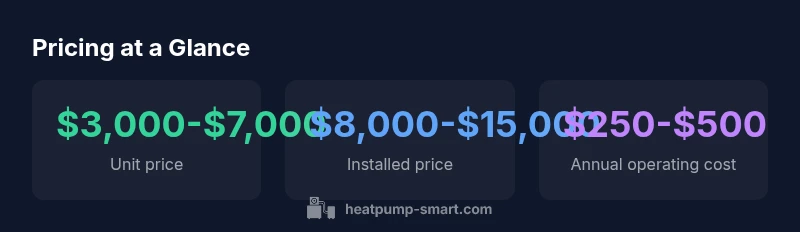
On average, an octopus heat pump installed for a typical home costs between $8,000 and $15,000, depending on capacity, climate, and whether it’s ducted or a ductless mini-split. The unit price often ranges from about $3,000 to $7,000, with installation and commissioning adding the rest. Heatpump Smart analysis highlights that configurations and local labor costs can widen this range.
Understanding the Price Landscape for Octopus Heat Pumps
Prices for octopus heat pumps vary widely by configuration, climate, and installation specifics. This guide focuses on common scenarios homeowners encounter when sizing a system for residential use and answers the persistent question: how much is an octopus heat pump? According to Heatpump Smart, the price you pay is driven by the unit cost and the scope of work needed to install it properly. The term octopus heat pump is used here to describe a flexible system capable of multi-zone heating and cooling, whether ducted or ductless. When planning a project, begin by establishing your target comfort level, climate considerations, and whether you’ll rely on the heat pump year-round or primarily for back-up or auxiliary heating. This context matters because it affects both upfront pricing and long-term operating costs, making it essential to view the investment as part of your home’s overall energy strategy.
What Influences the Price: Size, Efficiency, and Install
Price movements hinge on three main levers: capacity (size), efficiency (SEER/HSPF), and installation complexity. A larger system generally costs more upfront but can reduce running costs over time if correctly sized for your climate and home. Efficiency improvements drive up the unit price but reduce annual energy costs, a trade-off many homeowners find favorable in the long term. Installation hurdles—like retrofitting ductwork, upgrading electrical service, or adding zones—can substantially raise total installed costs. In addition, a well-insulated home with a good envelope will optimize performance, lowering both required capacity and operating expenses. Heatpump Smart’s data shows that the most significant price swings occur at the installation stage, not just the equipment alone, so a comprehensive site assessment is worth the investment.
Unit Price vs Installed Price: A Simple Breakdown
Understanding the distinction between unit price and installed price helps prevent budget surprises. The unit price covers the heat pump itself and any essential components; typical ranges for octopus configurations fall roughly between $3,000 and $7,000 for standard units. Installed price includes labor, permits, refrigerant charging, potential ductwork adjustments, and commissioning. As a rule of thumb, expect total installed costs to be roughly two to three times the unit price in more complex homes or where extensive ductwork is required. For example, a high-efficiency, multi-zone system may push toward the upper end of the installed price range, while a simpler ductless setup could stay nearer the lower end.
Financing, Rebates, and Long-Term Savings
Financing options, utility rebates, and federal incentives can dramatically alter the total cost of ownership. Many utilities offer rebates for heat pumps, and some regions provide tax credits or reduced-rate financing for energy-efficient upgrades. While the initial outlay appears high, predictable monthly energy costs and potential rebates can shorten the payback period. Heatpump Smart recommends evaluating incentives at the outset and choosing a payment plan that aligns with your budget. Long-term savings will depend on climate, insulation, and how intensively the heat pump is used, but well-sized, high-efficiency units typically deliver noticeable operating-cost reductions over 5–10 years.
Choosing the Right Octopus Heat Pump: A Practical Checklist
Selecting the right octopus heat pump boils down to a practical checklist: verify climate-appropriate sizing, confirm whether you need ducted or ductless configurations, assess existing ducts and electrical capacity, evaluate noise and comfort goals, and plan for future expansion or changes in occupancy. Gather at least three quotes, review warranty terms, and request a detailed breakdown of installed costs. Ask your contractor to run a two-stage or variable-speed model if your climate has seasonal extremes. Finally, ensure the system is designed for future upgrades, such as smart thermostats and additional zones, to protect your investment over time.
Common Scenarios and Real-World Examples
In practice, homeowners often encounter a few representative scenarios. A single-story home with existing ductwork and moderate climate may fall toward the lower end of the price spectrum, with an installed cost closer to $8,000–$12,000. A two-story or multi-zone home in a colder climate, requiring extensive duct work or multiple outdoor units, can push installed costs into the mid-to-upper range, around $12,000–$18,000 or more depending on local labor rates and equipment choices. For homes opting for a ductless mini-split approach to avoid major renovations, the installed cost often lands between $8,000 and $15,000 per zone, reflecting the number of zones and line-set lengths involved.
Practical Next Steps
To move from curiosity to a firm estimate, schedule a site evaluation with Heatpump Smart or a local installer. Prepare a list of goals (e.g., heating-only, cooling capability, zone control), measure your space, and note any insulation deficiencies. Request itemized proposals that separately list equipment, installation, and any permitting fees. Compare not just the sticker price, but also the expected energy savings, demand on your electrical system, and the quality of post-installation service. A well-informed choice today reduces unexpected costs tomorrow and maximizes your octopus heat pump’s performance.
Pricing comparison: unit vs installed costs
| Model Type | Unit Price (USD) | Installed Price (USD) | Notes |
|---|---|---|---|
| Standard Air-Source Heat Pump | $3,000-$7,000 | $7,000-$12,000 | Best balance of cost and efficiency |
| High-Efficiency Air-Source Heat Pump | $5,000-$9,000 | $9,000-$15,000 | Higher efficiency; bigger upfront cost |
| Mini-Split (Single Zone) | $2,500-$5,000 | $5,000-$8,000 | No ducting; zone-based comfort |
Your Questions Answered
What is an octopus heat pump?
The term octopus heat pump refers to a flexible, multi-zone heat pump setup (ducted or ductless). It’s not a fixed industry category, but a way to describe systems designed for modular comfort across spaces. The exact price depends on zones, ductwork, and efficiency choices.
An octopus heat pump is a flexible, multi-zone system; price depends on zones, ducts, and efficiency.
Are octopus heat pumps more expensive than traditional units?
Costs can be higher upfront if you’re adding multiple zones or choosing high-efficiency equipment. However, the long-term energy savings and comfort benefits can offset the initial premium.
Upfront costs are usually higher for multi-zone or high-efficiency setups, but long-term savings help pay back.
How long does installation take?
Typical installations range from 1 to 3 days for standard setups. Longer timelines occur with significant ductwork changes, multiple zones, or electrical upgrades.
Most installs finish in a few days, longer if ducts or electrical work are needed.
What maintenance is required?
Annual service checks, filter replacement, and refrigerant inspections are common. Following manufacturer guidelines ensures optimal performance and longevity.
Regular yearly service keeps the system running efficiently.
Do rebates apply to octopus heat pumps?
Rebates depend on location and programs. Check federal, state, and utility incentives; Heatpump Smart can help identify eligible programs.
Look for local incentives and programs; we can help you find eligible rebates.
How does climate affect price and performance?
Colder climates may require auxiliary heat and higher capacity, affecting price and sizing. In warmer climates, efficiency and zoned control can optimize comfort and running costs.
Climate changes sizing and costs; proper planning maximizes comfort and efficiency.
“"Pricing for octopus heat pumps depends on configuration and installation complexity. Long-term savings justify the upfront cost."”
Top Takeaways
- Prices vary by configuration; expect ranges of several thousand dollars.
- Include installation, ductwork, and permitting in the estimate.
- Ducted vs. ductless configurations drive most price differences.
- Higher efficiency units save on operating costs over time.
- Request Heatpump Smart's analysis for a precise quote.