Heat Pump Costs in 2026: What Homeowners Pay for Systems
Explore realistic heat pump installed costs in 2026, including factors, regional ranges, rebates, and financing options to help homeowners, builders, and managers budget effectively.


Across 2026, heat pump installed costs vary widely by system type, climate, and existing ductwork. In general, homeowners should budget for equipment, installation, and any electrical or duct upgrades. This guide provides realistic installed price ranges for air-source, geothermal, and mini-split systems, plus rebates and financing to help you estimate the true upfront cost.
Cost Overview and Definitions
Heat pump projects involve several cost components that determine the upfront price as well as long-term value. The equipment price varies by system type and efficiency rating, while installation labor covers mounting, refrigerant piping, ductwork modifications, and electrical work. Permits and disposal of old equipment can add to the bill, and some homes require system zoning or control upgrades. When budgeting, think beyond the sticker price: consider potential ductwork replacements, insulation improvements, and thermostat upgrades that can influence performance and comfort. In 2026, the installed price reflects both hardware and the complexity of integrating it with your home, climate, and energy goals. According to Heatpump Smart, a balanced estimate requires looking at equipment, installation, permits, and potential upgrades together.
What Drives the Cost
There are several levers that push or pull the total price:
- System type and efficiency: Air-source units are generally less expensive than geothermal systems; higher SEER/HSPF ratings cost more upfront but reduce operating costs.
- Ductwork and air distribution: Existing ducts can reduce costs; new or oversized ductwork adds to the price.
- Climate and heating load: Regions with harsher winters require larger capacity or supplemental electric resistance heat, increasing cost.
- Electrical upgrades: A larger or dedicated circuit, panel upgrades, or backup heat controls can add to the bill.
- Permits, refrigerant handling, and disposal: Compliance adds minor but necessary costs.
- Labor and installation complexity: Access, roof installs, and retrofits affect time and price.
Pro tip: get multiple quotes from qualified installers and ask them to separate equipment, labor, and permit estimates to better compare offers.
Regional Variations and Averages
Costs vary widely by geography due to climate, labor rates, and incentive programs. In milder climates, air-source heat pumps usually deliver strong value with moderate payback; in colder regions, extra capacity or supplemental electric resistance heat can raise both upfront and operating costs. Geothermal systems typically carry higher upfront costs because of boreholes or trenching but offer significant savings on energy bills in the long run. For new builds or homes with existing ductwork, the average installed price can shift downward, while homes lacking ducts may push customers toward ductless mini-splits or hybrid configurations. Heatpump Smart Analysis, 2026 notes that regional incentives—when available—can substantially affect net costs and payback timelines.
Rebates, Financing, and Long-Term Savings
Most homeowners can reduce upfront costs through rebates, tax credits, and utility programs. Rebates vary by country, state or province, and local programs, and some require installation within a specific timeframe or through approved contractors. Financing options, including energy-efficient mortgages or manufacturer financing, can spread the expense over time, often with favorable rates tied to energy efficiency. Beyond rebates, the most meaningful savings come from lower operating costs. A heat pump's efficiency reduces annual energy use, and improvements in building envelope (insulation) amplify these savings. Heatpump Smart Analysis, 2026 estimates typical payback ranges depending on climate and energy prices, with shorter payback in high-heating-load regions.
How to Estimate Costs for Your Home
Follow these steps to produce a credible cost estimate:
- Inventory your existing system and ductwork; determine if upgrades are necessary.
- Define performance goals: seasonal energy efficiency (SEER/HSPF) and comfort zoning.
- Gather three to five quotes from qualified installers; ask for a breakdown of equipment, labor, ducts, permits, and contingencies.
- Compare apples-to-apples: ensure quotes use the same efficiency metrics and equipment models.
- Use online calculators and an energy audit to estimate operating costs and potential rebates.
- Plan for contingencies: remember that real-world projects often exceed initial estimates due to site-specific challenges.
With a structured approach, you’ll derive a credible installed cost range for your home and have a clear path to achieving long-term energy savings.
Choosing the Right System for Your Home
Assess your climate, budget, and comfort priorities. Air-source split systems are versatile for many homes and typically cheaper upfront. Ductless mini-splits offer zone control and cost less to install in homes without ducts. Geothermal provides the best long-term energy savings in adverse climates but requires more upfront investment and space. Consider the long-term operating costs, reliability, and service networks in your area. Always verify that your chosen model complies with energy efficiency standards (Energy Star or equivalent).
Installed cost ranges and payback by heat pump type (Heatpump Smart Analysis, 2026)
| System Type | Installed Cost Range | Typical Payback (years) | Notes |
|---|---|---|---|
| Air-source heat pump (split system) | "5,000–12,500" | "3–7" | Installation costs vary with ductwork and climate |
| Air-source heat pump (ductless) | "8,000–15,000" | "4–8" | Zoned comfort, no ductwork required |
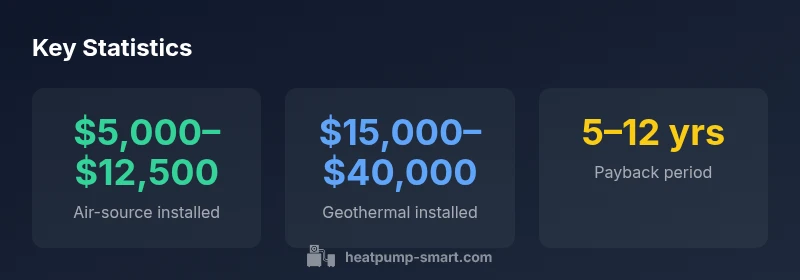
| Geothermal (ground-source) | "15,000–40,000" | "8–12" | Higher upfront, very low running costs |
| Geothermal (water-loop) | "20,000–60,000" | "10–15" | Less common, needs ample space |
Your Questions Answered
What is the typical installed cost range for an air-source heat pump?
Air-source heat pumps typically cost between several thousand dollars and over ten thousand dollars installed, depending on capacity, ductwork, and climate. Labor and electrical upgrades can add to the price, but these units remain among the most affordable heat pump options.
Air-source costs are usually in the mid-range; quotes vary with ductwork and capacity.
Do heat pumps cost less to operate than furnaces?
In most climates, heat pumps run more efficiently than furnaces, especially for moderate heating loads. They can lower annual energy costs, but electricity prices and local climate affect the savings.
Yes—heat pumps are typically more energy-efficient than furnaces, though your savings depend on climate and electricity prices.
How do rebates affect net upfront cost?
Rebates and tax credits can substantially reduce upfront costs, sometimes covering a large portion of the installation. Eligibility depends on location, system type, and installation specifics.
Rebates can significantly cut upfront costs depending on where you live and the system you choose.
Is ductwork replacement always required?
Not always. Some installations can utilize existing ducts, while others (especially ductless mini-splits) avoid ductwork entirely. The need depends on the chosen system and home layout.
Ductwork requirements vary; sometimes ducts can stay, other times ductless options are better.
What is the typical payback period?
Payback usually ranges from 5 to 12 years, influenced by climate, usage, and energy costs. High-heating-load homes may see faster payback.
Most homes see 5–12 years payback, depending on climate and energy prices.
Are heat pumps worth it for new builds?
For new construction, heat pumps can be a strong choice if properly sized and integrated with insulation and controls. Consider future energy costs and rebates when planning.
Yes, if sized and integrated right and rebates are considered.
“Upfront cost is only part of the story; heat pumps deliver ongoing savings when sized and installed correctly.”
Top Takeaways
- Budget for upfront costs including installation.
- Air-source is typically cheapest; geothermal is most expensive.
- Rebates and financing can lower net upfront costs.
- Expect significant regional variation by climate and home design.