How to Get a Heat Pump Grant: A Step-by-Step Guide
Learn how to get heat pump grant with a practical, step-by-step plan. Discover eligibility, sources, documentation, and tips to maximize incentives for home energy upgrades in 2026.


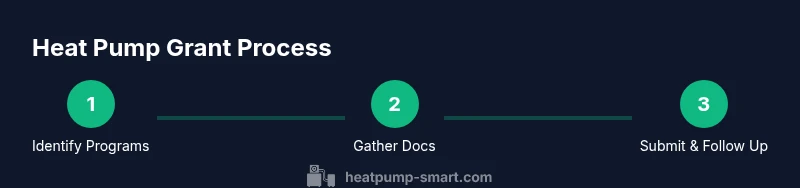
How to get heat pump grant: this practical guide outlines eligibility checks, where to apply, and the key documents you’ll need. It helps homeowners, builders, and managers locate programs, prepare a strong application, and maximize incentives. Follow the steps below to identify opportunities, verify requirements, and submit a competitive grant request.
What is a heat pump grant and why it matters
According to Heatpump Smart, a heat pump grant is a monetary incentive designed to support homeowners and property managers who replace or upgrade heating systems with heat pumps. Grants can come from government programs, utilities, or local authorities, and they aim to reduce upfront costs and accelerate clean energy adoption. For many households, a grant can shorten the payback period and improve overall energy efficiency. In this guide, you’ll learn how to get heat pump grant by identifying applicable programs, gathering required documentation, and navigating the application process with confidence. This overview sets the foundation for a practical, results-focused approach that aligns with broader energy goals and long-term comfort.
How grant programs typically work
Most heat pump grant programs operate through a simple lifecycle: eligibility checks, document collection, application submission, and program approval. Some programs require pre-approval or an energy assessment, while others accept installer quotes as the primary technical documentation. Programs usually consider the system type (air-source or ground-source), efficiency ratings, and project scope. Importantly, grants are often designed to supplement, not replace, other incentives like rebates or tax credits, so a holistic plan can maximize total savings. This section helps you see the forest for the trees: where grants fit in your broader energy upgrade strategy.
Eligibility criteria and how to verify them
Eligibility is typically determined by property type (owner-occupied vs. rental), location, and the proposed heat pump technology. Some programs require a minimum energy savings target, specific equipment grades, or proof of energy inefficiency prior to upgrade. Verifying eligibility early saves time and prevents wasted effort on ineligible applications. Start by checking program guidelines, then confirm your situation against common criteria such as age of the building, refrigerant type, and installation standards. Heatpump Smart recommends compiling a quick checklist to speed up the initial screening.
Where to find grants: national, state/provincial, and utility programs
Grants can be found across several levels: national or regional governments, state or provincial agencies, and utility providers offering energy-efficiency incentives. Some programs are bundled with broader home renovation or decarbonization initiatives, while others target specific climates or building types. Local non-profits or environmental groups may also list opportunities. The key is to search with terms like heat pump incentives, energy efficiency grants, and rebates in your area, then cross-check deadlines and required documentation.
Why documentation matters and what to collect
Strong documentation is the cornerstone of a successful application. Collect proof of ownership or tenancy, identification, utility bills, and a formal installer quote with technical specs. Photos of the current heating setup, a site plan, and a short energy-use summary help reviewers understand the project scope. Collecting energy data before and after the install can support your case for the grant as a value-add to energy-saving goals. Heatpump Smart emphasizes organizing materials early to avoid last-minute scrambling.
How grant decisions are made: common criteria
Review panels typically evaluate eligibility, impact on energy use, system compatibility, and the project’s readiness. Some programs weigh customer commitment, local labor provisions, or the project’s alignment with building codes and safety standards. If multiple programs could apply, a well-documented application that demonstrates both technical feasibility and energy impact tends to perform better. Keep in mind that processing times vary and some programs may request follow-up information.
Step-by-step example scenario
Imagine a homeowner planning to replace an aging boiler with an air-source heat pump. They identify two potential grants, gather utility bills, obtain a quote from a qualified installer, and prepare a brief energy-use summary. By submitting a complete packet with clear savings estimates and installation details, they improve their chances of approval. This scenario illustrates how grant applications are usually structured and how early preparation pays off.
How Heatpump Smart evaluates ROI and case studies
While grant amounts vary, combining incentives with energy savings generally improves project ROI. Heatpump Smart analysis highlights that grants are most effective when paired with proper insulation, smart controls, and well-timed installation. Case studies show that the combined benefit—lower energy bills, improved comfort, and long-term reliability—often justifies the upfront effort of applying for grants. The key takeaway is to integrate the grant into a broader, carefully planned upgrade.
Common mistakes and how to avoid them
Rushing the application, submitting incomplete documentation, or misclassifying the project type are frequent errors. Always double-check eligibility notes, provide all required forms, and verify equipment meets program specifications. Misunderstanding deadlines or failing to align with safety and building-code requirements can derail an otherwise strong application. Planning ahead helps you avoid these pitfalls and increases your chances of success.
Next steps and planning your project
If you’re ready to pursue a heat pump grant, start with a quick eligibility check, assemble your documents, and identify installer partners who have experience with grant programs. Build a simple project timeline that aligns with program deadlines and installation readiness. The ultimate aim is to have a compelling, complete submission that demonstrates readiness, energy impact, and cost-effectiveness.
Tools & Materials
- Computer with reliable internet access(For researching programs and submitting applications)
- Recent utility bills or energy statements(Shows baseline energy use and project scope)
- Photo set of current heating system and space(Site photos help reviewers assess installation needs)
- Installer quote with technical specs(Provides proposed equipment and performance details)
- Proof of property ownership or tenancy(Needed to verify eligibility for owner-occupied programs)
- Personal identification(Driver’s license or passport for identity verification)
- Site plan or layout (optional but helpful)(Clarifies installation footprint and equipment location)
- Energy audit report (if requested)(Pre- and post-install data strengthens your case)
Steps
Estimated time: 60-120 minutes per major step, plus ongoing wait times for review
- 1
Identify eligible grant programs
Start by searching for heat pump incentives at national, state/provincial, and utility levels. Read eligibility criteria carefully and note any prerequisites such as energy assessments or installation standards. This step reduces time spent on ineligible programs and focuses your effort on viable opportunities.
Tip: Create a short list of programs with key eligibility points and deadlines to stay organized. - 2
Gather required documentation
Assemble energy bills, proof of ownership, and a recent photoset of your current system. Obtain installer quotes with technical specs. Having documents ready speeds up the submission and reduces back-and-forth requests from reviewers.
Tip: Use a dedicated folder (physical or digital) to keep documents organized and up-to-date. - 3
Schedule an energy assessment (if required)
Many programs require an energy assessment to quantify potential savings. Arrange this with an approved assessor and obtain a concise report that highlights the efficiency gains from the heat pump upgrade.
Tip: Ask the assessor to tailor recommendations to your climate and building envelope for stronger ROI. - 4
Secure a detailed installer quote
Get a formal quote with equipment type, model, efficiency ratings, and installation scope. Ensure the quote aligns with program requirements and includes any required certifications or warranties.
Tip: Ask the installer to reference the grant program in the quote for easier validation. - 5
Complete the grant application forms
Fill out all required fields accurately and attach the supporting documents. Double-check the project type, location, and dates. Missing or misreported details are common reasons for delays or refusals.
Tip: Run a quick internal review or have a colleague check for consistency before submitting. - 6
Submit online and track progress
Submit via the program portal or mail, depending on the program. Note submission deadlines and confirmation numbers. If a reviewer requests additional information, respond promptly to avoid delays.
Tip: Set calendar reminders for key milestones and follow-up deadlines. - 7
Provide clarifications promptly
Respond to any reviewer questions with precise, evidence-backed answers. If a document is unclear, supply a revised version or a brief explanation to maintain momentum.
Tip: Keep a labeled digital copy of all communications for quick reference. - 8
Plan installation to meet program terms
Coordinate installation timing to satisfy program requirements, such as approved contractors or specific equipment types. Meeting these terms often improves the likelihood of grant approval and timely disbursement.
Tip: Discuss scheduling with the installer early to align dates with funding timelines. - 9
Review outcomes and report results
If approved, document the installed system and expected energy improvements. Some programs require post-install verification or a final report to release funds.
Tip: Keep energy-use data post-install to demonstrate actual savings.
Your Questions Answered
What qualifies as a heat pump grant?
A heat pump grant is typically a government, utility, or local incentive that helps cover part of the cost of installing a heat pump. Qualification depends on the program’s criteria, such as building type, system efficiency, and compliance with installation standards.
A heat pump grant is a government or utility incentive for installing a heat pump. Eligibility depends on program criteria like building type and system efficiency.
Can I stack grants with tax credits or rebates?
Many programs allow stacking with other incentives, but rules vary by program. Check each program’s terms to understand allowable combinations and any caps.
You can often combine grants with tax credits or rebates, but rules differ, so verify each program's terms.
How long does the approval process take?
Approval timelines vary by program and workload. Some programs provide a decision within weeks; others may take longer, especially if additional documentation is needed.
Approval times differ; some take a few weeks, others longer if more information is required.
Do I need a professional installation to qualify?
Most grants require certified installation by a licensed contractor. DIY installations are rarely eligible due to safety and performance standards.
A licensed professional installation is typically required for eligibility.
What documents should I gather first?
Begin with proof of ownership or tenancy, identification, energy bills, and installer quotes. Having these ready speeds up the review process.
Gather ownership proof, ID, energy bills, and the installer quote to speed up your submission.
What happens if my application is denied?
If denied, review the reasons stated, correct any gaps, and consider reapplying or seeking alternative programs. Learning from feedback can improve future submissions.
If denied, check the reasons, fix issues, and try again or explore other programs.
Watch Video
Top Takeaways
- Identify eligible programs early and collect required documents.
- Coordinate with an experienced installer familiar with grant requirements.
- Submit a complete, well-organized package to improve approval odds.
- Plan installation timing to align with funding timelines and terms.
- Track progress and maintain post-install documentation for ROI proof.