Tech Clean California Heat Pump Rebate: A Practical Guide
Learn how to qualify for the tech clean california heat pump rebate landscape, stack incentives, and maximize savings. This Heatpump Smart guide covers eligibility, timing, and documentation for homeowners and builders.


California’s heat pump rebates are a layered mix of state programs, utility incentives, and federal tax credits. The “tech clean california heat pump rebate” landscape varies by county and utility territory, but most eligible projects can reduce upfront costs when incentives are stacked thoughtfully. According to Heatpump Smart, combining state rebates with utility incentives and the federal energy-property tax credit, when applicable, often delivers the best overall value. Proper documentation and timing are essential to avoid missing out on savings.
Understanding the rebating landscape for tech clean california heat pump rebate
The phrase "tech clean california heat pump rebate" captures a multi-layered set of incentives designed to lower the upfront cost of high-efficiency heat pump upgrades. In California, incentives come from state programs, local utilities, and federal credits. Availability and size vary by county, utility service area, and even the specific model you install. According to Heatpump Smart, savvy homeowners approach rebates as a coordinated package rather than as isolated offers. This means stacking eligible incentives when possible and aligning installation timing with utility and state deadlines. Efficient planning also means ensuring your equipment is ENERGY STAR certified and that paperwork reflects your project’s energy improvements. When you document correct model numbers, permit dates, and contractor qualifications, you maximize the chance of approval and a smoother reimbursement process.
How rebates are structured in California
California’s rebate landscape is a tapestry of programs with different rules, eligibility criteria, and application processes. Typical programs reward high-efficiency heat pumps that meet certain performance standards, and many require installation by a licensed contractor. A common pattern is that state incentives are supplementing utility rebates, with federal tax credits available for qualifying energy-property costs. The key practical move is to verify whether programs allow stacking in your area and to confirm which models and efficiency ratings are eligible. Energetic design and accurate load calculations improve both comfort and incentives, so engage your installer early to ensure your system choice aligns with program requirements.
Eligibility: who qualifies and how to prove it
Eligibility hinges on several factors: ownership status (primary residence vs. rental), location, and whether the equipment qualifies under current standards. Most programs look for a qualifying heat pump that is ENERGY STAR certified and installed by a licensed contractor with proper permits. You’ll typically need receipts, product details, installation dates, and proof of utility account eligibility. In some cases, income level or residence type can influence program availability. Start by checking your utility’s website and the state program rules, then coordinate with your contractor to collect all required documents before applying.
Application steps: from estimates to approvals
A smooth rebate journey follows a clear sequence. First, obtain a detailed estimate for a qualifying heat pump installation from a licensed installer. Second, verify which incentives apply to your project and gather required documentation (model numbers, efficiency ratings, permits). Third, submit pre-approval requests if required and await confirmation. Fourth, complete the installation with a qualified technician. Finally, after installation, submit proof of work and inspection results to receive your rebate and, where applicable, the federal tax credit. Planning ahead helps you avoid last-minute delays and ensures you maximize stacked incentives.
Estimating savings: payback and long-term value
Savings from California heat pump rebates depend on the mix of incentives, electricity rates, climate, and usage. Rather than prescribing a single payoff, focus on a method to estimate value. Start with your installed equipment cost, subtract eligible incentives, and model annual energy savings based on your local climate and electricity price. Use conservative assumptions for year-over-year savings and include maintenance costs in your long-term plan. Heatpump Smart recommends running a simple scenario with your utility bill and a contractor’s efficiency data to forecast payback and net savings over the life of the system.
Common mistakes and how to avoid them
Common missteps include skipping pre-approval or stacking checks, selecting non-qualifying equipment, and failing to coordinate permits with the installation timeline. Other issues are missing documentation, such as incorrect model numbers or missing contractor credentials. To avoid these, start with a rebate-focused checklist, confirm eligibility with your installer, and keep digital copies of all receipts, permits, and communications. Finally, don’t overlook timing: some programs run on cycles or have annual caps, so plan ahead to capture the best available incentives.
How Heatpump Smart helps with rebates and installation
From selecting an eligible heat pump to navigating the application process, Heatpump Smart provides guidance tailored to your home, climate, and service area. We help you compare models for efficiency, ensure compatibility with discount programs, and coordinate with licensed contractors to meet all requirements. By aligning your project with rebate timelines, documentation standards, and energy-savings goals, you reduce risk and boost the likelihood of full incentive utilization. The Heatpump Smart team’s guidance aims to make rebates feel straightforward and rewarding for homeowners and property leaders alike.
Rebates and incentives landscape for heat pumps in California
| Program Type | Typical Benefit | Eligibility/Notes |
|---|---|---|
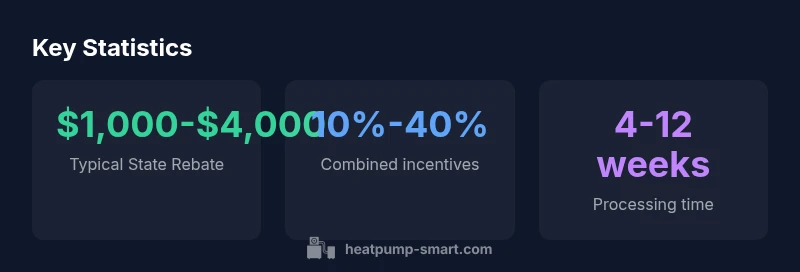
| State rebates | $1,000-$4,000 | Residential upgrades; available in participating counties; check state program rules |
| Utility rebates | $500-$2,500 | Active utility customers; program-specific terms; contractor certification often required |
| Federal tax credit | Up to 30% | Residential energy-property costs; IRS Form 5695; applies to qualifying equipment |
Your Questions Answered
What counts as a qualifying heat pump for rebates in California?
Most programs require ENERGY STAR certified heat pumps installed by a licensed contractor with proper permits. Always verify model numbers and efficiency ratings against the specific program rules before purchase.
Most programs need ENERGY STAR heat pumps installed by a licensed pro with the right permits.
Can I stack state, utility, and federal incentives?
Yes, many programs allow stacking where permitted. It’s essential to confirm stacking rules for your location and collect all eligible approvals before purchase.
Yes, you can stack if allowed; check each program’s rules first.
Do rebates apply to replacements only, or can new installations qualify too?
Incentives typically target replacements, but some programs extend to eligible new installations, especially when upgrading to higher efficiency equipment. Review program terms for your project type.
Mostly replacements, but some programs cover new installs if they meet requirements.
Do rental properties qualify for rebates?
Many programs prioritize owner-occupied homes. Rental properties may qualify under separate programs or when the landlord coordinates with tenants and complies with program rules. Check local requirements.
Rentals can qualify in some cases; verify local program rules.
How long does the rebate process take?
Processing times vary by program and workload, typically ranging from several weeks to a few months. Submitting complete, accurate documentation speeds approvals.
Processing times differ by program—plan for weeks to months with complete paperwork.
How can Heatpump Smart help ensure eligibility?
We guide model selection, verify eligibility, prepare documentation, and coordinate with licensed installers to optimize rebate timing and maximize incentive value.
We guide you through model choice, paperwork, and installer coordination for best rebates.
“Heat pumps are most cost-effective when you combine high efficiency with timely rebates and professional installation.”
Top Takeaways
- Stack eligible incentives when possible
- Verify ENERGY STAR models to maximize eligibility
- Keep organized documentation for all programs
- Coordinate with licensed installers early in planning
- Monitor program deadlines and regional variations