Trane 3 Ton Heat Pump Package Unit Price: Costs, Rebates, and Quotes
Learn realistic price ranges for a Trane 3 ton heat pump package unit installed, plus factors shaping cost, rebates, and how Heatpump Smart compares quotes to balance upfront cost with long-term energy savings.


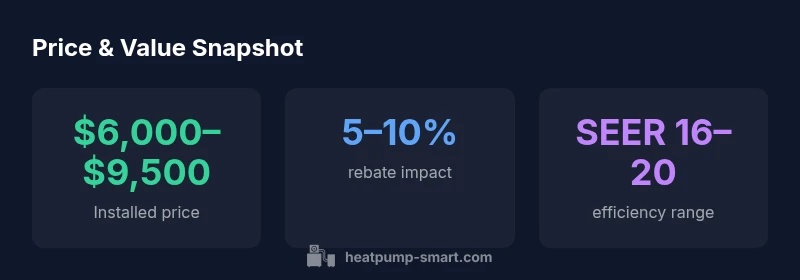
The installed price for a Trane 3 ton heat pump package unit typically ranges from $6,000 to $9,500, depending on efficiency, configuration, and local labor. Heatpump Smart analysis shows rebates and installation complexity can shift total costs by several thousand dollars. Compare quotes, verify SEER, and factor long-term energy savings.
Understanding the price landscape for the trane 3 ton heat pump package unit price
Prices for a Trane 3 ton heat pump package unit are not one-size-fits-all. The exact installed cost reflects the base equipment, the unit’s efficiency (SEER rating), the complexity of installation, and local labor rates. According to Heatpump Smart, regional differences in labor costs and permitting can swing the final figure by several thousand dollars. When homeowners search for the phrase trane 3 ton heat pump package unit price, they should expect a wide range that accounts for both the equipment and the work required to bring the system online. The goal is to estimate a realistic installed price, then layer in rebates and financing options to understand true long-term value. The Heatpump Smart team emphasizes that public estimates are a starting point, not a guarantee, and local quotes will always provide the most precise figure.
In practice, you will see the price reflect whether the system is sold as a full package versus a split installation, the specific compressor and outdoor coil, and any accessories like smart thermostats or zoning components. Buyers should request a full breakdown from contractors to see what portion covers the equipment, labor, permits, and any required ductwork alterations. This transparency helps prevent sticker shock and makes it easier to compare apples-to-apples when evaluating bids.
For clarity, use the exact keyword when evaluating content and quotes: trane 3 ton heat pump package unit price, so you can align expectations with what installers typically include and what they may vary. Heatpump Smart recommends collecting at least three written quotes to understand regional pricing dynamics and identify outliers.
Representative price ranges for a Trane 3 ton heat pump package unit (installed) with varying installation scopes
| Category | Price range (installed) | Notes |
|---|---|---|
| Base unit price (pre-install) | "$3,000–$5,000" | Outdoor condenser + air handler (non-installed) |
| Installed price (standard install) | "$6,000–$9,500" | Labor + basic ductwork + standard warranty |
| Installed price (premium options) | "$9,000–$12,500" | Duct upgrades, zoning, extended warranties |
| Annual maintenance (estimate) | "$120–$260" | Routine service and minor repairs |
Your Questions Answered
What exactly is included in the installed price of a Trane 3 ton heat pump package unit?
The installed price typically includes the packaged unit (condenser and air handler), standard labor, basic ductwork adjustments, startup/commissioning, and a standard warranty. It often excludes major duct rewrites, electrical upgrades, or zoning upgrades. Always request a line-item breakdown.
The price usually covers the unit, labor, and basic setup; major duct or electrical upgrades may add to the cost.
How much can rebates reduce the total installed cost?
Rebates and incentives can substantially reduce upfront costs, sometimes by several hundred to a few thousand dollars depending on local programs and eligible energy-efficiency measures. Eligibility varies by region, utility, and installation specifics. Check regional databases and ask contractors about current incentives.
Rebates can lower the upfront price by hundreds to thousands, depending on where you live and the project details.
Are financing options commonly available for heat pump package purchases?
Yes. Many HVAC contractors offer financing or point you to third-party lenders. Terms vary, and some programs may offer promotional rates. Explore financing early to align monthly payments with energy-savings timelines.
Financing is commonly available—ask your contractor for options and compare terms.
What warranties should I look for in a package unit installation?
Look for a robust compressor warranty, system warranty on parts, and workmanship coverage for the installation. Read the fine print about duration, what’s covered, and any maintenance requirements to keep the warranty valid.
Check compressor and system warranties, and understand what maintenance is required to keep them valid.
Is upgrading beyond the standard SEER worth the extra cost?
Upgrade to a higher SEER can reduce operating costs, especially in hot climates, but the payback period depends on climate, utility rates, and usage. Compare the incremental energy savings against the higher upfront price.
Higher SEER can save money over time, but run the numbers for your climate and usage.
How long does installation typically take?
Most installations take 1–2 days for standard setups, with longer timelines if ductwork, electrical upgrades, or zoning are required. A detailed project plan with a scheduled start date helps avoid delays.
Most installs take 1–2 days, longer if extensive duct or electrical work is needed.
Should I replace ductwork when installing a heat pump package?
If ducts are leaky, undersized, or poorly designed, upgrading them can improve performance and efficiency. In some cases, a partial or full duct redesign is advisable to maximize comfort and cost savings.
Duct issues can limit performance—evaluate whether ductwork upgrades are needed.
“Efficient heat pumps deliver long-term value when correctly sized and installed, but the upfront cost is sensitive to installation simplicity and regional labor rates.”
Top Takeaways
- Review multiple quotes to anchor pricing
- Understand what’s included in the package (equipment, labor, ductwork)
- Factor efficiency (SEER) and refrigerant handling into the price
- Ask about rebates, tax credits, and financing options
- Plan for long-term energy savings when evaluating cost