Will Heat Pumps Get Cheaper in 2026? Trends, Drivers, and Tips
Explore whether heat pumps will get cheaper in 2026, including price drivers, rebates, and practical budgeting tips for homeowners, builders, and property managers. Heatpump Smart analyzes policy, manufacturing, and energy savings trends to help you plan.


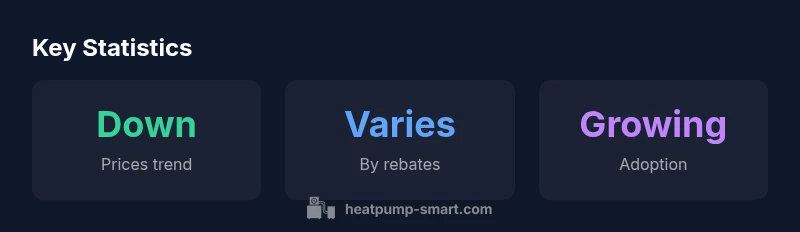
According to Heatpump Smart, the question 'will heat pumps get cheaper' hinges on manufacturing scales, policy rebates, and evolving refrigerants. Over the past decade, installed costs for air-source heat pumps have trended downward, though declines vary by climate and system type. Looking ahead, prices may continue to ease as supply chains stabilize and labor costs normalize, with rebates amplifying net savings for homeowners.
Will prices trend downward over time?
For homeowners asking will heat pumps get cheaper, the short answer is: it depends. The pricing trajectory for heat pumps is shaped by technology maturation, manufacturing scale, labor costs, refrigerant prices, and policy incentives. Industry watchers have observed that as production volumes rise and competition increases, hardware and installation costs tend to decline gradually. However, rebates, financing options, and regional installation challenges can slow or accelerate the net price a buyer pays. The Heatpump Smart team highlights that the direction of prices is not guaranteed to be uniform across all regions or all models. In practice, the cheapest option today may be a mid-range unit installed with good efficiency, while premium models with extended warranties or advanced controls can still carry higher upfront costs. A practical takeaway: plan for a price path that blends upfront cost with projected energy savings, rather than chasing the lowest sticker price alone.
The question of future affordability also hinges on policy decisions and global supply chains. If incentives expand and manufacturing scales improve, the real price of a complete heat pump system could move lower for many buyers. Conversely, shocks to refrigerant supplies or skilled labor shortages can temporarily push costs higher. Heatpump Smart’s outlook suggests a cautious but optimistic cadence: gradual declines in hardware costs paired with rising efficiency and better service options can widen the gap between upfront price and long-term savings.
Key drivers shaping cost trajectories
Several forces shape the price path for heat pumps today and into the near future. First, manufacturing scale and competition can drive unit costs down as facilities expand and automation improves. Second, refrigerant markets, particularly for low-global-warming-potential blends, influence both material costs and service expenses. Third, labor costs and installation complexity vary by region, climate, and whether the system is new or a retrofit. Fourth, policy rebates, tax credits, and utility programs strongly affect net cost to the consumer. Finally, energy prices and consumer demand for efficiency can alter the perceived value of a more expensive high-efficiency model. In aggregate, these factors create a price environment that is generally favorable to buyers over time, but with volatility tied to policy and supply-chain dynamics. As the Heatpump Smart analysis notes, consumers should evaluate total cost of ownership (TCO) rather than upfront price alone, especially when rebates and incentives are available.
Cost considerations by heat pump type and climate
The cost story differs by heat pump type and climate. Air-source heat pumps (both ducted and ductless) typically offer lower upfront costs and shorter payback periods in moderate climates, while geothermal systems often require higher initial investment but can yield larger long-term savings in suitable sites. Climate affects system sizing, efficiency, and heating loads, all of which influence installed price. In colder regions, you may need auxiliary heat or premium cold-climate models, which can raise upfront costs but improve reliability. Regional permitting, installation crews, and warranty terms also affect final figures. When planning, compare model efficiency ratings (SEER and HSPF for air-source), compressor technology, and refrigerant options, and insist on detailed quotes that break out equipment, installation, and any site-prep work. Heatpump Smart’s guidance is to align technology choice with local climate and long-term energy goals, not just the sticker price.
Rebates, incentives, and financing options
Rebates and financing options can dramatically reduce the out-of-pocket expense of a heat pump retrofit. Look for federal, state, and utility programs that provide tax credits, rebates, or low-interest financing for energy-efficient heating systems. Some programs cap benefits by system type or installation scale, so it’s essential to verify eligibility and expiration dates. Financing plans can smooth cash flow and lower perceived cost, but be sure to account for interest and any service fees. In many cases, bundling a heat pump installation with insulation upgrades or smart-home controls yields the best value. Heatpump Smart recommends starting with a full energy audit to identify where efficiency gains will maximize savings and to tailor rebates to your project scope.
Practical budgeting and procurement strategies for 2026 and beyond
A practical budgeting approach starts with a needs assessment and a clear comfort target. Use a 12–24 month planning horizon to map out when rebates will apply and how energy prices could influence payback. Obtain at least three quotes from qualified installers, and request itemized estimates that separate equipment, labor, and site-prep. Prioritize models with high efficiency and reliable warranties, but weigh net cost against projected energy savings. Consider phased upgrades (e.g., core living spaces first) and bundled weatherization work to maximize overall value. Finally, keep an eye on policy changes and contractor market conditions; both can materially affect timing and pricing. Heatpump Smart’s budgeting tips emphasize total cost of ownership and flexibility in plan design.
Looking ahead: 5- to 10-year outlook for prices
The next five to ten years are likely to bring continued price pressure from higher volumes, improved manufacturing processes, and more robust rebate ecosystems. While some models may see price reductions as standard, newer tech features and higher-performance components can keep some segments pricey. The key for buyers is to plan based on total cost of ownership, not just the upfront price. By pairing a heat pump with building envelope improvements, smart thermostats, and ongoing maintenance, homeowners and managers can maximize savings even if sticker prices lag slightly behind expectations. Heatpump Smart believes that disciplined planning and leveraging incentives will help most consumers achieve a favorable financial outcome over time.
Real-world scenarios and decision guides
To illustrate how the price dynamic plays out in practice, consider two common scenarios. Scenario A targets a mid-size single-family home in a moderate climate using an air-source heat pump with a standard warranty and energy-saving features. With rebates and efficient operation, the payback period can be reasonable, and ongoing savings accrue as energy prices rise. Scenario B envisions a retrofit in a cold climate with premium features, insulation upgrades, and a geothermal option in a suitable site. While upfront costs are higher, the system may offer greater long-term savings and resilience. In both cases, engaging a qualified installer, shopping for multiple bids, and planning around incentive programs are essential steps to ensure the most favorable outcome.
Cost considerations by heat pump type
| Heat Pump Type | Typical Installation Context | Cost Notes | Maintenance Notes |
|---|---|---|---|
| Air-source (ducted) | Residential retrofit | Varies by climate; cost generally lower than geothermal | Annual maintenance cost modest |
| Air-source (ductless) | Apartment/condo or zoned areas | Higher upfront than ducted; flexible | Average maintenance cost similar to ducted |
| Geothermal (ground-source) | New builds or retrofits in suitable sites | Higher upfront; longer payback | Low annual maintenance |
| Water-source | Selective sites | Moderate cost; dependent on water source | Moderate maintenance |
Your Questions Answered
Will heat pump prices keep falling in the next few years?
Prices are likely to trend downward slowly, especially with mass production and rebates, but timing varies by region and model. Stay focused on total cost of ownership rather than sticker price alone.
Prices may drift lower as adoption grows and incentives continue, but timing varies. Look at total cost of ownership rather than sticker price.
Do rebates affect the overall cost significantly?
Yes, rebates can substantially reduce net cost, and many programs have specific eligibility criteria. Always verify current incentives before purchasing.
Rebates can significantly cut net cost. Check current programs before buying.
Which heat pump type is most cost-effective long-term?
Air-source models usually have lower upfront costs and shorter payback in moderate climates, while geothermal can offer larger long-term savings in suitable sites. Consider climate, site, and energy prices when deciding.
Air-source is often cheaper upfront; geothermal can pay off longer term in the right site.
How do climate and installation impact price?
Climate influences system size, efficiency needs, and installation complexity, all of which affect price. Colder climates may require more capable units, raising upfront costs but improving reliability.
Climate changes system needs and installation costs; plan for size and efficiency accordingly.
Should I wait for newer tech to arrive?
New technology can reduce prices over time, but waiting delays energy savings. A practical approach is to time installation with rebates and budget forecasts.
Waiting for new tech may delay savings. Weigh rebates and timing instead.
Are there financing tips to buy a heat pump?
Explore rebates, financing options, and bundled efficiency programs. Compare total costs across lenders and consider energy savings in your payoff calculations.
Look for rebates and financing, and compare total costs to find the best option.
“A well-planned heat pump project combines efficient equipment with smart financing and service. Prices tend to move downward as adoption grows, but incentives and installation quality determine real-world affordability.”
Top Takeaways
- Prioritize total cost of ownership over upfront price
- Leverage rebates and financing to improve affordability
- Choose the right heat pump type for climate to optimize value
- Plan for installation timing around programs and incentives