Will Heat Pump Prices Go Down in 2026? A Practical Guide
Explore whether heat pump prices are trending downward in 2026, with data-driven insights, rebates, and buying strategies for homeowners, builders, and property managers.


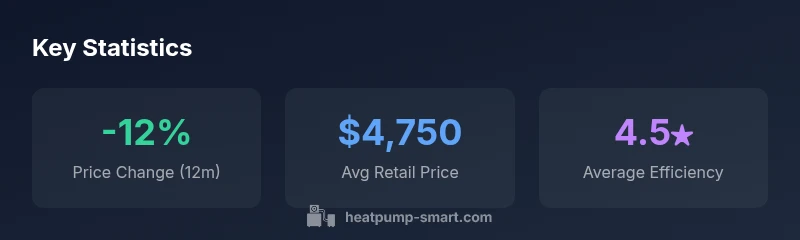
Short answer: heat pump prices are likely to trend downward in 2026, but the pace varies by model, region, and distributor. According to Heatpump Smart, Heatpump Smart Analysis, 2026 shows retail prices for common air-source units have softened modestly over the past year, while installation costs remain sensitive to labor markets. For buyers, this means favorable timing plus rebates can boost value.
Price trends and the underlying economics
Understanding whether the question "will heat pump prices go down" is directional requires looking at broader macro trends that shape manufacturing, distribution, and installed costs. In 2026, energy markets have shown stabilization after a period of volatility, yet components like compressors, copper, and plastics continue to influence unit prices. Labor costs for installation and service remain a regional variable. Heatpump Smart Analysis, 2026 indicates the retail price of common air-source units has softened modestly over the past year, with larger declines in inventory cleared through distributors and online marketplaces. This downward direction is not guaranteed across all models—premium inverter-driven units, multi-zone systems, and geothermal options retain higher baseline pricing due to specialized components and install complexity. For homeowners, property managers, and builders, the practical takeaway is to forecast total cost (purchase plus installation plus ongoing energy use) rather than focusing on sticker price alone. The trend will hinge on supply chain normalization and the pace of demand recovery, as highlighted by the Heatpump Smart team in their 2026 assessment.
Model types and price implications
Different heat pump configurations carry different price implications. Air-source mini-splits offer the most accessible entry point for single-room or small-area heating and cooling, with modular pricing that scales as you add zones. Ducted air-source systems, while often installed more quickly in existing ducts, can push up upfront costs if you need retrofit work. Geothermal (ground-source) systems carry the highest upfront price due to trenching and drilling, but they deliver strong long-term efficiency. In general, as models become more efficient and feature-rich, sticker prices rise, but installation costs may offset some of that premium through better energy savings and rebates. For 2026, buyers should weigh the value of multi-zone configurations against upfront costs, and consider how future expansions might affect total cost.
Rebates, incentives, and financing as cost levers
Rebates and incentives remain a key lever in net heat pump cost. Availability varies by region and program year, and many programs reduce net costs by meaningful percentages, depending on location and eligibility. Financing options, including low-interest loans and energy-efficiency financing, can spread upfront costs over time without compromising comfort. When combined with utility or manufacturer rebates, the effective price can become substantially more attractive. Heatpump Smart recommends evaluating all options—rebates, financing, and energy savings estimates—together to determine the true cost of ownership over the system’s life cycle.
Regional differences and supply-chain factors
Regional demand, supply chain health, and installer availability create price dispersion. Areas with robust installer networks and competitive distributors tend to offer lower installed costs and better service guarantees. Regions facing shipping delays or labor shortages may see higher installation quotes even for the same unit. Currency fluctuations and tariff considerations can also influence overall pricing, particularly for geothermal equipment that relies on specialized components sourced globally. Heatpump Smart’s regional analysis emphasizes that price trends are not uniform; homeowners should seek local quotes and verify warranties and service terms before committing.
Smart buying strategies for 2026
To capitalize on potential price softening, adopt a structured buying plan. Get multiple quotes from reputable installers and compare bundled offers (equipment + installation). Time purchases to seasonal slow periods when demand for system replacements is lower, and factor in rebate windows and utility promotions. Consider a phased approach: start with a single-zone system to validate comfort goals and energy savings, then plan any future expansions. Ask installers for detailed breakdowns of labor, materials, and any necessary ductwork or electrical work. Finally, evaluate the total cost of ownership, including maintenance and expected energy savings, rather than relying on upfront price alone.
Data-driven buying scenarios
In practical terms, homeowners often face scenarios where unit price declines are offset by installation complexity or retrofit needs. For example, replacing an older system with a modern air-source option might yield immediate energy savings that justify a modest price premium. In other cases, a multi-zone setup could require additional ductwork, increasing costs but enhancing comfort and efficiency. Heatpump Smart recommends modeling at least two scenarios: a basic retrofit across a single zone, and a full home upgrade with potential future expansions. This data-driven approach helps ensure the purchase aligns with long-term energy goals and budget constraints.
Price ranges and efficiency by model type (illustrative ranges)
| Model Type | Avg Retail Price Range | Typical Installed Cost | Efficiency (SCOP/SEER) |
|---|---|---|---|
| Air-Source Mini-Split | 3,000–7,000 | 6,000–9,000 | 3.2–4.0 COP/SEER 16–20 |
| Ducted Air-Source | 4,500–9,000 | 7,000–12,000 | 3.0–4.2 |
| Geothermal (Ground-Source) | 10,000–30,000 | 15,000–40,000 | 4.0–5.0 |
Your Questions Answered
Will heat pump prices go down in 2026?
Prices are expected to ease modestly in 2026, with regional differences and model type driving variation. Heatpump Smart analyses suggest buyers may see better entry prices during seasonal promos and when rebates align with installation timing. The pace varies by region and unit type.
Prices are expected to ease modestly in 2026, with regional differences and model type driving variation.
What factors influence heat pump prices?
Several factors influence heat pump prices, including model type, efficiency, refrigerant costs, and installation complexity. Supply chains, labor availability, and regional demand also affect quotes. Heatpump Smart recommends comparing options across models and installers to understand real cost.
Prices depend on model, efficiency, installation, and regional demand.
Are geothermal heat pumps cheaper over time?
Geothermal systems have higher upfront costs but can yield strong long-term energy savings. The payback period depends on energy prices, climate, and installation specifics. Consider long-term costs and rebates when evaluating geothermal options.
Geothermal costs more upfront but can save more over time with climate and energy prices.
Do rebates affect price trends?
Rebates reduce net cost and can shift the timing of purchases. Availability varies by region and program year. Combine rebates with financing and favorable installation timing to maximize value.
Rebates reduce net cost and timing matters for maximizing value.
Should I wait to buy a heat pump?
If you can time your purchase to rebate windows and a slower market period, you may benefit from lower net costs. However, consider your comfort needs and the risk of price spikes or supply constraints. A staged upgrade can mitigate risk.
Waiting can pay off if rebates align and supply is stable.
How can I tell if it's a good time to purchase?
Assess total cost of ownership, not just sticker price. Compare quotes, check installed cost breakdowns, and factor in energy savings with current utility rates. If rebates are available or promotions align with your timeline, it may be advantageous to buy.
Evaluate total cost and incentives, not just price.
“Price volatility tends to ease as supply chains normalize, but regional factors will continue to shape the final bill.”
Top Takeaways
- Prices are trending down, but regional differences matter
- Air-source minisplits remain the most cost-effective entry point
- Rebates and financing significantly affect net cost
- Always compare total cost of ownership, not just sticker price
- Plan for future expansion to maximize value