Xcel Heat Pump Rebate Guide 2026
Learn how the Xcel heat pump rebate works in 2026, who qualifies, how to stack incentives, and how to estimate ROI. Heatpump Smart explains eligibility, application steps, and practical tips for homeowners, builders, and property managers.


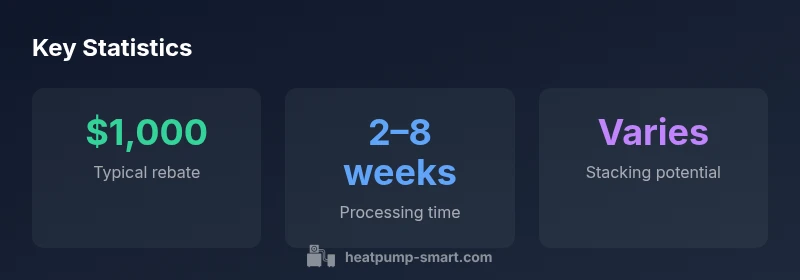
Xcel heat pump rebates typically offer incentives ranging from $300 to $2,000, depending on region and program. Eligibility hinges on system efficiency and installation standards. According to Heatpump Smart analysis, start with your utility or state energy office to identify stackable offers and caps. Final savings depend on equipment size, climate, and whether the unit meets efficiency targets. For precise figures, consult official program portals and your installer.
What is the xcel heat pump rebate and why it matters
For homeowners upgrading to a heat pump, the xcel heat pump rebate represents a meaningful subsidy that reduces upfront costs and speeds return on investment. It’s not a single program; rather, a family of incentives offered by utilities, state energy offices, and sometimes regional funders. According to Heatpump Smart analysis, the landscape changes with budget cycles and policy updates, so checking current opportunities before you shop is essential. In practice, rebates reward efficient, correctly installed systems that deliver reliable heating and cooling with lower energy use. A ductless mini-split or a standard air-source heat pump can qualify if it meets modern efficiency targets and installation standards. To maximize impact, align project scope—equipment size, zoning, refrigerant type, and thermostat controls—with program requirements. The outcome is not only reduced upfront costs but also improved performance and longer equipment life. A knowledgeable installer or energy advisor can map the best rebate path for your home, helping you understand stacking options and regional limits.
Eligibility criteria and qualifying costs
Eligibility is defined by program-specific requirements, which may include primary residence status, age of existing system, and minimum efficiency ratings (SEER, HSPF). Many programs require an energy assessment or approved equipment list. Typical qualifying costs include the purchase price, installation, and in some cases certain permits. Non-qualifying costs may include electrical upgrades beyond the scope of the project or extended warranty fees. The Heatpump Smart analysis shows that most rebates target new installations rather than retrofit-only replacements, and some programs require the unit to meet energy efficiency thresholds such as SEER 15 or HSPF 8.5 or higher. It’s important to note that some regions cap the rebate by system size in tons or by home value. For example, a typical installation might be eligible for a partial rebate based on efficiency tier, with larger homes or higher-performance models getting higher caps. Documentation usually includes a dated receipt, installation photos, and a verification form from the contractor. If your home is eligible for multiple programs, stacking is common but subject to caps; always verify with the administering agency or utility before approving the project.
How to apply: step-by-step process
- Define project scope with a qualified installer to ensure the heat pump meets efficiency targets and space constraints. 2) Gather required documentation such as receipts, contractor details, permits, and any pre-approval forms. 3) Get an energy assessment if required by your programs and confirm device model numbers meet eligibility lists. 4) Submit the application through the utility portal or state program portal, including site photos or documentation as needed. 5) Obtain approval and schedule installation by a licensed contractor. 6) After installation, submit final verification materials, including installation photos and equipment specifications. 7) Receive the rebate check or credit and keep records for future tax considerations. 8) If stacking is involved, coordinate timing between programs to maximize total incentives.
Regional variations and program overlap
Rebate programs vary widely by state, utility, and climate zone. Some regions set caps based on home value, lot size, or system capacity in tons, while others penalize inefficiency by lowering the rebate for older equipment. In many markets, several programs run concurrently—utility incentives, state grants, and federal or regional clean-energy funds—so applicants can potentially stack multiple offers. However, stacking is not universal; caps, eligibility, and sequencing rules differ. To navigate this landscape, homeowners should track expiration dates, required pre-approvals, and any documentation needed for each program. Heatpump Smart’s analysis shows that planning early—before selecting a model—helps maximize stacking opportunities and avoid missed deadlines.
Calculating savings and ROI: a practical approach
ROI from a heat pump rebate is not just the up-front discount. A simple framework considers: 1) net installed cost after rebate, 2) expected annual energy savings, and 3) maintenance costs over the life cycle. A basic formula might be: Net Cost = Purchase and installation minus rebates; Payback Period = Net Cost divided by annual energy savings. Because rebates and energy prices vary by region, use a range-based estimate: expect payback in the mid- to high-single digits of years in many cases, with potential shorter timelines in high-energy-price areas. Remember to account for weather differences, insulation levels, and thermostat optimization. Heatpump Smart analyses indicate that larger, more efficient systems tend to deliver better long-term ROI, particularly when paired with proper sizing and high-efficiency components.
Pitfalls to avoid and best practices
- Don’t skip a professional energy assessment or system sizing; incorrect sizing undermines efficiency and rebate eligibility. - Ensure the equipment nameplate matches program eligibility lists and that installation follows manufacturer and code requirements. - Keep all documentation organized: receipts, permits, contractor verification, and pre-approval letters if required. - Be cautious of “free” add-ons that aren’t eligible for rebates and may complicate eligibility. - Check whether the program requires a post-installation inspection or heat-loss assessment. - Coordinate with your installer to align the timing of purchases, permits, and inspections for smooth processing. - Consider combining rebates with financing options to reduce upfront costs further and speed ROI.
Beyond rebates: financing, incentives, and long-term benefits
Rebates are often complemented by tax credits, utility rebates, and low-interest financing programs. Depending on your location, you may be able to stack incentives with federal tax credits or state-level energy efficiency grants to maximize savings. Financing options can spread the upfront cost while preserving cash flow, and some programs offer performance-based incentives tied to actual energy savings after installation. Additionally, newer heat pump models may offer improved reliability, quieter operation, and better compatibility with smart thermostats, enabling further long-term energy savings. For property managers, coordinated rebates across multiple units can yield significant cumulative ROI and simpler procurement through bulk installer agreements.
Representative rebate landscape for residential heat pumps in 2026 (ranges approximate)
| Program | Typical rebate range | Qualifying costs | Notes |
|---|---|---|---|
| Residential Heat Pump Rebate | $300–$2,000 | Equipment + installation | Regionally varying caps |
| Efficiency Grant (generic) | $200–$1,000 | Equipment + installation | Subject to eligibility |
| State Tax Credit Alignment | $500–$1,500 | Equipment cost | Can stack with rebates |
Your Questions Answered
What counts as a qualifying heat pump for rebates?
Qualifying units typically meet minimum efficiency thresholds and specific model lists published by the program. Your installer can verify model numbers and efficiency ratings (SEER, HSPF) to ensure eligibility.
Qualifying units meet minimum efficiency standards and must appear on program-approved lists. Have your installer verify model numbers and efficiency ratings.
Can I stack multiple rebates from different programs?
Many programs allow stacking, but caps and sequencing rules vary. It’s essential to confirm stacking eligibility for each program and document timing to optimize total incentives.
Stacking is often allowed but varies by program. Check each program’s rules and time requirements to maximize incentives.
Do rebates require a home energy audit or verification?
Some programs require an energy audit or post-installation verification. Your contractor can help prepare the necessary paperwork and ensure compliance.
Some programs require an audit or verification. Your contractor can guide you through the paperwork.
Are rebates income-based or limited by home value?
A subset of programs may have income-based eligibility or home-value caps. Always check the specific program guidelines for your location.
Some programs have income or home-value eligibility limits. Check the local guidelines.
How long does it take to receive the funds after installation?
Processing times typically range from a few weeks to a couple of months, depending on program workload and documentation completeness.
Most rebates take several weeks to a few months after submission, depending on the program.
“Rebates can significantly improve the return on investment for heat pump upgrades when paired with proper sizing and efficient installation.”
Top Takeaways
- Identify all eligible programs before purchasing.
- Stack incentives carefully to maximize total savings.
- Budget for installation quality to unlock higher rebates.
- Use official portals and your installer as guides.
- Plan ahead for documentation and timelines to avoid delays.