Best Temperature for Heat Pump in Winter: Comfort and Efficiency
Discover the optimal indoor temperature for winter heat pump operation, how climate and humidity influence settings, and practical tips to maximize comfort and energy savings.


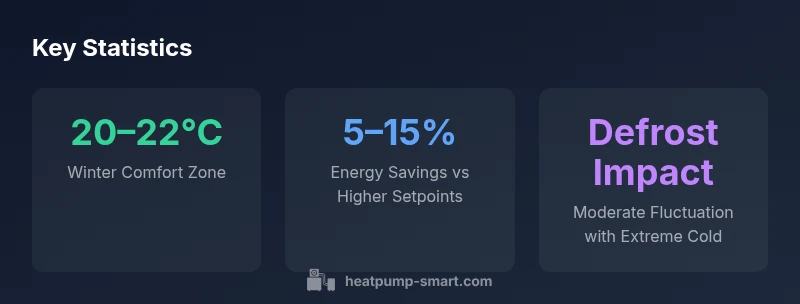
The best indoor temperature range for winter heat pump operation is generally about 20–22°C (68–72°F). For many homes, setting the thermostat to around 21°C (70°F) provides comfort while keeping electricity use reasonable. Individual comfort varies by clothing and activity, and very cold outdoor conditions may require some adjustments or auxiliary heat. According to Heatpump Smart, small, gradual changes yield the best balance between comfort and efficiency.
What the phrase 'best temperature for heat pump in winter' means
In the context of heat pump operation, the question isn't about a single universal number. The phrase refers to the indoor setpoint that delivers comfortable living conditions while minimizing energy use. For most homes in moderate climates, a winter setpoint around 21°C (70°F) hits a practical balance. However, personal comfort, clothing choices, home insulation, and local weather all influence the ideal value. According to Heatpump Smart, the aim is to minimize temperature swings and rely on gradual adjustments rather than abrupt changes. Using a smart thermostat to automate small, incremental changes helps maintain steady comfort and efficiency over the season. This section unpacks the factors that shape your 'best' winter temperature and why a one-size-fits-all figure rarely applies.
Factors shaping the ideal setpoint in winter
Comfort is personal, but several objective factors influence your target: occupant preferences, building envelope performance, thermostat capabilities, and the heat pump type. Poor insulation or air leaks make a cooler setpoint feel harsher and can force the system to work harder to maintain warmth. Programmable or smart thermostats help by scheduling gradual ramps, rather than sudden jumps that waste energy. The heat-pump type matters too: air-source units behave differently than geothermal systems in outdoor-to-indoor heat transfer efficiency. Consider your daily routines, occupancy patterns, and thermostat responsiveness when choosing a baseline around 21°C and adjusting in 1–2°C steps after a week of observation.
Climate zone considerations and insulation
Regional climate and home envelope quality drive the feasible temperature range. In milder winter climates, you might be comfortable at 22°C, while very cold regions often require 20–21°C to balance comfort with energy use. Insulation quality, window performance, and air sealing significantly affect perceived warmth; better envelopes reduce heat loss, allowing a lower setpoint without compromising comfort. Heatpump Smart emphasizes evaluating your insulation and solar gains alongside setpoint choices to determine the true comfortable range for your house.
Humidity, airflow, and indoor comfort
Humidity and air distribution influence how warm a space actually feels. Dry air at the same temperature can feel cooler, prompting higher setpoints or frequent fan operation. Conversely, high humidity can make the space feel warmer and sometimes less comfortable at higher temperatures. Ensuring balanced airflow—via properly sized vents, clean filters, and evenly heated rooms—lets you rely on a lower setpoint without sacrificing perceived comfort. In some homes, humidification or dehumidification strategies may enable you to maintain comfort at a lower temperature while keeping humidity in a healthy range.
Defrost cycles and winter operation
Defrost cycles are essential for maintaining heat-pump efficiency in winter but can temporarily reduce indoor warmth. Scheduling sets that minimize abrupt changes during defrost can help maintain steady comfort. If you notice frequent defrost episodes, verify outdoor coil cleanliness, refrigerant charge, and outdoor unit placement. A well-maintained system typically delivers consistent performance with modestly adjusted setpoints, rather than chasing a drastically higher number that costs more energy.
Practical step-by-step to optimize winter settings
- Establish a baseline: start at 21°C (70°F) and note comfort and energy use for 7 days. 2) Adjust in small increments: shift by 1°C (2°F) and observe changes in comfort and electricity consumption for another 7 days. 3) Enable adaptive scheduling: let the thermostat ramp temperature up in the morning and cool gradually at night to avoid swings. 4) Consider occupancy and clothing: lighter apparel may justify a slightly cooler setpoint while occupied; when home alone, you can tune down a notch. 5) Monitor humidity and airflow: ensure vents are clear, filters are clean, and humidity stays within a comfortable range. 6) Reassess after cold snaps: extreme cold may warrant a temporary, modest increase in setpoint or supplemental heat for comfort.
Monitoring and adjustment: a data-driven approach
Use energy-use data and indoor comfort feedback to guide ongoing optimization. Track monthly electricity use per degree of setpoint change, and correlate with occupancy and outdoor temperatures. If energy use rises without a corresponding improvement in comfort, reassess insulation, air sealing, and thermostat programming. Heatpump Smart recommends documenting changes and outcomes to build a personalized winter strategy that balances comfort and efficiency over the entire heating season.
Special cases: multi-zone homes, apartments, and retrofits
Smaller spaces or multi-zone layouts allow you to tailor temperatures by room, reducing the need to raise a single central setpoint for the whole house. For apartments with open-plan layouts, consider zone control strategies and a smart thermostat that can handle multiple zones. If you retrofit insulation or seal air leaks, you may discover that you can comfortably run at a lower setpoint, further boosting efficiency. When in doubt, run a trial period with a fixed setpoint, then gradually introduce zoning or advanced controls as needed.
Winter setpoints and practical notes
| Setting | Indoor Temp | Notes |
|---|---|---|
| Winter Default (typical) | 21°C (70°F) | Balanced comfort & efficiency |
| Eco Mode Setpoint | 20°C (68°F) | Lower energy use |
| Cold Snap Adjustment | 22–23°C (72–73°F) | Extra warmth during extremes |
Your Questions Answered
What is the ideal indoor temperature for a heat pump in winter?
Most homes find 20–22°C (68–72°F) comfortable, with 21°C (70°F) as a solid default. individual comfort varies, so adjust gradually.
Aim for about twenty to twenty-two degrees Celsius, adjusting slowly to suit comfort and energy use.
Does climate zone change the best temperature?
Yes. Mild climates may be comfortable higher in the range, while very cold regions often benefit from slightly lower setpoints paired with supplemental heat when needed.
Climate zones matter; you might need to tweak by a degree or two and use supplemental heat in extreme cold.
How often should I adjust my thermostat in winter?
Make small adjustments every 1–2 weeks based on comfort, then monitor energy use and weather; avoid large swings.
Adjust in small steps every week or two and watch energy use.
Can better insulation reduce the need to raise the setpoint?
Yes. Improved insulation reduces heat loss, allowing a lower setpoint without sacrificing comfort.
Better insulation often means you can keep comfort with a lower temperature.
Should I use auxiliary heat in cold snaps?
Auxiliary heat provides quick warmth but reduces efficiency. Use it sparingly during extreme cold or for short periods.
Aux heat can help during extreme cold but is less efficient, so use it sparingly.
How can I test if my settings are optimal?
Track energy use and comfort for a few weeks, compare baselines, and adjust based on observed results.
Measure energy use, compare baselines, and adjust as needed.
“Temperature decisions during winter are best guided by a blend of comfort data and system efficiency metrics; incremental adjustments with smart controls deliver the most reliable results.”
Top Takeaways
- Start with a baseline around 21°C and adjust gradually.
- Insulation and humidity significantly affect comfort at any setpoint.
- Use smart thermostats to optimize ramp times and avoid swings.
- Extreme cold may require modest temporary adjustments or auxiliary heat.
- Monitor energy use alongside comfort for ongoing optimization.