How Cold Can You Use a Heat Pump: A Practical Guide
Learn how cold a heat pump can operate, what temperatures affect performance, and practical tips to maintain comfort and efficiency in winter for homeowners, builders, and managers.


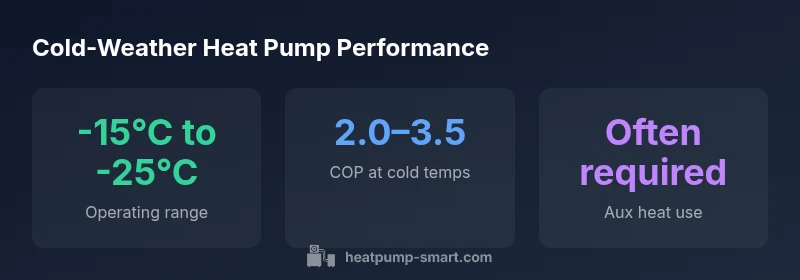
According to Heatpump Smart, cold-weather performance depends on the model and climate, but most modern air-source heat pumps (cold-climate variants) can operate down to roughly -15°C to -25°C (-5°F to -13°F). Efficiency falls as temperatures drop, and many systems rely on auxiliary heat during extreme cold; proper sizing, insulation, and smart controls improve reliability.
Why cold-weather performance matters
Understanding how a heat pump behaves in cold weather helps you avoid discomfort and unexpected energy bills. According to Heatpump Smart, the key is recognizing that operating temperature, outdoor unit efficiency, and indoor load all interact. A well-meshed system maintains comfort with a carefully sized unit, good insulation, and a smart thermostat that shifts to auxiliary heat only when necessary. Homeowners in moderate cold climates may notice little difference between rated performance and real-world results, while those in harsher winters should plan for supplemental heat options and defrost cycles. This section explains the physics in simple terms and frames practical decisions for retrofit or new installation. We'll cover how cold temperatures affect heat transfer, fan operation, refrigerant pressure, and how to interpret efficiency ratings when choosing equipment for winter performance.
How heat pumps handle subfreezing temperatures
Air-source heat pumps move heat from outside to inside, even when ambient temperatures fall below freezing. In subfreezing conditions, the system uses a refrigeration cycle with a boosted outdoor coil and higher compressor effort to extract heat from cold air. Defrost cycles periodically melt frost on the outdoor coil to maintain heat transfer, which can briefly reduce heating output. Cold-climate models often include enhanced refrigerant circuits and variable-speed compressors to optimize performance at low temperatures. While the unit continues to provide warmth, its COP drops as it approaches the lower end of its rated range, and the heating load may need to rely more on internal electric resistance or a secondary heat source during very cold spells. In practical terms, expect lighter yet steady warmth in typical winter days, with occasional spikes during cold snaps.
Factors that limit cold-weather operation
Several factors determine how well a heat pump performs in the cold. Outdoor air temperature is primary: the colder it is, the less heat is available to pull inside. Inadequate insulation increases indoor heat loss, forcing the system to work harder. Duct design and air leakage can undermine efficiency, especially when the building envelope is leaky. The specific efficiency rating of the unit at low temperatures may differ from standard operating conditions, so it is important to review COP values at cold temps (not just at 25°C). Finally, climate specifics, such as humidity and wind, influence perceived warmth and electricity usage. Understanding these limits helps you plan for auxiliary heat and zone control to maintain comfort throughout winter.
The role of auxiliary heat and defrost cycles
Auxiliary heat, often electric resistance, kicks in when the heat pump cannot meet the demand alone, typically during very cold days or rapid cooling. This is an expected behavior in many colder climates and is typically controlled by a smart thermostat or heat pump controller. Defrost cycles remove ice from the outdoor coil, temporarily reducing heating output but preserving long-term efficiency. Modern systems schedule defrost during milder periods to minimize energy loss. Understanding when and why auxiliary heat engages lets homeowners adjust setpoints, temperature setbacks, and humidity levels to optimize comfort and costs without sacrificing reliability.
Best practices for maximizing efficiency in winter
- Ensure your building envelope is tight: seal leaks, add insulation, and minimize thermal bridges.
- Use a properly sized heat pump designed for cold climates; avoid oversizing, which can waste energy during defrost cycles.
- Install a variable-speed compressor and a high-efficiency reversing valve; these features improve resilience in cold weather.
- Optimize thermostat strategy with outdoor temperature sensors or smart zoning to reduce reliance on auxiliary heat.
- Schedule regular maintenance before winter, including coil inspection and refrigerant checks. Heatpump Smart notes that even small improvements in insulation and system controls can yield meaningful gains in comfort and energy savings during cold months.
Selecting a heat pump for cold climates
When choosing a heat pump for a cold climate, prioritize models marketed for efficiency in low temperatures. Look for a higher HSPF and COP at low ambient temperatures, and consider the presence of compensating controls, defrost optimization, and frost protection features. Evaluate the unit’s performance in the specific climate zone you inhabit and compare energy usage across typical winter days. It’s wise to consult with an HVAC pro to confirm that the equipment matches your home’s insulation, ventilation, and solar gain. A well-chosen unit will minimize auxiliary heat and provide steady warmth through many winter days.
Installation prerequisites for winter performance
Proper installation is critical to winter performance. Outdoor units should have clear airflow and protection from wind; indoor units should be well-sealed with minimal duct leakage. Electrical supply must meet the unit’s amperage requirements, and a dedicated circuit is essential for peak operation. Ensure refrigerant lines are correctly insulated and that there is adequate frost protection. In colder regions, consider a dual-stage or matched system pairing with a supplemental heat source. The installer should verify that defrost controls, reversing valves, and sensor placements are calibrated for your climate.
Real-world scenarios: winter tips
Case examples show that even in moderate cold, residents notice comfort consistency when heat pumps are correctly installed. In cold snaps, setting back the thermostat slightly can reduce energy use without sacrificing perceived warmth if the system is paired with good insulation and smart controls. In very cold weeks, auxiliary heat may be unavoidable, but smart scheduling and zoned heating keep overall costs manageable. Weatherization measures, such as sealing leaks and upgrading windows, further reduce heat loss and improve the system’s effective performance during winter.
Maintenance and seasonal readiness
Prepare for winter with a pre-season check: inspect outdoor unit clearance, clean the coil, and ensure condenser fins are undamaged. Schedule a refrigerant charge check if your system is older or if you notice a drop in performance. Check the defrost system and thermostat operation. Regular filter changes and duct cleaning help maintain air flow and efficiency. By staying proactive, you reduce the risk of cold-weather failures and keep your heat pump performing close to its best across the cold season.
Representative cold-weather performance ranges
| Climate Condition | Typical COP | Auxiliary Heat Needed | Notes |
|---|---|---|---|
| 0°C (32°F) | 2.8-3.5 | Sometimes required | Most efficient in moderate cold |
| -10°C | 2.0-2.5 | Often required | Performance declines with lower temps |
| -20°C | 1.5-2.2 | Usually required | Very cold days rely on auxiliary heat |
Your Questions Answered
Can a heat pump heat my home below freezing?
Yes, many models operate below freezing, but efficiency drops and auxiliary heat is common.
Yes. Most heat pumps can work below freezing, but expect reduced efficiency and possible use of auxiliary heat on very cold days.
What temperature defines a cold-climate heat pump?
Cold-climate heat pumps are designed for low-temperature operation and typically show usable performance at subfreezing temps. Check COP at low temps instead of only standard ratings.
Cold-climate models are designed to perform in low temperatures; look at COP at cold temps, not just standard ratings.
Do I need auxiliary heat in winter?
Often, especially during very cold days. The need depends on outdoor temps, insulation, and system sizing.
Sometimes you will need auxiliary heat in very cold weather to keep the home comfortable.
How do I choose for winter performance?
Look for a model with strong COP at low temperatures, good defrost efficiency, and proper sizing for your home.
Choose a heat pump with good cold-weather performance, and make sure it’s properly sized for your space.
Will defrost cycles waste energy?
Defrost cycles briefly reduce heating output but prevent frost buildup; overall winter performance remains solid with proper design.
Defrosts are normal and energy-efficient when the system is properly designed.
How can I maximize efficiency in winter?
Seal leaks, insulate, install smart controls, and ensure correct sizing. Regular maintenance helps sustain performance.
Seal and insulate your home, use smart controls, and keep the system well-maintained.
“Cold-climate heat pumps can keep homes comfortable well below freezing, but performance hinges on system design, insulation, and controls.”
Top Takeaways
- Match heat-pump choice to climate and insulation.
- Expect auxiliary heat on very cold days.
- Defrost cycles are normal and not a sign of failure.
- Seal, insulate, and seal again for best results.
- Regular winter maintenance boosts reliability.