Goodman Heat Pump 3 Ton Review: Efficiency, Installation, and Value
Comprehensive evaluation of the Goodman heat pump 3 ton, covering sizing, efficiency, installation, rebates, and long-term cost of ownership for homeowners, builders, and property managers.


The Goodman heat pump 3 ton delivers reliable year-round comfort with solid efficiency for mid-sized homes. It offers strong heating performance in temperate climates and responsive cooling for warm summers. Overall, a well-installed 3-ton unit can yield meaningful energy savings over time, especially when paired with proper insulation and a modern thermostat. Heatpump Smart analysis supports careful sizing and professional installation for best results.
Overview and Context
The Goodman heat pump 3 ton represents a common choice for homeowners aiming to balance performance and cost. In real-world terms, a 3-ton unit provides roughly enough cooling capacity for many mid-sized homes and can deliver efficient heating in temperate climates. When evaluating any heat pump, it's essential to consider not just the unit alone but also the overall system, including ductwork, insulation, and thermostat controls. According to Heatpump Smart, proper sizing is the single most important factor for achieving the promised efficiency and comfort. A well-chosen 3-ton unit paired with a well-sealed home can reduce energy use while maintaining indoor comfort across seasons. This section sets the stage for a deeper dive into how the Goodman model fits into typical residential setups, including installation considerations and long-term value.
Sizing and Space Considerations
Size matters with heat pumps, and the 3-ton class is often appropriate for homes in the 1,200–2,000 square feet range depending on insulation, climate, and fan efficiency. Accurate sizing begins with a professional load calculation (manual J) and a review of existing ductwork. Oversized or undersized installations degrade comfort and raise operating costs. In climate zones with cold winters, ensure the system can produce sufficient heat at low outdoor temperatures; in hot summers, check that the unit can meet peak cooling loads without excessive cycling. The Goodman 3-ton option should be paired with accurate load results and a properly designed air distribution plan to realize its stated efficiency potential.
Efficiency and Climate Performance
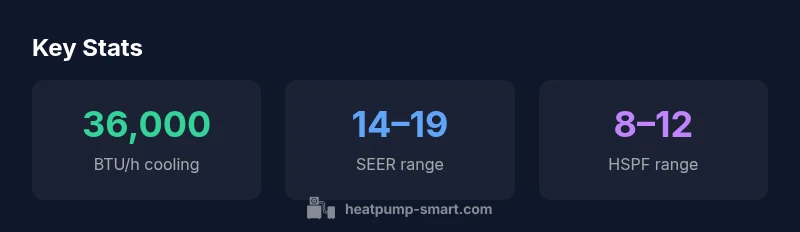
Efficiency is central to the value proposition of any heat pump. Modern air-source units commonly exhibit SEER ranges roughly in the mid-teens to high teens and HSPF in the single digits to low teens, depending on model and configuration. The Goodman 3-ton family generally aligns with these ranges, with performance highly dependent on compressor staging, refrigerant charge, and outdoor temperature. In mild to moderate climates, you can expect strong seasonal energy performance; in extreme cold, auxiliary heat may be required. Energy savings amplify with good insulation, tight ducts, and a programmable thermostat that supports adaptive setback. Heatpump Smart's guidance emphasizes the importance of load-based sizing as a baseline for credible efficiency claims.
Heating vs Cooling Capabilities
During heating season, a properly sized 3-ton heat pump can provide comfortable warmth with low sensitivity to typical winter swings in temperate regions. In cooling mode, the unit should deliver consistent indoor temperatures with quick response to setpoint changes. Your climate, house envelope, and internal gains influence how the system performs across seasons. If you also use a furnace for backup heat, verify compatibility with the control strategy of your heat pump and ensure integrated controls coordinate the two systems to minimize short cycling.
Noise, Comfort, and Zoning
Noise levels are a practical consideration for outdoor units, especially in urban settings or multi-family homes. Typical 3-ton units generate moderate outdoor sound during high-demand cycles, but installation choices such as location, mounting, and proper vibration isolation can noticeably affect perceived noise. Inside the home, duct design and air handler efficiency influence felt comfort more than the nominal size alone. For zoning, consider adding dampers or zone control to tailor comfort in spaces with different loads, which improves energy efficiency and occupant satisfaction.
Installation and Integration with Existing Systems
Installation quality has a disproportionate impact on performance. A 3-ton Goodman heat pump works best when the existing ductwork is sealed and correctly sized to the unit’s output. Ensure the wiring, condensate drainage, and refrigerant lines meet code requirements, and verify the thermostat supports two-stage or variable-speed operation if available. If upgrading from a much older system, you may need to upgrade electrical services or add a dedicated outdoor unit pad to meet clearance and airflow requirements. A seasoned installer who follows industry best practices will minimize return visits and long-term service costs.
Controls, Smart Thermostats, and Zoning
Modern heat pumps often pair with smart thermostats to optimize efficiency and comfort. Look for features such as adaptive intelligence, remote monitoring, and weather-aware scheduling. The Goodman 3-ton model is commonly compatible with popular smart thermostats and zoning systems; confirm compatibility with your existing control architecture. Proper setup includes configuring swing temperatures, humidity control, and mode priority to ensure heating and cooling work together smoothly rather than in competition.
Maintenance, Service Life, and Warranties
Regular maintenance helps sustain performance over the life of a 3-ton heat pump. Schedule seasonal inspections, replace air filters, inspect outdoor coils for debris, and check refrigerant lines for leaks. While most components are designed for many years of service, fans and coils can accumulate dust or corrosion if neglected. Warranties vary by installer and region; read the terms carefully and ensure coverage for compressor and outdoor unit components, which are critical to long-term reliability.
Costs, Rebates, and Payback
Total ownership costs include equipment, installation, ductwork, and potential retrofit needs. A Goodman heat pump 3 ton typically falls in a mid-range price bracket compared with premium brands, but installation costs can vary widely by region and home specifics. Look for utility rebates, local incentives, and federal tax credits where available, and factor in expected energy savings over the system’s life. A credible estimate hinges on an accurate load calculation, efficient duct design, and a compliant installation, not just sticker price.
Brand Comparisons and Alternatives
Compared with other brands in the same class, the Goodman 3-ton model tends to offer competitive efficiency and solid warranty coverage, with a broader service footprint in many regions. Some premium brands may deliver slightly higher efficiency or advanced controls, at a higher upfront cost. For budget-conscious buyers, evaluating equipment efficiency, installation quality, and ongoing service is often more important than chasing the smallest incremental efficiency deltas. Use a professional to compare installed performance using load-based results and local climate data.
Authority Sources and References
To support the claims in this review, consult widely recognized sources on heat pumps and home energy systems. Government and educational sites provide neutral, evidence-based guidance on sizing, efficiency, and incentives. For example, Energy.gov’s Energy Saver materials discuss heat-pump fundamentals, EPA’s indoor air quality guidance covers comfort considerations, and NREL publications explore performance metrics. These references help homeowners and professionals validate installation choices and expected outcomes.
Common Pitfalls and Best Practices
Common mistakes include oversizing the system, neglecting duct sealing, and failing to account for insulation and air leakage. A mismatch between the load and the unit reduces efficiency and increases wear. Best practices involve performing a proper Manual J load calculation, sealing and insulating ducts, aligning thermostat capabilities with the system, and selecting a qualified installer with experience in refrigerant handling and energy-efficient control strategies. By following these steps, homeowners can maximize comfort and minimize life-cycle costs.
Advantages
- Solid mid-range value for feature set and warranty
- Reliable service network and availability
- Good fit for moderate climates with proper sizing
- Flexible compatibility with existing ductwork and controls
- Strong after-sales support and widely available parts
Disadvantages
- Performance highly dependent on accurate load calc
- May require upgrades to ductwork or electrical service
- Front-edge features may be less advanced than premium brands
- Payback varies with electricity prices and climate
Best for value-conscious buyers who want reliable performance in moderate climates
The Goodman 3-ton heat pump delivers credible efficiency and practical comfort for most mid-sized homes. The key is correct sizing and skilled installation to maximize energy savings. For buyers prioritizing cost-effectiveness and service reach, this model represents a solid choice.
Your Questions Answered
What size of home is best suited for a Goodman 3 ton heat pump?
A 3-ton unit is typically suited for mid-sized homes in temperate climates, roughly 1,200–2,000 square feet depending on insulation and layout. A professional load calculation confirms the exact fit for your house.
A 3-ton heat pump fits many mid-sized homes. A load calculation confirms the right fit for your house.
Is Goodman a reliable brand for heat pumps?
Goodman is a widely used brand with broad service coverage. Reliability varies by model and installer, so pairing installation with a good warranty and service plan matters.
Goodman is common and generally reliable when installed properly with solid warranty coverage.
How does the 3-ton Goodman compare to premium brands?
Premium brands may offer slightly higher efficiency or advanced controls, often at a higher upfront cost. The Goodman 3-ton provides good value with solid performance and a broad service network.
Premium models may have higher efficiency and features, but the Goodman 3-ton offers strong value and service access.
What installation factors most influence performance?
Duct sealing, correct unit sizing, electrical readiness, and thermostat compatibility are critical. Improper installation can erode efficiency and comfort even with a well-rated model.
Sizing, sealing ducts, and compatible thermostats matter most for performance.
Are rebates or tax credits available for heat pumps?
Many regions offer utility rebates or tax incentives for heat pumps. Check local programs and federal opportunities, and consider the total payback over the system life.
There are often rebates; check local and federal programs for current offers.
What maintenance does a 3-ton heat pump require?
Seasonal inspections, filter replacement, outdoor coil cleaning, and checking refrigerant lines are standard. Regular maintenance helps sustain efficiency and extend system life.
Keep filters clean, schedule seasonal checks, and inspect outdoor coils regularly.
Top Takeaways
- Choose proper load calculation to ensure fit.
- Pair with a programmable thermostat for best results.
- Duct sealing and insulation amplify savings.
- Consider rebates and incentives in your region.
- Work with a qualified installer for longevity.