Heat Pump and Heat Strips: A Comprehensive Side-by-Side Comparison
An analytical comparison of heat pump systems and electric heat strips, covering operation, efficiency, costs, installation, and ideal use scenarios to help homeowners choose the right heating strategy.


Heat pumps generally outperform heat strips in efficiency and long-term savings, but heat strips can be a cheaper retrofit or backup in very cold weather. This article compares heat pump systems with electric heat strips across installation, operating costs, climate suitability, and comfort, helping homeowners decide when to choose a full heat pump, a strip-based setup, or a hybrid approach.
Overview of Heating Technologies
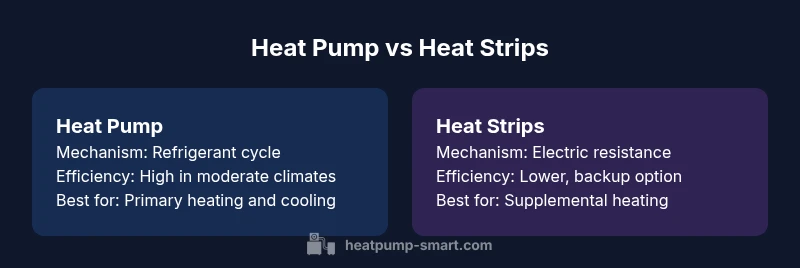
Heat pump and heat strips are two common approaches to delivering warm air in homes. This article compares heat pump and heat strips with a focus on how they work, where they shine, and where they falter. According to Heatpump Smart, the first step is a climate-based assessment, because your home’s insulation, electricity costs, and existing ductwork determine which solution yields the best balance of comfort and cost. A heat pump moves heat using electricity and refrigerant, pulling warmth from outside (even in cool weather) and delivering it inside. Heat strips, by contrast, generate heat directly through electric resistance. They’re simpler to install and can be added as a retrofit or backup. In practice, many homes benefit from a heat pump as the primary heating source, with heat strips deployed only during peak cold snaps or when extra capacity is required. This section sets the stage for a careful, data-driven comparison that weighs up-front costs, ongoing energy use, maintenance, and long-term reliability.
How They Work: Mechanisms and Controls
A heat pump operates like a reversible air conditioner. In heating mode, it uses an outdoor unit and refrigerant loop to absorb heat from the outside air and transfer it indoors through an indoor component such as a air handler or ducted system. The efficiency of this process depends on outdoor temperatures, system sizing, and proper maintenance. Heat strips, on the other hand, are an electric resistance source installed in or near the living space or within the ductwork. They convert electricity directly into heat without moving heat from outside, which means a quicker response but higher energy consumption per unit of heat. Control systems for both options can be integrated with smart thermostats, zoning, and weather-based controls to optimize performance. The choice between them hinges on how you weigh efficiency, reliability, and upfront costs in your climate and home design.
Efficiency and Operating Costs: What Drives Value
Efficiency is the primary driver of long-term costs. Heat pumps typically offer high efficiency in mild to moderate climates because they move heat rather than generate it, and cooling functionality can be a bonus in summer. Heat strips, by contrast, convert electricity to heat directly, which generally results in higher operating costs per hour of use. The value of heat pumps increases when electricity prices are stable and insulation minimizes heat loss. A hybrid approach—using heat pumps as the main heater and heat strips as a supplemental or backup source during very cold days—often yields a favorable balance between comfort and operating costs. As Energy experts emphasize, the choice should reflect local energy prices, climate patterns, and how often you anticipate peak-demand scenarios.
Installation, Maintenance, and Lifespan
Installation complexity differs markedly between the two options. A heat pump requires outdoor equipment, refrigerant lines, a properly sized indoor unit, and usually a dedicated electrical circuit. It may involve ductwork, refrigerant charging, and zoning considerations, all of which contribute to higher upfront costs but a more integrated system. Heat strips require far less installation work—usually a straightforward electrical connection and integration with an existing heating circuit or air handler. Maintenance for heat pumps includes regular outdoor unit cleaning and periodic refrigerant checks, while heat strips demand less routine service beyond wiring inspections. Lifespan varies with usage and climate, but with appropriate maintenance a well-designed heat pump system can last longer and provide cooling as well as heating.
Design, Space, and Zoning Considerations
Choosing between a heat pump and heat strips also involves space planning. A heat pump needs outdoor space and clearances for the condenser unit, along with indoor footprint for the air handler or ductwork. Noise and vibration from the outdoor unit are factors for property managers and homeowners in dense neighborhoods. Heat strips have a smaller physical footprint and multiplex more easily into existing layouts, but they rely on robust electrical capacity. Zoning becomes important when you want room-by-room control; heat pumps with modern zone controls can deliver precise comfort, while heat strips are often deployed as supplemental zones or in multi-story retrofit scenarios where extending a heat pump system is impractical.
Real-World Scenarios: When to Use Each Option
Consider a new build in a temperate climate: a heat pump is usually the best primary heating source, thanks to efficiency and the potential for cooling in summer. For an older home with limited electrical capacity or a retrofit project, heat strips can be added as a backup or supplemental heat, avoiding a full system replacement. In regions with very cold winters, a hybrid approach may be optimal: the heat pump handles most days, while heat strips kick in during severe cold or during peak demand periods to maintain comfortable indoor temperatures. Builders and homeowners should evaluate insulation quality, air sealing, and local incentives to shape the most cost-effective configuration.
Hybrid Solutions: When to Combine Heat Pumps with Heat Strips
Hybrid systems blend the strengths of both technologies. The heat pump covers the bulk of heating load in moderate weather, while heat strips take over during cold snaps or when the heat pump’s capacity is insufficient. This approach reduces the risk of uncomfortable indoor temperatures and avoids oversizing the heat pump to handle the coldest days. Key considerations include controlling strategy, thermostat programming, and ensuring electrical service can support simultaneous operation of both systems. For many households, a well-designed hybrid system offers dependable comfort with better long-term energy performance.
Practical Decision Checklist: How to Decide
To decide between heat pump and heat strips, follow a simple checklist: evaluate your climate and winter temperatures, estimate electricity costs, review insulation and air sealing, examine the current electrical service, and consider installation budgets. Run a scenario analysis for typical winter days, and discuss with a qualified HVAC professional how a hybrid approach might optimize comfort and cost. Don’t forget to check for local rebates or incentives that can significantly affect the payback period. Heatpump Smart recommends starting with a climate-based assessment and then validating options with a trial or staged implementation where possible.
Comparison
| Feature | heat pump | heat strips |
|---|---|---|
| Heating mechanism | Vapor-compression cycle using refrigerant | Electric resistance heating |
| Energy efficiency | High efficiency in moderate climates; performance improves with climate-appropriate sizing | Lower efficiency; direct conversion of electricity to heat |
| Upfront cost | Higher; equipment, installation, and ductwork typically required | Lower; simpler retrofit and no outdoor unit needed |
| Installation complexity | Outdoor unit, refrigerant lines, indoor air handling or ducts; may require electrical upgrades | Relatively simple electrical work; minimal space impact |
| Maintenance | Regular outdoor unit maintenance; refrigerant checks sometimes required | Fewer moving parts; occasional wiring inspections |
| Climate suitability | Excellent in mild to cool climates; cold-weather performance improves with auxiliary heat or hybrid systems | Useful as backup in cold weather or for retrofit heating; best for limited peak demand scenarios |
| Best for | Primary heating and cooling with long-term energy savings | Backup heating or retrofit where heat pump installation is impractical |
Advantages
- Higher long-term efficiency and potential cooling benefits with heat pumps
- Hybrid setups offer flexible climate responsiveness
- Access to rebates and incentives for energy-efficient systems
- Smart controls enable precise zoning and comfort
- Potential for quieter operation with properly engineered systems
Disadvantages
- Higher upfront cost and more complex installation
- Cold-climate performance can require supplemental heat
- Heat strips can raise operating costs if used heavily
- Outdoor units demand space and weather protection
- Maintenance and inspections are more involved for heat pumps
Heat pumps are generally the best overall option for efficiency and comfort; heat strips serve as reliable backups or retrofit options in tight spaces or very cold climates.
For most homes, a heat pump-based system delivers durable comfort and energy savings. In extreme winter regions or retrofits where a full system upgrade isn’t feasible, heat strips provide a practical, lower-cost backup or supplemental heating option.
Your Questions Answered
What is the main difference between heat pump and heat strips?
A heat pump moves heat using a refrigeration cycle, which is typically more energy-efficient, while heat strips generate heat directly through electric resistance. The choice depends on climate, insulation, and desired comfort level.
Heat pumps move heat efficiently, while strips generate heat with resistance. Climate and insulation determine which is better for you.
Can I use heat strips with a heat pump?
Yes. A hybrid setup can use heat strips to supplement the heat pump during very cold periods or as a backup. This approach preserves comfort while avoiding over-reliance on one system.
You can combine them; heat strips back up the heat pump during cold snaps.
Do heat strips dramatically raise electricity bills?
Heat strips increase electricity use when active, especially if used extensively. They are most cost-effective as a backup or in limited situations rather than as the primary heat source.
Yes, heat strips cost more to operate if used a lot; use them judiciously.
Are heat pumps effective in very cold climates?
Heat pumps perform well in moderate and cool climates but may need supplemental heat in very cold conditions. Hybrid systems often mitigate this limitation by providing additional warmth when needed.
In very cold weather, heat pumps may need backup heat, but hybrids help maintain comfort.
What maintenance do they require?
Heat pumps require annual checks of outdoor units and refrigerant integrity; heat strips require minimal routine service beyond wiring inspections. Both benefit from professional evaluation every few years.
Heat pumps need regular service; heat strips are simpler but still need inspection.
How do I decide on a hybrid approach?
Evaluate climate severity, electricity costs, insulation quality, and local rebates. A contractor can tailor a control strategy so the heat pump handles most days and heat strips engage only when needed.
A hybrid approach prioritizes the heat pump, with heat strips used when necessary.
Top Takeaways
- Assess climate, insulation, and electricity costs before choosing
- Hybrid solutions often balance comfort and energy use
- Heat pumps excel in efficiency; heat strips are reliable backups
- Plan for proper zoning and smart controls to maximize performance
- Check local rebates and incentives to improve payback