Heat Pump vs Electric Heat: A Practical Comparison
Detailed, data-driven comparison of heat pump vs electric heat for home heating. analyze efficiency, costs, climate suitability, installation, and long-term value to guide your decision.


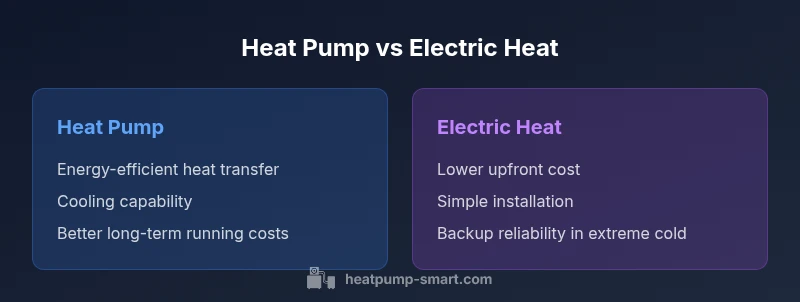
Heat pump or electric heat: which is more cost-effective and reliable? Heat pumps move heat rather than generate it, delivering warmth with far less energy when conditions aren't extreme. In most homes, a properly sized heat pump reduces operating costs and improves comfort, while electric resistance remains simpler to install and is reliable as a backup in very cold weather.
Overview: Why the comparison matters and what to expect
Choosing between heat pump or electric heat hinges on how heat is produced, how it travels through your home, and how climate shapes performance. A heat pump transfers heat from outside air or the ground into your living spaces, often providing cooling in summer as a byproduct of the same system. Electric resistance heating, by contrast, generates heat directly by running electric coils. This distinction drives differences in efficiency, operating costs, and resilience across seasons. According to Heatpump Smart, the most meaningful difference is energy flow: heat pumps use ambient heat, which means you pay for moving energy rather than creating it. The Heatpump Smart team found that the economics of each option improve when you account for insulation quality, air sealing, and thermostat strategy. For homeowners, builders, and property managers, the goal is to balance upfront investment with long-term comfort and bills. The choice should reflect climate, building envelope, and how you use heat (heating only, or heating plus cooling). The result is not always a black-and-white winner; in many cases, hybrid approaches or staged installations offer the best value.
In the opening section, you will see how the two approaches perform under typical real-world conditions and what factors tip the scales toward one option over the other.
Comparison
| Feature | Heat Pump | Electric Resistance Heating |
|---|---|---|
| Operating principle | Moves heat using refrigerant cycle (also provides cooling in summer) | Generates heat by resisting electrical current through coils |
| Energy efficiency | High efficiency when outdoor heat is available; efficiency improves with modern refrigerants and controls | Lower efficiency in proportion to electricity used for heat production; no seasonal efficiency gain |
| Running costs | Typically lower long-term costs due to heat transfer mechanism | Often higher ongoing costs, especially in cold weather when more electricity is required |
| Installation requirements | Outdoor unit plus indoor distribution; may require ductwork or mini-split configurations | Simple electrical hookup; no refrigeration equipment |
| Maintenance | Requires periodic service for refrigerant, compressor, and controls | Fewer moving parts; basic electrical system maintenance |
| Cold weather performance | Continues to operate efficiently in moderate cold; supplemental heat may be needed in extreme cold | Consistent heat output but rising electricity use in colder months |
| Noise and footprint | Outdoor unit adds some noise and space needs | Typically quieter indoors; no outdoor mechanical unit |
| Best suited for | Homes seeking year-round comfort plus cooling, moderate climates, and energy-conscious upgrades | Budget-constrained upgrades, quick retrofit, or backup heating in very cold climates |
Advantages
- Lower operating costs over time in many climates due to heat transfer efficiency
- Provides cooling as part of the same system, increasing year-round comfort
- No combustion, improved indoor air quality and safety
Disadvantages
- Higher upfront costs and more complex installation
- Performance can drop in very cold climates unless paired with auxiliary heat
- Requires space for outdoor equipment and proper clearance
Heat pumps generally offer better total value for most homes, especially in moderate climates; electric heat remains a viable backup or budget-friendly option in very cold locations.
For most households, heat pumps deliver lower long-term energy costs and added cooling. Electric heat is simpler and cheaper to install upfront, but operating costs can be higher. The best choice depends on climate, insulation, and how you use heat year-round.
Your Questions Answered
What is the primary mechanical difference between heat pumps and electric resistance heating?
Heat pumps transfer heat using a refrigeration cycle and can also provide cooling, while electric resistance heating generates heat directly with electric coils. The transfer-based approach yields higher efficiency under typical operating conditions.
Heat pumps move heat from outside to inside, and they can cool spaces too. Electric heat simply turns electricity into heat. That difference is what makes heat pumps more energy-efficient in many situations.
Can a heat pump operate effectively in very cold weather?
Most air-source heat pumps continue to function in cold weather, though performance can degrade and additional heat may be required. Ground-source heat pumps tend to perform more consistently in cold conditions, depending on installation.
Yes, but very cold days may necessitate auxiliary heat or a hybrid setup to maintain comfort.
Are rebates or tax credits available for heat pump installation?
Many regions offer rebates or incentives for heat pump installations or energy-efficiency upgrades. Availability varies by location and program support, so check local and national programs.
Yes—look for local rebates and tax credits to offset upfront costs.
Is electric heat cheaper to install than a heat pump?
Electric resistance heating generally has a lower upfront installation cost because it uses a simpler electrical system. Over time, however, energy costs often rise relative to heat pump operation, especially in moderate climates.
Upfront, electric heat is cheaper to install, but long-term running costs can be higher.
How should I assess maintenance needs between the two options?
Heat pumps require periodic service for refrigerant and mechanical components, whereas electric resistance systems are simpler with fewer moving parts. Regular checks can prevent efficiency loss in both cases.
Heat pumps need a professional service occasionally; electric heat needs less routine maintenance but still benefits from inspections.
Which option is better for rental properties?
For rentals in temperate climates, a heat pump can improve comfort and reduce operating costs for tenants, but upfront costs and space for equipment must be considered. In very cold climates or smaller units, a well-designed electric heat setup may be more practical as a stopgap.
Heat pumps can boost tenant comfort and reduce bills, but upfront space and budget matter.
Top Takeaways
- Evaluate climate and home envelope before choosing.
- Think long-term: compare total cost of ownership, not just upfront price.
- Heat pumps offer cooling and higher efficiency in temperate regions.
- Electric resistance is simple, reliable, and fast to install but typically costlier to run.
- Check local rebates and incentives to improve economics.