Heat Source Pump Pros and Cons: An Analytical Guide
Explore the pros and cons of heat source pumps, including air-source and geothermal options, with practical guidance for homeowners, builders, and property managers seeking efficient heating solutions.


Air-source and geothermal heat source pumps each bring trade-offs. Air-source units usually cost less to install and retrofit, with simpler maintenance, but efficiency can drop in very cold weather. Geothermal systems offer steadier, higher efficiency and longer life, yet demand more space and a larger installation. Your climate, property, and long-term plans determine the best fit.
What is a heat source pump and how it differs from standard heat pumps
A heat source pump is a heating and cooling system that transfers heat between a home and an external source, such as outdoor air, the ground, or a nearby water body. This definition covers common configurations like air-source and ground-source heat pumps. In the context of heat source pump pros and cons, the core advantage is moving heat rather than burning fuel, which can lower operating costs and reduce emissions over time. Heat pumps are designed to extract heat from a source at a relatively low temperature and upgrade it to comfortable indoor conditions using a heat exchange cycle. Heatpump Smart emphasizes that the selection of heat source—air, ground, or water—significantly shapes performance, upfront costs, and long-term value. The debate over heat source pump pros and cons often centers on climate compatibility, available space, and long-term ownership goals. The takeaway is simple: the technology works best when matched to the site and usage patterns of the home.
Core types: air-source vs ground-source heat pumps
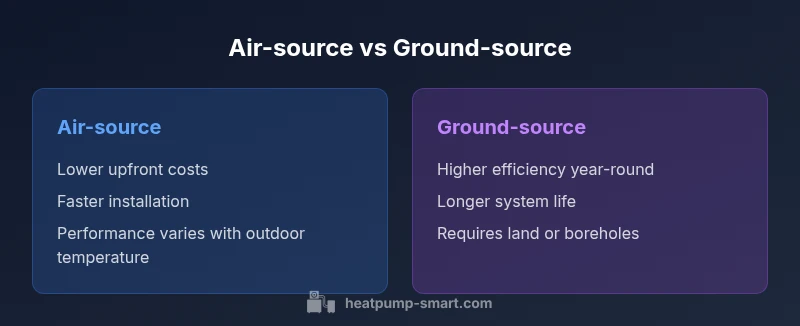
Air-source heat pumps (ASHPs) pull heat from outdoor air and transfer it indoors. Ground-source heat pumps (GSHPs or geothermal) use stable subterranean temperatures via buried loops to provide heat. ASHPs are generally easier to install and retrofit, with lower upfront costs and simpler service. Geothermal systems typically offer higher efficiency and a longer lifespan, but their installation requires more space for ground loops or boreholes and involves more complex permitting. When weighing heat source pump pros and cons, consider how a climate with extreme cold or heat will affect performance, and how much land or excavation is feasible on the property. Heatpump Smart notes that both options can integrate with smart thermostats and hybrid systems for optimized energy use.
How climate affects the pros and cons
Climate is arguably the most decisive factor in selecting a heat source pump. In moderate climates, ASHPs often provide dependable performance with adequate efficiency and pleasant indoor comfort. In very cold climates, ASHP efficiency tends to drop, although modern cold-climate models mitigate this gap with enhanced refrigerants and advanced controls. Geothermal systems maintain high efficiency across a wide temperature range thanks to the earth’s stable underground temperature, but their performance hinges on the loop design and soil conditions. Heatpump Smart analysis shows that climate dictates a lot of the heat source pump pros and cons, influencing not only efficiency but also maintenance needs and potential backup heating requirements.
Efficiency and performance considerations
Efficiency for heat source pumps is typically described by COP (coefficient of performance) and SCOP (seasonal COP). Higher COP/SCOP values indicate better efficiency, which translates into lower operating costs over time. Real-world performance depends on several factors, including outdoor temperature, humidity, refrigerant choice, system sizing, and duct design. In practice, a geothermal loop can sustain higher performance in winter than an air-source unit operating in frigid air. Heatpump Smart highlights that while efficiency is important, real-world comfort, consistent heating, and humidity control are equally vital to the overall value of the installation.
Installation considerations and space requirements
Installation considerations for heat source pumps vary by type. Air-source units typically mount on an exterior wall or stand on a pad, with minimal indoor remodel required. Ground-source systems demand space for buried loops or boreholes, often requiring professional site assessment and possible excavation. Noise management is a factor with ASHPs due to outdoor equipment, but modern designs minimize disruption. Properly designed ductwork, electrical capacity, and ventilation are essential for maximizing performance. Heatpump Smart recommends a detailed site evaluation to determine feasibility and optimize system layout before committing to any heat source pump pros and cons analysis.
Upfront costs, operating costs, and long-term value
Upfront costs for heat source pumps vary by type, installation complexity, and local labor rates. Air-source systems generally have lower initial costs and faster installation, while geothermal systems involve higher upfront investment due to ground loop installation. Operating costs and long-term value depend on efficiency, climate, and energy prices. In many cases, the lower lifetime energy use of geothermal systems offsets the higher upfront expense, especially in homes planning long-term occupancy. Heatpump Smart stresses evaluating total cost of ownership over the system’s lifetime rather than focusing solely on initial price.
Maintenance and service requirements
Maintenance for heat source pumps is typically straightforward but differs by configuration. Air-source pumps require routine filter changes, outdoor unit inspections, and periodic refrigerant checks. Geothermal systems may require less frequent refrigerant service but demand specialized inspection of underground loops and heat exchangers. Regular professional maintenance helps sustain efficiency and prevent costly breakdowns. Heatpump Smart notes that proactive maintenance can extend system life, reduce unexpected downtime, and preserve energy savings over the lifespan of the installation.
Noise, aesthetics, and integration with home systems
Noise from outdoor units is a common concern with air-source heat pumps, especially in densely built neighborhoods. Advancements in compressor technology, vibration isolation, and better fan design have reduced audible noise in modern units. Aesthetics—external cabinets, conduit runs, and mounting choices—also matter for homeowners and property managers. Both air-source and geothermal systems can be integrated with smart thermostats and home automation routines to optimize comfort and efficiency. Thoughtful placement and design help minimize visual impact and noise while maximizing performance.
Per-option: Air-source vs Ground-source in practice
In practice, air-source heat pumps offer faster payback, easier retrofitting, and less invasive installation than geothermal systems. They are often the preferred choice for existing homes with limited land or without the option for large yard space. Ground-source heat pumps deliver superior energy efficiency and greater stability in hot or cold extremes, but require land area or access to boreholes and involve higher installation costs. For properties with enough land and a long-term ownership horizon, geothermal can deliver the best long-term value. Heatpump Smart emphasizes weighing climate, property constraints, and budget against the anticipated lifespan of the equipment.
Best-use scenarios for homeowners, builders, and property managers
Homeowners in mild and transitional climates with limited space may lean toward air-source heat pumps for quick installation and solid comfort. Builders planning net-zero or high-efficiency new homes may favor geothermal systems if the site offers space for loops and long-term occupancy is anticipated. Property managers overseeing multi-unit buildings can benefit from geothermal systems where feasible, given the consistent performance and potential for reduced energy usage across units. Regardless of choice, pairing the system with a well-insulated envelope and efficient ductwork enhances overall performance and savings.
Decision checklist: how to choose in real life
Begin with a climate assessment: do you experience frequent extreme temperatures that affect heat source efficiency? Review land/building constraints: is there space for ground loops or access to boreholes? Consider long-term occupancy and maintenance commitments. Compare upfront costs with expected energy savings, and consult with licensed professionals to confirm system sizing and compatibility with your existing setup. Heatpump Smart recommendations emphasize testing, quotes, and reference checks before finalizing a heat source pump pros and cons decision.
Comparison
| Feature | Air-source heat pump | Ground-source heat pump |
|---|---|---|
| Upfront cost | lower upfront costs, easier retrofit | higher upfront costs due to ground loop installation |
| Energy efficiency | strong efficiency in moderate climates | typically higher efficiency and stable performance year-round |
| Climate suitability | works well in mild to moderately cold climates | best in cold climates with proper loop design |
| Installation footprint | outdoor unit, minimal yard impact | requires underground loops or boreholes, more space |
| Maintenance | regular outdoor unit maintenance, ducted options common | generally fewer refrigerant service visits, underground components require specialized checks |
| Noise considerations | outdoor unit noise is a factor; usually mitigated with placement | less outdoor noise impact due to buried loops |
| Best uses | retrofits and projects with limited land | new builds or long-term installations with land available |
Advantages
- Lower upfront costs and simpler installation for air-source systems
- Retrofitting and integration with existing ductwork is straightforward
- Solid performance in moderate climates with decent efficiency
- Geothermal systems offer higher efficiency and longer lifespan when land is available
- Hybrid configurations can optimize energy use by switching between sources
Disadvantages
- Air-source efficiency can decline in very cold weather
- Geothermal installation has higher upfront costs and longer payback
- Ground loops require physical space and/or boreholes
- Maintenance complexity can increase with geothermal designs in some cases
Air-source heat source pumps are the pragmatic choice for most homes; geothermal shines where space and long-term savings justify the cost.
Choose air-source for lower upfront investment and easier installation, especially in milder climates. Opt for geothermal if you have land, want peak efficiency, and plan to stay long-term. Balance climate, space, and budget to select the best heat source pump pros and cons path.
Your Questions Answered
What is a heat source pump?
A heat source pump transfers heat between a home and an external source such as air or ground to provide heating and cooling. It moves heat rather than burning fuel, offering energy efficiency benefits and reduced emissions when used correctly.
A heat source pump moves heat between your home and an outside source like air or ground, providing heating and cooling with energy efficiency advantages.
Are heat source pumps suitable for very cold climates?
Heat source pumps can function in very cold climates, but performance varies by type. Modern air-source models are designed for cold weather, while geothermal systems maintain efficiency more consistently regardless of outdoor temperatures.
They can work in cold climates, though performance depends on the system type and design.
What maintenance does a heat source pump require?
Regular professional inspections, refrigerant checks, and filter changes are typical for heat source pumps. Geothermal loops may require periodic verification of loop integrity, while air-source units benefit from outdoor unit cleaning and coil inspections.
Expect periodic professional checks and routine maintenance like filters and coil cleaning.
What is the difference between air-source and geothermal heat source pumps?
Air-source pumps pull heat from outdoor air and are generally easier to install with lower upfront costs. Geothermal pumps draw heat from the ground via buried loops, offering higher efficiency but requiring more space and installation work.
Air-source is cheaper and easier to install; geothermal is more efficient but needs more space.
Can heat source pumps provide cooling in summer?
Yes. Most heat source pumps operate as heat pumps year-round and can provide cooling by reversing the thermodynamic cycle. Proper sizing and duct design ensure comfortable indoor temperatures in summer as well.
Yes, they can cool in summer by reversing the cycle.
How do I estimate long-term savings from a heat source pump?
Estimate depends on climate, energy prices, efficiency, and usage. A professional assessment can compare expected annual energy consumption for heat source pump options against existing heating systems to project payback periods.
A pro can compare energy use and costs to estimate payback.
Top Takeaways
- Compare upfront costs vs long-term savings for your climate
- Air-source is typically easier to install and retrofit
- Geothermal offers higher efficiency but needs space and planning
- Consider future maintenance and system integration
- Use a professional site assessment to inform final choice