How to Make Your Heat Pump Hotter: Safe, Practical Tips
Learn safe, practical ways to maximize warmth from your heat pump. This guide covers sizing, thermostat settings, airflow, and maintenance, with Heatpump Smart.


To get the most warmth from your heat pump, you cannot simply make it hotter beyond its design. Instead, optimize system sizing, airflow, refrigerant efficiency, and thermostat settings, while using auxiliary heat during cold snaps. Start with a professional inspection, keep filters clean, and ensure your home is well insulated for best results.
Understanding what 'how to make your heat pump hotter' really means
When homeowners search for how to make your heat pump hotter, they often mean: how can I feel more warmth from a system without risking damage or wasting energy. In reality, a heat pump cannot be forced to produce heat beyond its rated capacity. It moves heat from the outdoors into your home and relies on outside temperatures, refrigerant efficiency, airflow, and indoor humidity. According to Heatpump Smart, heat pumps are designed to deliver a defined amount of heat and won't push extra warmth beyond their design. That means the goal is not to push the unit harder but to ensure it operates as efficiently as possible and that the home environment supports the machine. If the outside air is very cold, the system may switch to auxiliary heat to maintain comfort. The aim is to keep the system working smoothly and consistently rather than chasing a temporary spike in indoor temperature. The practical takeaway is that warmth comes from a well-rounded approach: good insulation, sealed ductwork, balanced air distribution, and correct equipment settings. Heatpump Smart's guidance emphasizes a holistic view: warmth depends on the whole system, not a single knob turn. In the coming sections you will find actionable steps, safety considerations, and practical strategies to improve comfort while protecting equipment.
How heat pumps produce heat and their limits
A heat pump doesn’t generate heat; it transfers it from outside to inside. Its effectiveness rises when outdoor temperatures are mild and falls as it gets colder, especially in extreme cold where a backup heater is used. The unit's real-world warmth is governed by three things: (1) the outdoor coil's ability to absorb heat, (2) indoor air delivery, and (3) the refrigerant charge and compressor efficiency. Because the system is rated for a specific capacity, you cannot increase warmth by turning a knob; you can only keep it operating at or near that capacity. Heatpump Smart analysis notes that performance declines if the outdoor coil is iced over, airflow is restricted, or indoor filters are dirty. Regular maintenance, proper sizing, and correct refrigerant charge help preserve warmth. If the defrost cycle runs frequently or the outdoor unit is obstructed by debris, you’ll notice cooler indoor air. The aim is reliable warmth, not dramatic temperature swings, and the best results come from optimizing a well-matched system and a tightly sealed home envelope.
Maximize warmth safely: core strategies
A common question is how to make your heat pump hotter. The safe answer is to optimize the factors you can control rather than trying to push the machine beyond its design. Start with the thermostat: set to Auto rather than ON, and avoid cranking the setpoint drastically at once, which triggers the auxiliary heat more often and raises energy costs. Next, inspect indoor airflow: replace dirty filters, ensure supply vents aren’t blocked, and seal leaks around windows and doors to reduce heat loss. At the outdoor unit, keep a clear space (typically several feet around the coil) and remove snow or ice promptly. Ensure the outdoor unit isn’t shaded by vegetation, which can impede heat absorption. Consider improving insulation and ceiling/attic sealing to reduce heat loss, so the heat pump runs longer at its rated capacity rather than cycling on and off. If you still feel insufficient warmth during cold spells, enabling the auxiliary heat for short intervals can help, but rely on the heat pump as the primary heat source whenever possible. This approach aligns with Heatpump Smart’s practical recommendations to balance comfort with efficiency.
Maintenance and airflow: getting the most out of your system
Periodic maintenance is the most reliable lever to improve warmth. Start with clean, tight air filters: a clogged filter reduces indoor airflow and makes the system work harder. Replace or clean filters every 1-3 months, depending on usage and manufacturer guidance. Next, inspect the outdoor unit for obstructions, snow, or ice, and clear at least three feet of clearance around the coil to ensure adequate airflow. Keep the condenser and evaporator coils clean; a light detergent and gentle brush are usually sufficient, but avoid high-pressure cleaning that can damage fins. Check the refrigerant lines for signs of leaks and listen for unusual noises that may indicate a service need. Ensure your ductwork is sealed and that returns aren’t pulling in unconditioned air. Finally, verify that your home’s insulation and sealing are up to par; even a perfect heat pump won’t feel warm if heat leaks through poorly sealed walls or leaky windows. Heatpump Smart stresses that keeping the system clean, balanced, and well-sealed is the most economical path to longer, more comfortable heating seasons.
Thermostat and controls: using auto, emergency heat, and recovery
Your thermostat is not just a temperature dial; it’s a control panel for efficiency and comfort. Use Auto mode so the system decides when to run the heat pump or switch to auxiliary heat, rather than forcing long, aggressive cycles. When outdoor conditions demand extra warmth, the Emergency Heat or auxiliary heater can be engaged temporarily, but it consumes more energy and can raise bills if left on. Modern thermostats with adaptive recovery will pre-heat spaces to meet a target temperature by the scheduled time, which can reduce cold spots without overheating. If you have a multi-zone system, ensure zone dampers are properly balanced to avoid hot spots in one room and cold air in another. Keep window coverings closed during the coldest parts of the day to minimize heat loss, and use ceiling fans on a low setting to improve air distribution. These controls matter for how warm your home feels and for keeping energy usage reasonable while you operate within the heat pump’s capabilities.
When to call a professional and potential upgrades
Some issues require professional inspection and service rather than DIY tweaks. If the heat pump struggles to maintain comfortable temperatures, it could be a sign of improper sizing, refrigerant leaks, electrical faults, or a failing compressor. A licensed technician can verify refrigerant charge, inspect electrical connections, and test airflow with calibrated equipment. If the equipment is undersized for the home or constantly relying on auxiliary heat, you may need a system upgrade. Pros may recommend a higher-efficiency outdoor unit, improved ductwork, heat pump with better cold-weather performance, or additional zone control to distribute warmth more evenly. In rare cases, upgrading to a higher SEER/HSPF model or supplementing with a dedicated backup heater may be appropriate. The Heatpump Smart team recommends a proactive approach: regular maintenance, honest sizing assessments, and timely upgrades when the home’s envelope has improved and the existing equipment cannot meet comfort goals.
Tools & Materials
- Thermostat with Auto mode and emergency heat capability(Ensure it is compatible with heat pump systems and programmable or smart-enabled for recovery features.)
- Clean or replacement air filters(Choose filters with a MERV rating appropriate for your system (check manufacturer guidelines).)
- Outdoor unit clearance tools(Gloves, long-handled brush, and a small shovel for snow removal near the unit.)
- Duct sealing materials(Weatherstripping or mastic sealant to reduce leaks in returns and ductwork.)
- Insulation improvements(Weatherstripping, door sweeps, and attic/ceiling insulation upgrades can dramatically improve warmth.)
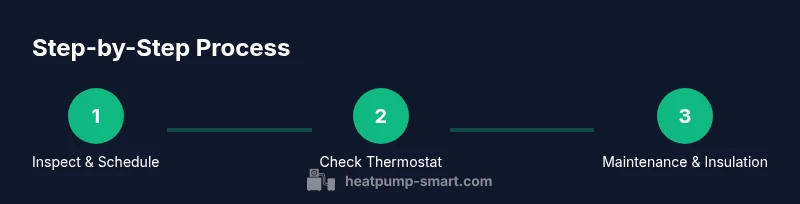
Steps
Estimated time: 2-3 hours
- 1
Schedule professional inspection
Begin with a certified HVAC technician to assess sizing, refrigerant charge, electrical connections, and airflow. This baseline check prevents unsafe DIY adjustments and identifies whether the unit is matched to your home. WHY: Proper sizing and charge ensure the heat pump operates at its rated capacity, which is essential for predictable warmth.
Tip: Ask for a written report and a recommended maintenance plan. - 2
Review thermostat settings
Confirm the thermostat is set to Auto, not On, and that recovery schedules align with your daily routine. Avoid large, rapid setpoint changes, which trigger auxiliary heat unnecessarily. WHY: Auto mode maintains comfort while minimizing energy waste.
Tip: Enable any smart recovery features for pre-heating before you wake up. - 3
Replace or clean air filters
Install clean filters to maximize indoor airflow and reduce system strain. Dirty filters restrict airflow, forcing the heat pump to work longer and potentially triggering auxiliary heat. WHY: Clean airflow supports steady, efficient heat delivery.
Tip: Set a reminder to check filters every 30-60 days during heavy use. - 4
Clear the outdoor unit
Remove debris, snow, and vegetation within at least three feet of the outdoor coil. This improves heat extraction and defrost effectiveness. WHY: Blocked airflow or iced coils reduce output and efficiency.
Tip: Do not hit the unit with sharp tools; use a soft brush or leaf blower if needed. - 5
Improve home envelope
Seal leaks around windows, doors, and attic hatches; add or upgrade insulation where feasible. This reduces heat loss so the heat pump can maintain comfort without excessive cycling. WHY: A tighter envelope makes the system more effective and comfortable.
Tip: Consider a home energy audit for targeted improvements. - 6
Use auxiliary heat judiciously
During extreme cold, enable Emergency Heat briefly to maintain comfort, but prioritize the heat pump to maximize efficiency. WHY: Auxiliary heat increases warmth but raises energy costs and wear if used long-term.
Tip: Monitor run time to avoid prolonged reliance on auxiliary heat. - 7
Evaluate duct and zoning
Inspect for uneven distribution; balance zones to minimize cold spots. This ensures more consistent warmth across rooms. WHY: Poor zoning creates perceived cold areas even when the unit is producing adequate heat.
Tip: Consider adding dampers or upgrading to a multi-zone system if imbalanced. - 8
Plan for upgrades if needed
If warmth remains insufficient, explore higher-efficiency models, improved cold-weather performance, or additional zone control. WHY: A properly sized upgrade can deliver noticeable warmth gains without wasting energy.
Tip: Consult a licensed contractor to compare options based on your home’s size and climate.
Your Questions Answered
Can I make my heat pump hotter than its rated capacity?
No. A heat pump cannot exceed its design capacity without risking equipment damage and safety concerns. Use auxiliary heat sparingly and focus on efficiency and proper sizing to improve warmth.
No. A heat pump’s heat output is limited to its design capacity; for more warmth, rely on proper sizing and safe auxiliary heat when needed.
What factors most affect heat output in winter?
Outdoor temperature, system sizing, airflow, refrigerant charge, and indoor insulation all influence how warm the home feels. Even with a well-maintained unit, environmental conditions play a big role.
Outdoor temperature, system size, airflow, and insulation determine how warm your home feels in winter.
Is it safe to set the thermostat very high to feel warmer?
Raising the thermostat to extreme levels does not increase the heat pump’s capacity and can lead to energy waste or reliance on auxiliary heat. Use Auto mode and aim for consistent, comfortable temperatures.
No, turning it way up doesn’t make the heat pump hotter; it often just uses auxiliary heat and wastes energy.
How often should I service my heat pump?
Have a licensed technician inspect the system annually and check refrigerant charge, electrical connections, and airflow. Regular maintenance helps preserve warmth and efficiency.
Annual professional service keeps the system reliable and efficient.
What upgrades help in cold weather?
Upgrades may include a higher-efficiency outdoor unit, better ductwork, and enhanced zoning. Upgrades should be planned with a professional to match your home’s size and climate.
Upgrades like a better outdoor unit or improved zoning can boost warmth in cold weather.
When should I call a professional?
If warmth remains inadequate after basic maintenance, or if you suspect refrigerant leaks or electrical faults, contact a licensed HVAC professional promptly.
Call a professional if warmth doesn’t improve after basic checks or you notice leaks or electrical issues.
Watch Video
Top Takeaways
- Maximize warmth by optimizing the system within its design limits
- Keep filters, ductwork, and outdoor unit clear for better airflow
- Use auxiliary heat sparingly and rely on proper sizing for comfort
- Upgrade and professional checks yield bigger gains than ad-hoc tweaks