Inverter Heat Pump vs Heat Pump: A Practical Comparison
A detailed comparison of inverter heat pumps and traditional heat pumps, covering efficiency, climate suitability, costs, and installation considerations for homeowners and professionals.


Choosing between an inverter heat pump and a conventional heat pump hinges on efficiency, climate, and budget. An inverter unit modulates compressor speed, delivering smoother heating and cooling with better energy use. For homeowners seeking long-term savings and stable comfort in variable weather, the inverter heat pump generally outperforms fixed-speed models, though upfront cost is higher.
The core difference between inverter heat pumps and conventional models
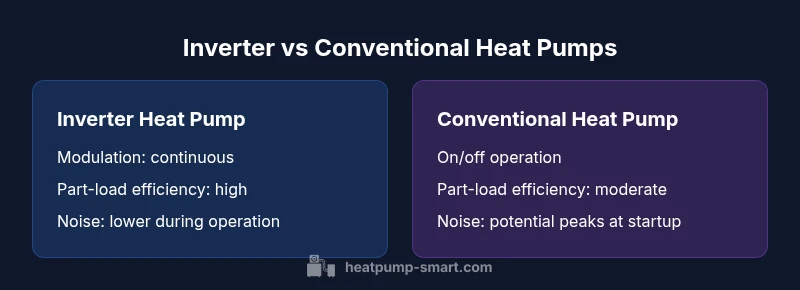
The term inverter heat pump vs heat pump describes how the unit is controlled, not how it looks. A conventional, fixed-speed heat pump turns the compressor on at full capacity or off, which leads to noticeable temperature swings and more energy wasted during partial loads. An inverter-equipped unit uses a variable-speed compressor and smart electronics to modulate output, closely matching the heating or cooling demand. This means less cycling, more consistent indoor temperatures, and often better efficiency across a wider operating range. According to Heatpump Smart, this modulation is the primary reason most homes experience steadier comfort and lower electricity use when conditions fluctuate. The trade-off is more complex installation and a higher upfront price, but many homeowners recoup the extra cost through reduced energy bills and longer equipment life due to gentler operation.
How inverter technology improves efficiency and real-world performance
At the heart of an inverter heat pump is a variable-speed compressor, paired with advanced controls and often variable-speed fans. This combination reduces energy waste by avoiding sudden surges and ramping; when demand drops, the compressor slows rather than shutting off entirely. In practice, this yields higher part-load efficiency, more stable COP ratings across a range of outdoor temperatures, and less energy wasted on reheating spaces after short cycles. Real-world performance depends on proper sizing, installation quality, and inline components like filters and ductwork. Heatpump Smart analyses show that homes with fluctuating temperature requirements—such as mixed-use spaces or homes with smart thermostats—benefit most from continuous modulation, including finer humidity control and quieter operation during night hours.
Climate and usage patterns: when to choose inverter versus fixed-speed
Climate matters more than brand name. Inverter heat pumps excel when outdoor temperatures swing or when indoor loads are moderate but frequent. They maintain more even temperatures and respond smoothly to sudden weather changes. If you live in a climate with long, cold spells and your heating demand is steady, an inverter unit still provides comfort advantages, but the marginal gains may be smaller compared to a well-sized fixed-speed unit in a mild climate. For households that frequently cycle between heating and cooling—for example, in shoulder seasons—the inverter approach minimizes energy waste and reduces temperature swings, delivering comfortable results with lower noise.
Cost considerations and total cost of ownership
Upfront cost is typically higher for inverter heat pumps due to the enhanced electronics and the variable-speed compressor. The premium varies by model and features, but many homeowners find the long-term savings justify the extra expense if the system runs many hours per day or across the full year. Operational costs depend on how often the unit operates and how efficiently it maintains indoor temperatures. The total cost of ownership also includes potential maintenance costs, warranty coverage, and the value of improved comfort. When evaluating quotes, consider not only price but also expected electricity savings, seasonal energy performance, and compatibility with existing thermostats and home automation. Heatpump Smart notes that the best value often comes from a well-sized system paired with smart controls and performance monitoring that keeps energy use predictable.
Installation, sizing, and system integration
Sizing a heat pump correctly is critical for both inverter and conventional models, but the impact is more pronounced with variable-speed equipment. An oversized unit will still short-cycle under extreme cold, while an undersized one will work hard, eroding the benefits of modulation. A professional assessment should include load calculations, insulation checks, and ductwork evaluation. Inverter systems may require compatible drives, wiring, and sensor layouts to maximize modulation efficiency. If you already have a solar array or plan to add one, discuss inverter compatibility with your installer, as these units pair well with solar generation and demand-response programs. A thoughtful installation minimizes refrigerant line length, reduces heat loss, and ensures robust heat transfer.
Reliability, maintenance, and warranties
Reliability depends on component quality, proper installation, and service access. Inverter heat pumps have more sophisticated control boards, sensors, and drive electronics, which can translate into more variables for potential faults if not installed or serviced correctly. Routine maintenance—filter cleaning, refrigerant checks (performed by a licensed tech), and condensate drainage—remains essential. Warranties for inverter systems are usually similar to fixed-speed units but may require factory-approved maintenance schedules. The key is to work with a qualified contractor who understands modulation dynamics and can diagnose issues without replacing unnecessary components. Regular check-ins and firmware updates when offered can extend the life of the controller hardware.
Energy metrics: COP, SEER, EER, and SCOP explained
Energy performance is described with a set of metrics, most of which depend on test conditions and climate. COP measures efficiency during heating at a given outdoor temperature, while SEER and EER relate to cooling performance. SCOP captures seasonal heating efficiency and often differs between inverter and fixed-speed equipment due to modulation. When comparing models, look for a robust rating across multiple outdoor temperatures and real-world conditions. Understand that ratings are estimates and that actual performance depends on installation quality, duct sealing, and thermostat settings. A properly tuned system with a programmable thermostat can deliver steady comfort and prevent energy waste, especially when coupled with weather-stripping and insulation improvements.
User experience: comfort, control, and smart features
Many homeowners value precise temperature control, quiet operation, and intuitive controls. Inverter heat pumps generally deliver smoother, quieter performance because the compressor never fully stops and restarts. Smart thermostats, zoning, and mobile apps enhance this advantage by letting you fine-tune setpoints, monitor energy use, and schedule demand responses. For homes with multiple zones, inverter systems can modulate to the needs of each zone, improving comfort without raising energy bills. Consider features such as humidity control, defrost strategies, and integration with energy management programs offered by your utility or a solar installer.
Real-world scenarios: practical examples (hypothetical case studies)
Example A: An older, frequently fluctuating home in a mixed climate benefits from an inverter system; the homeowner notices more stable temperatures and fewer callbacks. Example B: A new build in a temperate climate prioritizes long-term energy savings and comfort; the inverter model provides efficient cooling and heating with lower running costs. Example C: A renovation with existing ductwork requires careful sizing to avoid oversizing traps and ensure the inverter maintains consistent performance. In all cases, a professional assessment, correct refrigerant charge, and a solid warranty are essential to maximize the advantages of modulation.
Practical decision checklist for homeowners
Use this checklist before purchasing: 1) Confirm climate and peak loads; 2) Request multi-point load calculations; 3) Compare two or three inverter models and a fixed-speed baseline; 4) Check warranty terms and maintenance requirements; 5) Verify compatibility with thermostats and solar; 6) Plan for proper duct sealing and insulation; 7) Consider future upgrades, such as heat pump water heaters or integration with energy storage. A methodical approach helps ensure you select the system that delivers the best balance of comfort and cost over time.
Comparison
| Feature | Inverter heat pump | Conventional heat pump |
|---|---|---|
| Modulation capability | Continuous variable-speed operation | Fixed-speed operation (ON/OFF) |
| Part-load performance | Excellent / strong at partial loads | Limited at partial loads |
| Temperature stability | More stable indoor temperatures | More temperature swings during cycling |
| Noise profile | Lower ramping noise, softer start | Short bursts of higher noise when cycling |
| Initial cost | Higher upfront cost | Lower upfront cost |
| Long-term savings | Higher savings due to efficiency | Moderate or lower savings |
| Maintenance | Similar maintenance with electronics care | Similar maintenance |
Advantages
- Better part-load efficiency reduces energy bills
- More consistent comfort with smoother temperature control
- Quieter operation due to variable-speed compressor
- Better compatibility with smart home and demand response
Disadvantages
- Higher upfront cost and longer payback period
- Complexity of diagnostics and potential maintenance costs
- Compatibility issues with older systems
- Limited availability of installers with in-depth inverter expertise
Inverter heat pump generally wins on efficiency and comfort, especially in variable climates, but upfront cost and installation considerations may favor conventional units for budget-conscious projects.
The inverter option typically delivers better energy performance and steadier comfort. Choose inverter when long-term running costs and climate variability matter most; consider conventional if initial budget and simple service are priority.
Your Questions Answered
What is the key difference between inverter heat pumps and conventional heat pumps?
The key difference is control method: inverter units use a variable-speed compressor to modulate output, while conventional units run at fixed speed on or off. This results in smoother operation and better efficiency for inverter models, especially under partial loads.
Inverter heat pumps adjust output continuously, delivering smoother comfort and better efficiency than traditional fixed-speed models.
Is an inverter heat pump worth the extra cost?
For homes with variable heating and cooling needs and where energy savings add up over time, the inverter system typically provides value through lower running costs. In milder climates or tight budgets, the payback period may be longer.
Inverter models often pay back through energy savings, but it depends on climate and usage.
How does climate affect inverter heat pump performance?
Inverter heat pumps perform best when outdoor conditions vary or loads shift often. They maintain steadier indoor temperatures and can reduce energy use in shoulder seasons, though gains may be smaller in very mild climates.
Climate heavily influences the benefits of inverters; more variability in weather usually means bigger gains.
Are inverter heat pumps reliable in cold weather?
Modern inverter heat pumps are designed for cold-weather operation, but performance depends on model and setup. Proper sizing, refrigerant charge, and defrost strategies determine reliability in cold snaps.
Cold-weather reliability depends on model quality and proper installation; choose a unit rated for your climate.
Do inverter heat pumps require special maintenance?
Maintenance for inverter systems is similar to traditional units but may require more attention to the controls and electronics. Regular filter cleaning, refrigerant checks, and firmware updates as offered help maintain performance.
Same maintenance as other heat pumps, with added attention to the control electronics.
How do I sizing an inverter heat pump properly?
Professional load calculations and duct assessments are essential. An undersized inverter unit loses modulation benefits, while an oversized one can waste energy and shorten its life. Accurate sizing is the foundation of performance.
Get a professional load calculation to size the system correctly for your home.
Top Takeaways
- Assess climate and load profile before choosing inverter tech
- Consider total cost of ownership, not just upfront price
- Plan for proper sizing and professional installation
- Leverage smart thermostats and zoning for best results
- Expect longer payback times to reflect energy savings in most cases