Is It OK to Leave Heat Pump On All Day? A Practical Guide
Learn whether you can run your heat pump all day, how to balance comfort and energy savings, and step-by-step tips to optimize performance with smart controls and proper maintenance.


Is it ok to leave a heat pump on all day? In most climates, you can run your heat pump continuously to maintain steady comfort, but it isn’t always the best energy choice. Consider climate, insulation, occupancy, and system design. Use a programmable or smart thermostat to balance comfort and savings, and minimize unnecessary defrost cycles. Heatpump Smart recommends tailoring runtime to your home.
Is it ok to leave a heat pump on all day
According to Heatpump Smart, many homeowners ask is it ok to leave a heat pump on all day. The short answer depends on climate, home efficiency, occupancy, and system design. The question is often framed as a binary choice, but a smarter approach focuses on runtime quality rather than run time alone. If the goal is steady comfort with predictable bills, leaving the unit running continuously can help avoid temperature swings and reduce cycling in shoulder seasons. However continuous operation may not always be the best path for energy savings or system longevity. In this guide we’ll unpack when it makes sense, how to optimize, and what to watch for to keep your home comfortable without waste. We’ll also cover common myths and practical tips so you can decide confidently. Heatpump Smart recommends starting with a baseline plan that reflects your home’s envelope, occupancy, and local climate. By the end you’ll know how to decide if is it ok to leave heat pump on all day applies to your situation.
How a heat pump operates and why runtime matters
A heat pump moves heat rather than generates it, which generally makes it more energy efficient than old fossil-fuel systems. It uses refrigerant cycles and a compressor to extract heat from outside air or water and transfer it inside. When the outside temperature is mild, the unit runs more efficiently, and cycling off and on frequently can waste energy on startup. Conversely, during very cold snaps or very hot days, keeping a reasonable baseline temperature can reduce peak loads and keep the system from short cycling. The balance between continuous operation and intentional shutoff depends on insulation, air leakage, thermostat location, and how the space is used. Proper sizing of the system is essential; an oversized unit may run in short bursts, while an undersized one will struggle to maintain comfort. Understanding these dynamics helps you judge whether is it ok to leave heat pump on all day is a good fit.
When leaving it on all day can be beneficial
If people are home most of the day, an always-on approach can maintain steady temperatures with fewer temperature swings. In well-insulated homes, a heat pump can hold comfortable temps with minimal energy loss when managed with a smart thermostat. Occupancy patterns matter: if you have predictable routines, a schedule that keeps the unit running during peak occupancy can prevent the system from repeatedly heating or cooling to meet sudden demand. In drafty homes, continuous operation might help maintain comfort, but only if the building envelope is sealed and the heat load is controlled. This section helps you weigh the pros and cons for your specific situation, including climate zone, occupancy, and current insulation levels. The goal is to avoid unnecessary cycling, which wastes energy, while preventing overcooling or overheating layers in your living spaces.
Energy efficiency and cost considerations
Heat pumps are rated by a coefficient of performance (COP) and heating seasonal performance factor (HSPF) that reflect efficiency, not a single number. In practice, continuous operation tends to be efficient when outdoor temperatures are moderate and loads are steady, because the compressor runs longer at a consistent pressure instead of starting from rest. Heatpump Smart analysis shows that the marginal energy saved by turning off and back on can be offset by startup losses, particularly in older or poorly insulated homes. For most homeowners, the key is to configure a baseline temperature and use adaptive controls that adjust to occupancy and weather. If you live in a climate with long shoulder seasons, leaving the unit on at a comfortable level can be more economical than repeatedly heating and cooling to meet an abrupt change in temperature. Always compare your bill before and after changes to verify savings.
Smart controls that balance comfort and savings
A programmable thermostat or a smart thermostat with occupancy sensing can manage runtime without sacrificing comfort. Set a reasonable baseline (for example, a target temperature during awake hours) and allow the system to react to real-time weather data and occupancy. Many modern thermostats support adaptive scheduling, which learns your patterns and gradually optimizes how long the heat pump runs. When is it ok to leave heat pump on all day? If your home demands consistent warmth, a stable run schedule can reduce energy spikes, but ensure the thermostat isn’t keeping the space too warm in the middle of the day when you’re away. Regularly review and adjust the schedule to reflect seasonal changes and residents’ routines.
Seasonal considerations: winter, spring, and fall
Shoulder seasons often present the best opportunities to run a heat pump more continuously without ballooning energy costs, since outdoor temperatures are moderate and humidity levels stay comfortable. In winter's cold snaps, a constant baseline reduces the number of defrost cycles and helps maintain warmth, but it may increase consumption if your heat loss is high. In milder climates, continuous operation may be close to optimal. The key is to monitor comfort levels and adjust thermostat setbacks as outdoor conditions shift. The guidance remains flexible: run longer during the cool night, but taper back during warm afternoons when people are outdoors.
Defrost cycles and their impact on runtime
Most air-source heat pumps periodically enter defrost mode to remove frost from outdoor coils. These cycles can temporarily raise demand and reduce efficiency. If your unit runs continuously, ensure defrost cycles are scheduled sensibly and not forced to extreme lengths. A well-maintained system will perform defrosts quickly and return to normal operation, preserving comfort with minimal energy waste. If you notice frequent or prolonged defrost periods, schedule a service check to verify outdoor temperatures, heat exchange efficiency, and refrigerant charge. A poorly performing defrost cycle can skew the impression that keeping the unit on all day is costly, when the real issue is maintenance.
Maintenance practices to support continuous operation
Regular maintenance ensures efficiency when the unit is on most of the day. Replace or clean air filters every 1-3 months, clean outdoor coils if accessible, and ensure there are no obstructions around the outdoor unit. Inspect ductwork for leaks and seal leaks to prevent energy loss. Check thermostat settings, calibrate sensors, and confirm refrigerant pressures with a qualified technician. A well-maintained heat pump responds more predictably to long runtime, delivering comfort at a reasonable cost. Heatpump Smart recommends scheduling annual checkups to catch issues before they escalate and to maintain optimal COP values.
Electrical safety and load management
Operating any powered system all day demands safe electrical practices. Ensure your circuit is sized for the heat pump's starting current and any control hardware. Avoid running a heat pump on an undersized circuit, as this can trip breakers or degrade performance. If you have other devices on the same circuit, consider upgrading the circuit or relocating loads to maintain stable voltage. Use a dedicated circuit where possible and install proper protection like a ground fault circuit interrupter (GFCI) as required by code. If you’re unsure about electrical work, consult a licensed electrician. This is not a place to guess.
Real-world scenarios for homeowners, landlords, and builders
Different situations call for different approaches. A homeowner in a temperate climate with good insulation might opt for a near-constant temperature with a gentle setback during night hours. A property manager overseeing multiple units may use a centralized thermostat strategy to balance comfort and energy costs across the building. Builders planning an energy-efficient home can design for continuous comfort by focusing on envelope improvements, efficient ductwork, and properly sized HVAC equipment. In all cases, correlate runtime with measured energy use, indoor air quality, and occupant comfort to decide when is it best to keep the system running.
Quick-start checklist to decide your runtime strategy
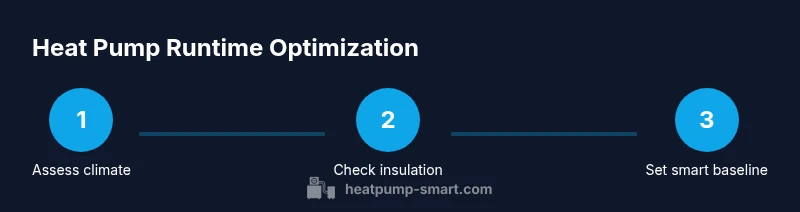
- Assess climate and occupancy patterns to set realistic goals
- Inspect insulation, leaks, and ductwork before changing run times
- Choose a smart thermostat with adaptive scheduling and remote access
- Set a baseline comfort temperature and adjust periodically
- Monitor energy bills and indoor comfort after every change
- Schedule annual professional maintenance to preserve efficiency
- Consider gradual rollouts rather than sweeping changes
Authority sources
This guidance draws on established recommendations and practical experience. For technical details on heat pump efficiency and operation, consult external authoritative references cited below.
Myths and guidance from Heatpump Smart
Myth: running a heat pump all day will always waste energy. Truth: efficiency depends on climate, load, and building envelope. Heatpump Smart recommends tailoring runtime to your home, using smart controls, and maintaining the system to avoid hidden energy waste. The Heatpump Smart team’s verdict is to optimize runtime by combining climate-aware schedules with routine maintenance, rather than applying a one-size-fits-all rule.
Tools & Materials
- Smart thermostat (Wi‑Fi enabled)(Supports programmable schedules and occupancy sensing)
- Energy monitor or electricity usage meter(Helpful for tracking actual energy impact of running time changes)
- Owner's manual for heat pump(Consult for model-specific defrost and compressor behavior)
- Digital multimeter(Useful if verifying electrical connections during maintenance)
- Sealant tape or weather stripping(Reduce heat loss to maximize efficiency when running continuously)
Steps
Estimated time: 30-60 minutes
- 1
Assess climate and occupancy
Evaluate your local climate, insulation quality, and typical occupancy. Understanding load helps determine whether continuous operation will improve comfort without unnecessary energy use.
Tip: Note typical daily temperature swings and how long you usually stay at home. - 2
Check the heat pump size and condition
Confirm the system is properly sized for your home and that it has had regular maintenance. Oversized units cycle more and undersized units run longer, both reducing efficiency.
Tip: If you notice frequent short cycling, call a technician to verify sizing and refrigerant levels. - 3
Install a smart thermostat
If you don’t already have one, install a thermostat that learns patterns and can adjust automatically. Program a baseline temperature and enable occupancy sensing.
Tip: Enable weather-based adjustments so the system adapts to outdoor conditions. - 4
Set a daylight baseline and a night setback
Choose a comfortable daytime setpoint and a modest setback at night or when the home is empty. The aim is to minimize extreme swings while maintaining comfort.
Tip: Test different baselines for a week to find the best balance. - 5
Review defrost behavior
Understand how your unit handles defrost cycles and how it affects runtime. Ensure the defrost cycle is efficient and not excessively long.
Tip: If defrost runs seem long, schedule professional maintenance to check outdoor coil cleanliness. - 6
Monitor energy data
Track energy use after implementing a new runtime strategy. Compare bills and indoor comfort before and after changes.
Tip: Use the thermostat’s native reports or an energy monitor for clarity. - 7
Fine-tune according to season
Adjust baseline and setbacks as seasons shift. Shoulder seasons often allow longer runtimes with favorable efficiency.
Tip: Document seasonal settings for quick reapplication next year. - 8
Schedule annual maintenance
Have a professional inspect refrigerant levels, duct integrity, and electrical connections to preserve efficiency.
Tip: Preventive care reduces the risk of unexpected energy spikes.
Your Questions Answered
Is it safe to leave a heat pump running overnight?
Yes, it is generally safe to leave a heat pump running overnight when temperatures require it and the system is properly maintained. Set a reasonable overnight setpoint to prevent overheating and ensure children or pets aren’t exposed to extreme temperatures.
Yes, it is generally safe to leave a heat pump running overnight when temperatures require it and the system is properly maintained. Set a reasonable overnight setpoint to keep comfort without waste.
Will leaving the heat pump on all day dramatically raise my energy bill?
Energy bills depend on many factors, including climate, load, insulation, and setpoints. Continuous operation can be economical in moderate climates with good envelope and smart controls, but may increase costs in drafts or very cold conditions if not managed carefully.
Energy cost depends on climate and house efficiency; continuous operation can be economical with good insulation and smart controls, but adjust baselines to avoid waste.
What thermostat setting saves the most energy?
The most energy-efficient approach uses moderate, stable baselines with smart scheduling. Avoid extreme temperatures, and let occupancy-aware thermostats adjust to real conditions. Periodically verify settings as seasons change.
Use a moderate, stable baseline with smart scheduling and adjust as seasons change.
Should I leave it on all day in winter or turn it off at times?
A balance often works best: keep a comfortable baseline, with strategic setbacks during the day when occupants are away or at night. In very cold climates, a low constant level can reduce energy spikes from rapid heating.
Keep a comfortable baseline and setback when you’re away; in very cold climates a small constant level can help reduce spikes.
Do defrost cycles waste energy when left on all day?
Defrost cycles are necessary for proper operation in cold weather. They add temporary energy use, but a well maintained system minimizes wasted energy and maintains comfort.
Defrosts happen to keep coils clear; they use energy briefly, and proper maintenance keeps them efficient.
Can I rely on a simple timer instead of a smart thermostat?
A timer can help, but smart thermostats adapt to weather and occupancy, delivering better comfort and potential savings. If you can only choose one, a smart thermostat is the better long-term choice.
Smart thermostats adapt to your schedule and weather for better comfort and savings.
Watch Video
Top Takeaways
- Run duration should be guided by climate and insulation, not a universal rule
- Smart controls help balance comfort and energy savings
- Regular maintenance keeps continuous operation efficient
- Monitor energy usage to validate savings
- Seasonal adjustments improve overall efficiency