How Often Should a Heat Pump Run? A Practical 2026 Guide
Discover how often a heat pump should run to balance comfort and efficiency in 2026. Learn factors, seasonal patterns, and actionable steps to optimize runtime for homeowners, builders, and property managers.


There isn’t a single fixed runtime for heat pumps. Optimal run frequency depends on climate, home insulation, and thermostat setup. In general, heat pumps cycle in short bursts to maintain comfort, with longer runs during very cold weather and shorter cycles in mild conditions. Aim for steady cycling rather than frequent short bursts.
Understanding heat pump run cycles
A heat pump operates by cycling between active heating or cooling and idle periods. The length of each cycle depends on the difference between indoor and outdoor temperatures, the system’s capacity, and the thermostat strategy you employ. Modern heat pumps, especially variable-speed models, are designed to modulate output to match the load, which helps minimize oversized on/off cycling and improves overall efficiency. When Heatpump Smart evaluates runtimes, we consider climate zone, insulation quality, duct efficiency, and occupancy patterns. The goal is to reach a balance where the unit spends most of its time running long enough to meet demand without excessive cycling that wastes energy or accelerates wear.
Defining a healthy runtime also means understanding the relationship between run time and COP (coefficient of performance). A unit that runs in steady, moderate-length cycles generally maintains a higher COP than one that repeatedly starts and stops. This is because each restart imposes extra energy and mechanical strain. In practice, homeowners should aim for cycles that are long enough to satisfy demand without triggering frequent start-stop cycles, which often signals an oversized system or poor air distribution.
What determines how often a heat pump should run
Several factors shape run frequency across seasons. Climate is the primary driver: colder climates tend to require longer, more frequent heating cycles, while mild climates may see shorter, intermittent runs. Home insulation and air sealing dramatically affect runtimes; leaky homes lose heat quickly, causing the system to run more to compensate. System sizing is another critical factor—an oversized heat pump will short-cycle, whereas an undersized unit will run longer to meet demand. Thermostat settings, such as setback schedules, fan mode, and the choice of heating modes (emergency heat vs. heat pump mode), directly influence runtimes. Ductwork quality matters too; leaky ducts can force the system to work harder, increasing run frequency. Occupancy patterns, window coverings, and thermostat location also play roles. Understanding these variables helps you set realistic expectations for runtime and energy use.
Detecting short cycling and why it matters
Short cycling occurs when a heat pump turns on and off too quickly, often lasting just a few seconds to a few minutes. Signs include rapid on/off cycling, noticeable temperature swings, and unusual compressor noise during restarts. Short cycling reduces efficiency, increases wear on key components, and can prematurely trigger auxiliary heat, which dramatically raises energy consumption. Causes range from an oversized unit, improper refrigerant charge, dirty filters, blocked vents, to duct leaks. If you notice frequent, abrupt starts, it’s essential to evaluate system sizing, airflow, and thermostat programming. Addressing short cycling typically involves correcting sizing, improving airflow, sealing ducts, and adjusting thermostat settings to maintain smoother operation.
Practical steps to optimize run frequency
To optimize runtime without sacrificing comfort, follow these practical steps:
- Verify system sizing: Ensure the heat pump is properly sized for your home by a qualified technician. An undersized unit will run longer to meet demand, while an oversized unit may short-cycle.
- Improve insulation and air sealing: A well-insulated home reduces load and helps the heat pump run more efficiently, stabilizing runtimes across seasons.
- Tune thermostat settings: Use a consistent setpoint with an adaptive or auto mode. Avoid frequent temperature setbacks that cause the unit to work harder when returning to comfort levels.
- Embrace zoning and smart controls: Zoning allows different areas to demand varying loads, reducing unnecessary runtime. Smart thermostats can learn your patterns and optimize cycles.
- Maintain airflow: Replace filters regularly, clear obstructions from vents, and ensure adequate return air paths. Poor airflow forces the system to run longer.
- Schedule regular maintenance: Annual checks for refrigerant charge, coil cleanliness, and compressor health help keep runtimes aligned with design specifications.
- Weatherize and seal ducts: Duct leakage can dramatically alter runtimes. Sealing ducts improves distribution and reduces wasted cycles.
- Consider climate-appropriate features: In cold climates, a heat pump with a robust defrost cycle and efficient auxiliary heat management will better protect runtime efficiency during winter months.
Seasonal considerations and climate impact
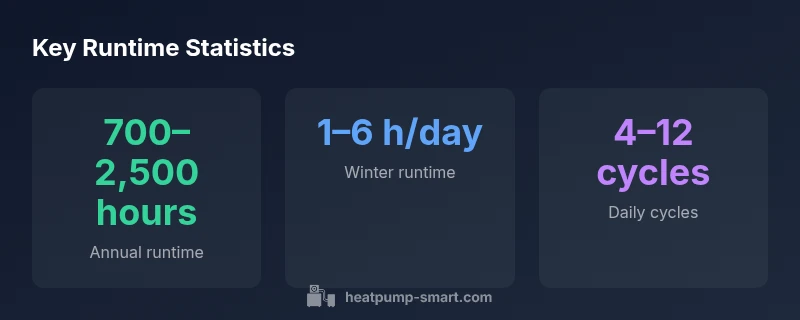
Seasonal patterns shape runtime in meaningful ways. In winter, outdoor temperatures drop, forcing the heat pump to work longer per cycle to deliver the same indoor warmth. In milder seasons, the unit often maintains comfort with shorter, more frequent cycles. Energy savings hinge on maintaining consistent indoor temperatures and avoiding excessive thermostat setbacks that cause longer re-irrival runs after a door is opened or a window is left ajar. Climate zones that experience large temperature swings typically see greater runtime variability between shoulder seasons and peak heating months. For homeowners, recognizing these seasonal shifts helps in choosing the right equipment, setting expectations, and planning maintenance cycles accordingly.
When to call a pro and what to expect
If runtimes seem abnormal—either persistently short cycles or unusually long ones—it's time to consult a pro. A technician will verify system sizing, refrigerant charge, coil cleanliness, fan performance, and duct integrity. They may run performance tests, such as a superheat check or airflow measurement, to isolate the cause. In many cases, improving insulation, sealing ducts, or rebalancing zoning resolves the issue without significant equipment changes. If deterioration in performance is suspected, the pro will check for refrigerant leaks or compressor wear, which require more involved repair or replacement decisions.
Advanced monitoring and tech that helps control runtime
Modern heat pumps paired with smart thermostats and zoned systems make runtime optimization more accessible. Use features like adaptive recovery, programmable schedules, and energy dashboards to monitor runtime patterns. Data from these tools helps you identify wasteful cycles, adjust setpoints to maintain steady operation, and confirm that maintenance activities yield tangible improvements. For multi-zone homes, integrating with a central controller enables precise load management and reduces inconsistent runtimes across living spaces. Always cross-check readings with professional guidance to avoid misinterpreting sensor data or system alerts.
Common myths about heat pump runtime
Myth: Heat pumps always run nonstop in winter. Reality: Efficient units balance runtime with demand; long continuous runs are common but not universal. Myth: Short cycling is normal in well-sized systems. Reality: Short cycling usually signals a problem and should be addressed promptly. Myth: Thermostat setbacks save energy in all situations. Reality: Aggressive setbacks can lead to larger runtime spikes when the system cycles back on. By debunking these myths, homeowners can focus on consistent, moderate runtimes grounded in real-world conditions and professional advice.
Runtime patterns by climate and insulation quality
| Climate scenario | Typical run pattern | Impact on efficiency |
|---|---|---|
| Mild climate | Short, frequent cycles (2–5 min) | High efficiency with proper insulation |
| Cold climate | Longer cycles (5–15 min) | Efficiency can stay high but may rise energy use if oversized |
| Well-insulated home | Balanced cycles | Optimal efficiency |
Your Questions Answered
What factors influence how often a heat pump should run?
Run frequency is shaped by climate, insulation, system sizing, thermostat settings, and occupancy. Proper sizing and good air distribution help maintain steady runtimes that balance comfort and efficiency.
Run frequency depends on climate, insulation, and thermostat setup. Proper sizing is key to steady runtimes.
How long should a typical cycle last?
Cycle length varies by load and design. In balanced systems, cycles often last several minutes rather than seconds, with longer runs in colder weather and shorter cycles in mild conditions.
Most cycles last several minutes; length varies with weather and system size.
What is short cycling and why is it bad?
Short cycling is rapid on/off cycling that wastes energy and wears components. It often indicates oversized equipment, airflow issues, or refrigerant problems.
Short cycling wastes energy and wears the system out—get it checked if you notice it.
Can thermostat settings impact runtime?
Yes. Large setbacks can create longer recovery periods, leading to higher peak runtimes. Use consistent, moderate setpoints and enable auto mode for smoother operation.
Set a steady temperature and let the system handle the rest with auto mode.
When should I service my heat pump to ensure proper runtimes?
Annual professional service helps maintain refrigerant charge, coil cleanliness, and airflow, preventing runtime issues and maintaining efficiency.
Have a pro service your system once a year to keep runtimes efficient.
Does climate affect runtimes?
Yes. Colder climates typically require longer, more frequent cycles, while mild climates allow shorter cycles. Proper insulation and correct sizing mitigate climate-driven variability.
Climate affects runtimes a lot—insulation and sizing matter too.
“The most reliable way to optimize heat-pump runtime is to size the system correctly and use consistent thermostat controls to maintain steady, efficient operation.”
Top Takeaways
- Understand that run frequency varies by climate and home design
- Avoid short cycling to protect efficiency and equipment life
- Use zoning and smart controls to stabilize runtimes
- Schedule annual professional checks for refrigerant and airflow
- Expect seasonal variations; winters generally run longer than summers