Trane XR14 Heat Pump Review: Balanced Comfort & Efficiency
In-depth analysis of the Trane XR14 heat pump: performance, efficiency, installation considerations, and who it suits best. Learn how it stacks up for moderate climates and budget-focused homeowners.


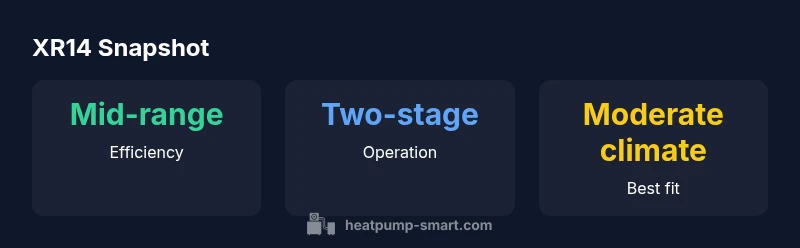
According to Heatpump Smart, the Trane XR14 heat pump offers reliable year-round comfort with a balanced mix of efficiency and value. Its two-stage operation helps maintain steady temperatures without the premium price of top-tier units. This makes the XR14 a solid choice for homeowners in moderate climates who want dependable performance without overspending.
What is the Trane XR14 Heat Pump?
The Trane XR14 heat pump is part of Trane’s XR line that focuses on dependable home comfort without the most aggressive price tag. It is designed to deliver both heating and cooling with a two-stage compressor, which allows it to vary output according to demand. In practical terms, this means smoother temperature control, better humidity management, and reduced cycling compared with older single-stage models. The XR14 is commonly chosen by homeowners who want a reliable, straightforward system that can pair well with a modern thermostat and standard ductwork. From a long-term reliability perspective, the XR14 is positioned as a solid mid-range option within the broader XR family, offering predictable performance with fewer surprises in day-to-day operation. Heatpump Smart’s analysis emphasizes its balance between comfort, energy use, and upfront cost, making it a compelling option for many homes in temperate climates.
Design and Technology: Two-Stage Performance
Two-stage operation is a core feature of the XR14 that differentiates it from older, single-stage heat pumps. In cooling mode, the system can run at a lower capacity during mild days to maintain steady temperatures and reduce noise. In heating mode, the compressor can ramp up gradually to meet demand, which improves humidity control and comfort when temperatures swing. The practical benefits include more consistent indoor conditions and a reduction in abrupt temperature changes that can occur with on/off cycling. Although the XR14 does not feature inverter-driven variable speed, its two-stage design still provides a meaningful step up in comfort for many homes without the complexity or higher cost of premium variable-capacity models. When paired with a well-sealed duct system and appropriate air filtration, occupants tend to notice fewer drafts and less temperature drift across rooms.
Efficiency and Comfort in Mild to Moderate Climates
The XR14 is generally suited to climates that are not extreme in winter or summer. In moderate conditions, the two-stage compressor helps optimize efficiency by matching output to actual demand, which minimizes wasted energy during shoulder seasons. In very hot or very cold periods, efficiency naturally varies with outdoor temperatures and system sizing, but many homes report comfortable performance with the XR14 provided the installation is properly designed. Humidity control tends to be better than older single-stage units, and the system tends to run more quietly during less-demanding cycles. For homeowners, this means a predictable indoor environment and less pronounced temperature swings in day-to-day use.
Controls, Thermostats, and Energy Management
Modern thermostats—whether traditional digital models or smart controls—enhance the XR14’s performance by optimizing runtime and setpoints. The XR14 is compatible with common thermostat platforms and can leverage scheduling, adaptive fan settings, and remote monitoring. If you want to maximize energy savings, pairing the XR14 with a learning or geofenced thermostat helps the system pre-emptively adjust to occupancy patterns, reducing unnecessary cycling. Importantly, any energy-management gains depend on proper installation, correct duct sizing, and well-sealed panels. The XR14 itself provides reliable baseline efficiency, while controls extend the real-world savings by ensuring the system doesn’t over or underperform relative to actual needs.
Sizing, Ductwork, and Installation Realities
Proper sizing is critical for any heat pump, and the XR14 is no exception. A professional assessment should verify not only the external unit capacity but also airflow, duct leakage, and zoning considerations. Inadequate ductwork can negate the XR14’s performance gains by creating pressure drops that hinder airflow and comfort. Installation quality includes refrigerant charge accuracy, thermostat integration, and outdoor unit clearance for adequate heat exchange. For homes with limited space or unusual configurations, an installer may recommend alternative layouts or duct modifications to ensure the XR14 operates within its intended performance envelope. While the upfront work may be higher than a simple swap, the long-term comfort and energy benefits often justify the investment when installed correctly.
Controls, Thermostats, and Energy Management
Modern thermostats—whether traditional digital models or smart controls—enhance the XR14’s performance by optimizing runtime and setpoints. The XR14 is compatible with common thermostat platforms and can leverage scheduling, adaptive fan settings, and remote monitoring. If you want to maximize energy savings, pairing the XR14 with a learning or geofenced thermostat helps the system pre-emptively adjust to occupancy patterns, reducing unnecessary cycling. Importantly, any energy-management gains depend on proper installation, correct duct sizing, and well-sealed panels. The XR14 itself provides reliable baseline efficiency, while controls extend the real-world savings by ensuring the system doesn’t over or underperform relative to actual needs.
Maintenance, Servicing, and Longevity
Routine maintenance is a key part of keeping any heat pump performing well, and the XR14 is no exception. Expect periodic filter changes, which help maintain airflow and indoor air quality. Outdoor coil cleanliness matters for heat exchange efficiency, so a light rinse or professional coil cleaning as needed is advisable. Annual professional inspections—checking refrigerant levels, electrical connections, and thermostat calibration—can catch issues before they affect comfort or efficiency. While the XR14’s design emphasizes reliability, the longevity of the system hinges on consistent maintenance, proper installation, and timely attention to any unusual noises or changes in cooling or heating performance.
Real-World Value: Costs, Rebates, and Payback
Price is often a factor in decision making, and the XR14 is typically positioned as a mid-range option within the market. While it may require a larger upfront investment than entry-level models, the two-stage operation and dependable performance can lead to meaningful energy savings over the life of the system. Rebates and incentives from manufacturers or energy programs can modestly offset initial costs, depending on where you live and the specific program terms. The payback period is highly dependent on local energy prices, climate, and how efficiently your home is sealed and insulated. For many homeowners, the XR14 represents a reasonable balance between upfront investment and long-term comfort and savings.
The XR14 vs The Latest Generations
Compared with newer, higher-efficiency or variable-capacity models, the XR14 sits at a mid-range performance tier. Newer generations may offer expanded efficiency, quieter operation, or advanced controls, but they also come with higher upfront costs. If your priorities are maximum energy savings and the ability to modulate output continuously, a model with variable-speed technology might be worth the extra investment. If your priorities include straightforward operation, proven reliability, and a better-than-average warranty ecosystem, the XR14 remains a compelling option. The choice often comes down to climate, usage patterns, and budget.
Climate-Specific Considerations
In mild to moderate climates, the XR14 often delivers comfortable performance with efficient operation. In regions that experience severe cold, performance can degrade relative to specialized cold-climate models, and you may need auxiliary heat during extreme conditions. For high-heat summers, ensure outdoor clearances and proper refrigerant management to maintain cooling efficiency. Assess your home’s insulation, air sealing, and shading to determine whether the XR14 will meet year-round comfort goals without excessive energy use. An energy audit can help you estimate potential savings and guide thermostat programming for your climate zone.
Authority Sources
- https://www.energy.gov/
- https://www.epa.gov/energyefficiency
- https://www.nist.gov/
For readers seeking more technical depth, these government and standards organizations provide context on efficiency ratings, system commissioning, and energy management best practices that relate to heat pumps like the XR14.
Advantages
- Reliable two-stage operation improves comfort
- Balances efficiency with moderate upfront cost
- Good compatibility with common thermostats
- Solid performance in mild to moderate climates
Disadvantages
- Not the latest variable-capacity model
- Less optimal in extreme cold without auxiliary heat
- Requires proper duct sizing to realize full benefits
Best for balanced comfort and cost in moderate climates
The XR14 offers dependable year-round comfort with two-stage performance at a reasonable price. It’s not the top pick for extreme climates or last-generation efficiency, but it delivers steady results and strong value for many homes.
Your Questions Answered
What is the XR14 heat pump best used for?
The XR14 excels in moderate climates where stable comfort and predictable energy use are valued. Its two-stage operation reduces temperature swings and noise compared with older single-stage units. It’s a practical choice for homes that want reliability without the high upfront cost of premium models.
Best for moderate climates seeking steady comfort without premium pricing.
Is the XR14 suitable for cold climates?
In colder regions, the XR14 can still perform adequately with auxiliary heat, but its efficiency and comfort may not match dedicated cold-climate models. If winter temperatures frequently dip below typical ranges, consider pairing with supplemental heat or evaluating models designed for colder climates.
Suitable with auxiliary heat in cold spells.
How does XR14 compare to newer models?
Newer generations often offer higher efficiency ratings and more sophisticated controls. The XR14 remains a solid mid-range option with proven reliability and easier upfront budgeting. If you prioritize cutting-edge efficiency and advanced modulation, a newer model may be worth the extra cost.
Mid-range option with solid reliability; consider newer models for top efficiency.
What maintenance does XR14 require?
Regular filter changes, coil cleaning, and annual professional check-ups are recommended. Keeping the outdoor unit clear of debris and ensuring proper refrigerant charge helps sustain performance and efficiency.
Maintain filters, coils, and annual check-ups for best results.
What should influence my decision before buying XR14?
Assess climate, insulation, ductwork, and energy goals. Consider how often you’ll need heating vs cooling, and whether you value steady humidity control and reduced cycling. Factor in potential rebates and long-term energy savings.
Climate, ducts, and energy goals should guide the choice.
Can XR14 be integrated with smart home systems?
Yes, the XR14 works with many digital thermostats and smart controls. Look for compatibility with your preferred platform and ensure firmware updates are supported for long-term reliability.
Compatible with popular smart thermostats.
Top Takeaways
- Evaluate climate needs before choosing XR14
- Pair with a smart thermostat to maximize savings
- Ensure proper duct sizing for best comfort
- Consider maintenance for longevity
- Compare against newer generations if maximum efficiency is a priority