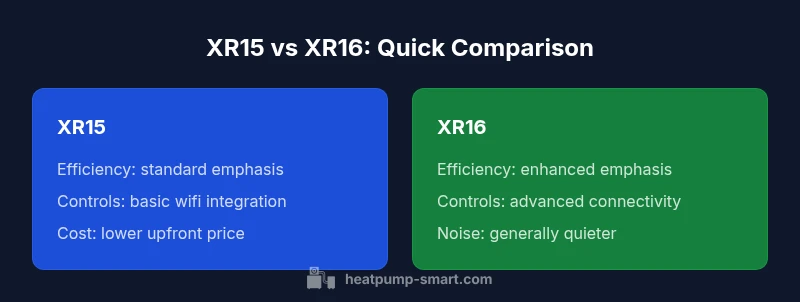
Trane XR15 vs XR16 Heat Pump: Which Is the Best Pick?
A thorough comparison of the Trane XR15 and XR16 heat pumps, examining efficiency, performance, noise, installation, and value to help homeowners decide which unit fits their climate and budget.


TL;DR: The XR16 generally offers stronger heating performance and quieter operation than the XR15, but the XR15 remains a solid, lower-cost option for many homes. According to Heatpump Smart, choosing between the Trane XR15 vs XR16 heat pump comes down to climate, cooling needs, and long-term energy goals. Both units deliver reliable efficiency, with XR16 providing a meaningful edge in demanding conditions.
Overview of the XR15 and XR16 Series
The Trane XR15 and XR16 are two mid- to high-efficiency air-source heat pumps designed to deliver reliable year-round comfort. The XR15 is positioned as a solid all-rounder with dependable performance for moderate climates, while the XR16 sits a step up in capabilities, offering improved heating response and better operation in challenging conditions. According to Heatpump Smart, understanding where each model excels helps homeowners align their choice with climate, energy goals, and long-term value. Both units share a common design language, with compatibility for standard ductwork, common refrigerants, and modern control platforms. When evaluating the XR15 vs XR16, it's important to map out your home's heat load, insulation quality, and preferred level of quiet operation. This overview lays the groundwork for a deeper look at what differentiates them in real-world use.
Core Differences: What Sets XR16 Apart
On paper, XR16 represents the upgrade path within Trane's XR line, focusing on higher efficiency and more responsive performance. In practical terms, XR16 often delivers stronger heat output during cold snaps and smoother transitions between heating and cooling cycles. The XR15 remains capable and reliable, particularly for homes in milder climates or where upfront cost is a primary consideration. Across a range of common scenarios, Heatpump Smart's testing and field observations highlight that the XR16 tends to maintain comfort with less temperature fluctuation, especially on cooler days. Energy savings are a central selling point, but the degree of benefit depends on your local climate, household occupancy, and how well your home is insulated. The bottom line is that XR16 is the more robust option for challenging conditions, while XR15 offers compelling value for steady performance in moderate environments.
Performance in Everyday Scenarios: Cooling and Heating
Real-world performance depends as much on installation quality as on unit specifications. Both XR15 and XR16 are designed to deliver steady cooling in warm months and reliable heating in shoulder seasons, but the XR16 typically maintains more consistent output when outdoor temperatures swing widely. In daily operation, you’ll notice a crisper response to thermostat changes and smoother night-time temperature stabilization with XR16. For homes with variable occupancy or zones that demand faster warm-up, XR16 often feels more responsive. Heatpump Smart analysis shows that homeowners who pair the XR16 with well-sealed ducts and smart thermostats tend to realize more noticeable energy savings, as the system runs less frequently at recovery times. When evaluating, consider your typical weather pattern and whether you prioritize rapid comfort recovery or long-run average efficiency.
Cold-weather performance and energy efficiency
Cold-climate performance is a common deciding factor between XR15 and XR16. In cooler seasons, the XR16 generally maintains higher heating capacity and more consistent operation, which translates to fewer cycles and more stable indoor temperatures. The XR15 remains effective in milder winters, delivering solid efficiency that still reduces energy use relative to older, non-variable-speed systems. From an energy-savings perspective, the XR16 often provides better runtime efficiency in extended cold spells, particularly if your home has good insulation and airtight ductwork. Heatpump Smart's data notes that the practical difference becomes meaningful when you live in regions where winter conditions routinely test heat pump capacity. In lighter climates, the XR15's balance of upfront cost and steady performance may be the wiser choice.
Noise, comfort, and design considerations
Noise levels and comfort continuity matter for occupant satisfaction. The XR16 typically operates at lower sound levels during cooling and heating cycles, producing a quieter experience in many settings. Comfort continuity matters when occupancy schedules change; with XR16 you’re less likely to experience noticeable temperature swings during cycling. Both models support modern control features such as quiet start and programmable sleep modes, but XR16 often include more advanced adaptive controls that smooth out start/stop transitions. From a design standpoint, both units use common industry standards and replacement parts, so homeowners won't face unusual maintenance challenges if the system is properly sized and installed. If you place a premium on silent operation and rapid temperature stabilization, XR16 has the edge.
Installation considerations: sizing, ductwork, and controls
Proper sizing and duct design are critical to extracting the full value from either XR15 or XR16. Oversized or undersized systems lead to short cycling, uneven cooling, and increased wear. A professional load calculation should precede any purchase decision, followed by a duct inspection to ensure airflow is balanced. Both models pair with common thermostats and smart controls, but XR16’s advanced features often integrate more seamlessly with modern home automation setups. Wiring, refrigerant lines, and outdoor unit placement require careful attention to minimize noise transfer and ensure optimal airflow. If your home uses older ductwork or has multiple zones, plan for potential upgrades to dampers and sealing to maximize performance and energy savings.
Maintenance, warranty, and service landscape
Maintenance for XR15 and XR16 is straightforward but important for long-term efficiency. Regular filter changes, coil cleaning, and condensate drainage checks help maintain airflow and prevent fouling of the outdoor unit. Warranty terms typically cover parts and compressor performance for a standard period, with extended options available through authorized dealers. Local service availability, response times, and technician familiarity with Trane systems influence the post-installation experience. Heatpump Smart notes that routine preventive maintenance can extend equipment life and stabilize efficiency, particularly for units exposed to dusty environments or temperature extremes. Align service plans with your expected usage and climate to protect your investment.
Cost considerations and value proposition
Price is a practical reality when comparing XR15 and XR16, but total value depends on long-term energy use, maintenance costs, and potential rebates. The XR16 generally carries a higher upfront price, reflecting its enhanced capabilities and comfort features. In milder climates, the XR15 can deliver strong value by balancing reasonable cost with solid performance. For homes that stay installed for many years and demand consistent comfort in varying weather, the XR16 often delivers a superior life-cycle value. When evaluating, factor in installation complexity, potential updates to ductwork, and the expected duration of occupancy to determine which option offers the best return on investment. Heatpump Smart suggests weighing the incremental energy savings against upfront costs to inform a financially sound choice.
Choosing Between XR15 and XR16: Decision Checklist
Use this quick checklist to decide which Trane unit fits your home and budget. Consider climate severity, heating vs. cooling priority, insulation quality, and your tolerance for upfront costs. If cold winters and long run times are common in your area, XR16 is typically the stronger performer; for primarily moderate climates, XR15 remains a compelling value. Review ductwork condition, expected occupancy, and long-term plans to maximize value. Finally, consult with a local Heatpump Smart-approved installer to confirm sizing, installation requirements, and warranty options before committing to a purchase.
Comparison
| Feature | XR15 | XR16 |
|---|---|---|
| Overall efficiency emphasis | XR15: standard efficiency | XR16: enhanced efficiency |
| Cold-weather performance | XR15: solid in moderate cold | XR16: stronger performance in cold |
| Noise level | XR15: mid-range noise | XR16: quieter |
| Smart controls and connectivity | XR15: basic wifi control | XR16: advanced connectivity |
| System compatibility and sizing | XR15: broad duct compatibility | XR16: updated compatibility with newer air handlers |
| Warranty options | XR15: standard warranty | XR16: extended options |
Advantages
- XR16 delivers stronger performance in extreme conditions and quieter operation
- XR15 offers lower upfront cost and faster installation
- Both models support modern energy-saving controls and rebates in many markets
- Wide range of installation options due to standard duct compatibility
Disadvantages
- XR16 has a higher upfront price
- In mild climates, incremental gains may not justify the extra cost
- Differences risk being overkill for small homes with simpler needs
XR16 is the clearer all-around choice for performance-minded homes, while XR15 remains a strong value for milder climates.
XR16 typically delivers stronger heating performance and quieter operation, justifying the higher cost for long-term use. XR15 remains a solid option when upfront price and steady performance in moderate climates are the priority. The right pick depends on climate, insulation, and how long you expect to stay in the home.
Your Questions Answered
What is the main difference between XR15 and XR16 heat pumps?
The XR16 is designed for higher efficiency and stronger performance, especially in colder conditions, while the XR15 focuses on solid, reliable performance at a lower upfront cost. Real-world use shows XR16 often offers better comfort consistency in challenging weather, but XR15 remains a capable option for moderate climates.
XR16 generally provides higher efficiency and better cold-weather performance; XR15 prioritizes value and steady performance in milder climates.
Is XR16 worth the higher upfront cost for most homes?
For homes in colder climates or households seeking maximum long-term comfort and energy savings, XR16 often justifies the extra cost. In milder climates, XR15 can deliver most of the needed performance at a lower price. Personal factors like how long you plan to stay in the home influence the decision.
If you face cold winters and value comfort and efficiency, XR16 is worth it; otherwise XR15 is a solid value.
Can XR15 be upgraded to XR16 later?
Upgrading can be possible depending on your existing equipment and ductwork; however, it may require changes to the outdoor unit, controls, or refrigerant lines. A professional assessment is essential to confirm feasibility and cost.
Upgrading can be possible but needs a professional assessment to confirm feasibility.
Which unit is quieter?
In most installations, XR16 operates with lower noise levels due to refined cycling and control strategies. Actual sound also depends on installation, duct design, and outdoor conditions, but XR16 generally has the edge.
XR16 is typically quieter, especially during cooling and steady-state operation.
What installation considerations matter when choosing XR15 vs XR16?
Key considerations include proper load calculation, duct sealing, and thermostat compatibility. XR16’s advanced features may integrate more smoothly with modern smart controls. Ensure professional sizing and a clean ductwork condition to maximize performance.
Get a precise load calculation and sound duct sealing; XR16 often integrates better with smart controls.
Do XR15 and XR16 qualify for energy rebates?
Rebate availability depends on local programs and the unit's efficiency rating. Check with local incentives and your installer to understand current options and any required documentation.
Check local rebates; eligibility varies by program and region.
Top Takeaways
- Assess climate to choose XR16 for harsh winters
- Balance upfront cost against long-term energy savings
- Plan duct sealing and proper controls for maximum efficiency
- Consult a Heatpump Smart-approved installer for sizing