When is Heat Pump Most Efficient: A Practical Guide
Discover when a heat pump runs most efficiently, how outdoor temperatures and design impact COP, and practical steps to maximize energy savings for your home.


Heat pumps reach peak efficiency in moderate outdoor temperatures, when the load is steady and auxiliary heat is minimal. In heating mode, this typically occurs during mild weather and in well-insulated homes. For best results, ensure proper sizing, high-efficiency equipment, and smart controls to avoid unnecessary back-up heat. This guidance aligns with Heatpump Smart Analysis, 2026.
How efficiency is defined for heat pumps
In the world of heat pumps, the question "when is heat pump most efficient" is answered by understanding two core metrics: the coefficient of performance (COP) for heating or cooling, and the seasonal performance factor (SPF) that accounts for real-world usage across a season. According to Heatpump Smart, peak efficiency occurs when outdoor temperatures are moderate, the house is well insulated, and the system is properly sized and commissioned. In practice, a well-matched system with minimal back-up heat will deliver the best COP, reduce running costs, and lower emissions. The operational mix—whether heating or cooling—depends on climate and occupancy. Importantly, efficiency isn’t a fixed property of the unit alone; it hinges on installation quality, controls, and how you manage demand.
Key takeaway: start with a professional assessment to constrain installation-related losses before chasing equipment improvements.
Temperature matters: When is heat pump most efficient? temperature matters
A heat pump’s COP is highly sensitive to outdoor air temperature. In heating mode, COP tends to be highest in mild temperatures and declines as it gets colder, because the system must work harder to extract heat from colder air. Conversely, in cooling mode, efficiency is usually highest when outdoor temperatures are moderate and humidity is manageable. Defrost cycles in heating mode can briefly reduce efficiency, but modern units minimize this impact with smart cycling and internal controls. For homeowners, this means the same unit can behave quite differently across seasons and climate zones. The phrase "when is heat pump most efficient" is most accurate when framed around climate-matched design and smart operation.
Heating vs cooling: seasonal efficiency dynamics
Seasonal Performance Factor (SPF) measures energy use over a season, blending heating and cooling performance into a single metric. A higher SPF indicates better long-term efficiency, assuming typical occupancy and thermostat settings. Achieving a strong SPF relies on insulation quality, air sealing, and consistent thermostat discipline. If a home is drafty or poorly insulated, the efficiency gains from a modern heat pump can be dampened despite a high COP indoors. In practice, you’ll see the biggest SPF gains when your climate supports comfortable interior temperatures with minimal heating or cooling during peak demand periods.
Regional climate profiles: cold, temperate, and hot regions
In cold regions, heat pumps may rely on auxiliary heat during extreme cold snaps, reducing overall efficiency. The best results come from selecting a cold-climate model with a well-designed air distribution system and proper duct sealing. Temperate regions benefit from a broad efficiency band where COP stays high across many months, especially with good insulation and a modern inverter-driven compressor. Hot regions emphasize cooling efficiency; while the COP is generally favorable during comfortable outdoor days, humidity and airflow management still influence energy use. The overarching rule remains: match the system to the climate, not just the house size.
Sizing and installation: the foundation of efficiency
Precision sizing is critical. An undersized unit struggles to meet demand and short cycles waste energy, while an oversized unit cycles on and off, undermining dehumidification and efficiency. A professional load calculation, proper refrigerant charge, duct sealing, and balanced airflow all contribute to sustained efficiency. Efficient installation also includes air sealing around windows and doors, attic insulation improvements, and sealing leaks in ductwork. By aligning the hardware with the house envelope, you unlock the heat pump’s peak COP range more consistently.
System features that boost efficiency
Modern heat pumps often include inverter-driven, variable-speed compressors that throttle output to match demand. This reduces energy waste from cycling and keeps indoor temperatures steadier. Other features like sophisticated defrost strategies, refrigerant circuit optimization, and multi-zone capabilities can further improve efficiency. When combined with a well-insulated home and properly configured ductwork, these features push a heat pump toward its theoretical efficiency potential.
Smart controls and demand response
A smart thermostat and zoned heating controls enable targeted operation during periods of lower energy costs and higher outdoor efficiency. Occupancy-based schedules, adaptive setback strategies, and integration with interval-based demand response programs can shave peak usage and lower bills. Heatpump Smart recommends pairing a high-quality thermostat with programmable zoning to maximize efficiency across different rooms and times of day.
Maintenance practices that sustain efficiency
Routine maintenance sustains heat-pump performance. Regular filter changes, coil cleaning, and periodic professional service keep the system operating within its designed COP range. Air leaks, dirty ducts, and clogged filters all degrade efficiency. A simple annual check of refrigerant lines, electrical connections, and thermostat calibration provides long-term reliability and energy savings.
Table: Factors affecting heat-pump efficiency and practical practices
| Aspect | Impact on Efficiency | Best Practices |
|---|---|---|
| Outdoor temperature | COP varies with ambient temperature; efficiency highest in mild weather and drops in extremes | Choose climate-appropriate model; maintain insulation |
| System sizing | Correct sizing prevents short cycling and wasted energy | Perform professional load calculation; avoid oversizing |
| Defrost cycles | Defrost can briefly lower heating efficiency | Ensure advanced defrost logic; maintain proper refrigerant charge |
| Auxiliary heat | Backup heat can dramatically raise energy use in cold snaps | Minimize back-up heat with proper insulation and staging controls |
| Thermostat controls | Smart controls improve real-world efficiency | Use programmable zones and occupancy-based schedules |
Your Questions Answered
When is a heat pump most efficient, heating or cooling?
In many climates, the heat pump runs most efficiently during moderate outdoor temperatures, with a favorable balance of load and minimal backup heat. Efficiency trends differ by season, so climate-specific guidance is essential.
In mild weather, heat pumps are at their best; extremes push efficiency down unless you have backup strategies.
Do heat pumps waste energy in very cold climates?
In very cold snaps, auxiliary heat may engage, reducing overall efficiency. Selecting cold-climate models and improving insulation helps maintain efficiency.
Yes, very cold weather can raise energy use unless you use a model designed for cold climates and good insulation.
Can a smart thermostat improve heat-pump efficiency?
Yes. Smart controls optimize run times, reduce unnecessary cycling, and align operation with energy-price dips, boosting yearly efficiency.
A smart thermostat helps your system run when it saves energy the most.
Should I size my heat pump to match my house exactly?
Yes. Proper sizing prevents short cycling and maintains efficiency. A professional load calculation should guide the decision.
Size it right, not just big, to get the best efficiency.
What maintenance improves efficiency most?
Regular filter changes, coil cleaning, and annual professional service sustain COP and SPF. Duct sealing also plays a big role.
Keep filters clean and ducts sealed to maintain efficiency.
Are heat pumps suitable for all climates?
Heat pumps are versatile, but performance varies by climate. In very hot or very cold regions, pairing with appropriate strategies or backups is common.
They work well in many climates, but some places need extra planning.
“"Efficient operation happens when outdoor temps are in the mild range, the system is well-sized, and controls minimize backup heat."”
Top Takeaways
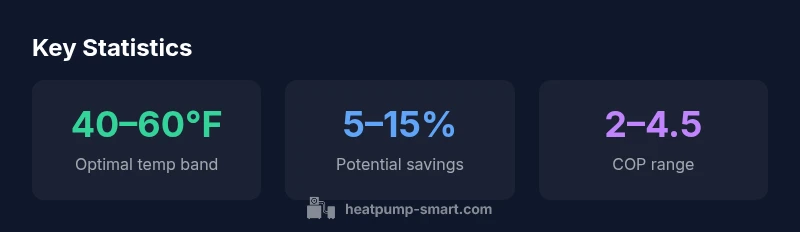
- Aim for the mild outdoor temperature band (~40–60°F) for peak efficiency
- Size the system correctly to avoid cycling losses
- Use smart controls to minimize auxiliary heat
- Maintain your home envelope to sustain COP gains
- Regular maintenance preserves long-term energy savings