What Temperature Is a Heat Pump Not Efficient At? A Practical Guide
Explore how outdoor temperatures impact heat-pump efficiency, with practical ranges, climate considerations, and strategies to minimize losses for homeowners, builders, and managers.


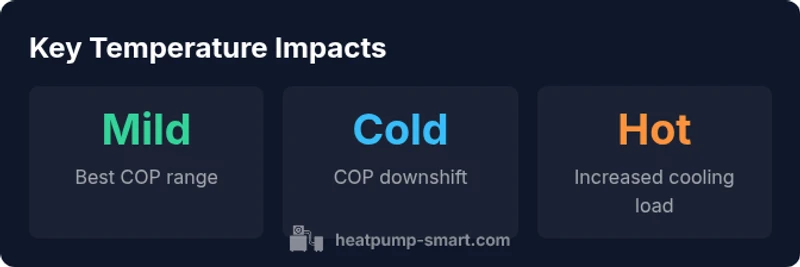
Heat pumps lose efficiency as outdoor temps move away from the mild range. For many air-source systems, performance declines when it's very cold or very hot outside. In practice, expect COP and heating or cooling efficiency to drop noticeably below about 20°F to 30°F (-7°C to -1°C) in cold weather and above roughly 95°F (35°C) on hot days. Design with climate and backup heating in mind.
Why Temperature Matters for Heat-Pump Efficiency
What temperature is heat pump not efficient? This question sits at the heart of every performance conversation. Heat pumps rely on transferring heat between your indoor space and the outdoor air or ground. Their efficiency, typically expressed as COP (Coefficient of Performance), rises in moderate outdoor temperatures and falls as conditions move toward the climate’s extremes. According to Heatpump Smart, the most efficient operation occurs in a temperate band, where the system can meet most heating or cooling loads without engaging auxiliary heat. In colder climates, the outdoor air becomes colder than the refrigerant loop can efficiently extract heat, and in hotter climates, the heat rejection process becomes more demanding. For homeowners, builders, and property managers, this means that the same unit will feel more energy-efficient in spring and fall than on the coldest winter nights or the hottest summer afternoons. Understanding these temperature-driven shifts helps with system design, setback strategies, and choosing between heat-pump types.
Cold-Weather Performance: How Freezing Temperatures Impact Efficiency
Cold outdoor temperatures challenge heat pumps by increasing the energy required to extract heat and transfer it indoors. Efficiency declines as the outdoor temperature drops, and the system may rely more on supplemental or auxiliary heat. Frost and defrost cycles introduce brief pauses in heat transfer, slightly reducing real-time output. Heatpump Smart's analysis notes that performance losses are most noticeable below freezing, with the COP dropping relative to milder days. In regions where temperatures regularly dip below this threshold, installers often recommend a well-insulated envelope, frequent maintenance, and, in some cases, a hybrid approach that combines a heat pump with a backup resistance heater for peak demand periods. The takeaway: cold snaps magnify energy use, so planning around anticipated temperatures improves overall efficiency.
Hot-Weather Performance: Cooling Loads and Efficiency
In hot conditions, heat pumps operate in reverse to move heat from inside to outside, which can stretch components and reduce efficiency if the system is undersized or poorly staged. The energy required to meet high cooling loads does not map linearly to outdoor temperature, but the COP generally declines as ambient temperatures soar, particularly in older or undersized units. Proper ventilation, shading, and a well-sealed building envelope help minimize cooling demand. Heatpump Smart emphasizes that the efficiency impact of extreme heat is not just about temperature; it’s about whether the equipment can meet the load without excessive cycling or resorting to auxiliary cooling methods. A climate-aware design reduces the risk of efficiency loss on the hottest days.
The Role of Auxiliary Heat and Defrost Cycles
Defrost cycles, necessary in many air-source heat pumps during cold weather, temporarily swap heating for defrosting, which uses energy but prevents ice buildup. The energy penalty is typically small in well-tuned systems, but it becomes noticeable when outdoor temperatures hover around freezing and humidity is high. Auxiliary or backup electric resistance heat can dramatically raise energy consumption during extreme cold if mismanaged. The key to maintaining efficiency is to optimize defrost cycles, ensure proper refrigerant charge, and use smart controls that minimize reliance on auxiliary heat during shoulder-season cold snaps. Proper maintenance and climate-aware operation reduce the overall energy impact of winter operation.
Sizing, Climate, and System Type: Why a Pairing Matters
The same heat pump can perform very differently in two homes depending on climate and building characteristics. Sizing errors—installing a unit that’s too small or too large for the load—lead to inefficient cycling, increased wear, and higher energy use during extreme temperatures. Ground-source or geothermal systems tend to maintain higher efficiency across seasons due to the relatively stable underground temperatures, while air-source systems usually face a broader range of COP values. Heatpump Smart highlights that the best results come from models sized for the local climate, paired with insulation, air sealing, and a well-designed duct plan. In other words, climate-tailored design and proper sizing minimize efficiency penalties associated with temperature extremes.
Practical Strategies to Maintain Efficiency Year-Round
Several practical steps help preserve efficiency across temperature swings. First, improve the building envelope: seal leaks, add insulation, and minimize thermal bridges. Second, choose a heat pump with a high seasonal performance factor (SPF) or COP suitable for your climate, and consider a model with variable-speed compression to adjust to load changes smoothly. Third, implement smart thermostats and zoning to avoid unnecessary heating and cooling when exterior conditions are extreme but not severe for occupancy. Fourth, schedule regular maintenance—refrigerant checks, coil cleaning, and airflow verification—to keep performance near its design point. Finally, plan for backup heat in the coldest or hottest days so the heat pump can cycle efficiently rather than run straight to auxiliary heat.
Indoor Comfort vs. Efficiency: Temperature Setpoints and Behavior
Homeowners often debate comfort against efficiency. The key is to balance setpoints with occupancy, humidity control, and ventilation. In general, setpoint strategies that avoid rapid temperature swings and align with seasonal shifts yield better efficiency and comfort. Fans, smart controls, and zoning help maintain comfortable indoor temperatures without forcing the system to work harder during extreme outdoor conditions. Heatpump Smart recommends gradual adjustments and seasonally tuned programs to sustain efficiency while preserving indoor comfort during periods of temperature extremity.
How outdoor temperature categories affect heat-pump efficiency
| Temperature Range | Typical Efficiency Impact | Notes |
|---|---|---|
| Cold climate (<0°C) | Efficiency downshift; COP reduced | Consider backup heating and insulation |
| Mild weather (0–15°C) | Near-optimal efficiency | Best performance window for many systems |
| Warm to hot (20–30°C) | COP remains solid but may drop with high ambient heat | Ventilation and shading help |
| Very hot days (>30°C) | COP drop; higher cooling demand | Prevent excessive cycling; use zoning |
| Shoulder seasons (temperate days) | Most efficient range | Optimal for energy savings and comfort |
Your Questions Answered
Why do heat pumps become less efficient in very cold temperatures?
Cold outdoor air makes heat extraction harder and increases the energy needed to deliver the same indoor heat. The COP falls as the outdoor temperature dips, and defrost cycles can briefly interrupt heating. Proper insulation and a correctly sized system help mitigate these effects.
Cold outdoor air makes it harder for heat pumps to extract heat, so efficiency drops in very cold weather. Proper sizing and insulation help reduce that impact.
Do heat pumps lose efficiency at high outdoor temperatures?
Yes, extreme heat can reduce efficiency because the system must move more heat and may cycle on and off more frequently. Good ventilation, shading, and a properly sized unit help maintain efficiency during hot days.
Extreme heat can lower efficiency, but good shading and a properly sized unit help keep performance up.
What indoor temperature maximizes heat-pump efficiency?
Aim for moderate indoor temperatures and minimize large setpoint changes. Keeping humidity under control, using zoning, and avoiding constant rapid cycling improves overall efficiency and comfort.
Keep a steady, moderate indoor temperature and use zoning to stay efficient.
How can I maintain efficiency during temperature extremes?
Improve building insulation, seal leaks, size the system correctly, and use smart controls to reduce cycling. Regular maintenance and coil cleaning also prevent efficiency losses during weather extremes.
Insulate well, size right, and keep the system maintained to stay efficient in extremes.
Is there a temperature where heat pumps are never efficient?
Extreme temperatures always challenge efficiency, but proper design—such as geothermal options or hybrid systems—and good insulation can minimize losses. No single temperature guarantees poor performance across all setups.
Extreme temps always stress performance, but good design and insulation keep it efficient.
“Temperature is a fundamental driver of heat pump efficiency; effective design and controls can minimize losses across climate zones.”
Top Takeaways
- Understand the mild-performance band for your climate
- Expect efficiency drops in extreme cold and extreme heat
- Pair heat pumps with insulation and airtight envelopes
- Use smart controls and zoning to minimize cycling
- Consider alternative systems (geothermal) for harsh climates