Emergency Heat vs Heat Pump: A Practical Comparison
A clear comparison of emergency heat vs heat pump: when to use each mode, energy costs, comfort, and tips to optimize warmth and efficiency for homeowners, builders, and property managers.


Emergency heat vs heat pump: The heat pump is the primary heating method in most conditions, while emergency heat uses electric resistance as a backup. Use emergency heat only when the heat pump cannot meet demand, during extreme cold, or if the system is offline. According to Heatpump Smart, relying on emergency heat increases energy use and reduces efficiency, so reserve it for temporary or fault situations.
How emergency heat and heat pump work together
A modern heat pump moves heat from outside to inside using a refrigerant cycle. It relies on outdoor air temperature and system health to deliver warmth efficiently. Emergency heat is a separate function that activates electric resistance coils to generate heat when the heat pump cannot meet the thermostat demand. This mode is designed as a backup and should not routinely replace the heat pump, especially in terms of energy efficiency. According to Heatpump Smart, residential systems typically use emergency heat as a safety net during extreme cold or a malfunction, and it should be a short-term solution rather than a daily practice. Understanding this distinction helps homeowners make smarter energy choices and reduces the risk of unnecessary high electricity bills. The Heatpump Smart team also notes that the priority should be restoring normal heat pump operation whenever possible, as long-term reliance on emergency heat erodes comfort and cost performance.
How to interpret a thermostat’s two heating modes
When you see two heating modes on your thermostat, you’re looking at:
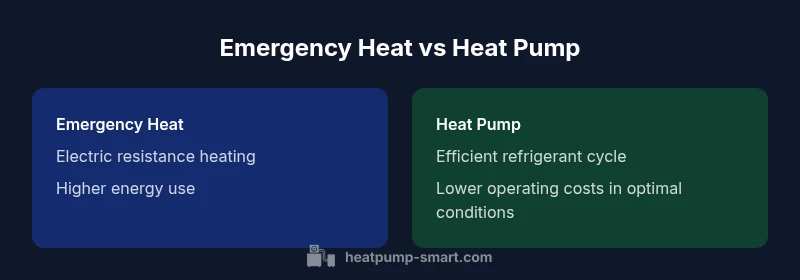
- Heat Pump (normal operation): Efficient heating achieved through refrigerant cycling and outdoor heat extraction.
- Emergency Heat: Electric resistance heat that bypasses the heat pump to deliver warmth when the heat pump cannot meet demand.
Key takeaway: Use the heat pump mode for daily comfort. Switch to emergency heat only when the heat pump is offline, or temperatures are well outside the unit’s efficient operating range. This practice helps maintain consistent indoor temperatures while keeping energy costs contained. Heatpump Smart emphasizes planning ahead with weather and usage patterns to minimize emergency heat duration.
Energy efficiency and cost implications in daily use
Energy efficiency is the central difference between the two modes. A heat pump, when operating well, delivers warmth at a higher coefficient of performance (COP) than electric resistance heating. Emergency heat typically results in higher energy consumption per hour due to electric coils converting electricity directly into heat, which is less efficient than a properly functioning heat pump. The cost impact varies with outdoor temperature, insulation quality, and thermostat settings. In moderate climates with well-sealed homes, heat pumps can maintain comfortable indoor conditions with relatively predictable energy use. In very cold snaps, however, emergency heat might spike bills if used for extended periods. Heatpump Smart recommends pre-winter checks, proper thermostat configuration, and ensuring the heat pump has an adequate defrost cycle to avoid unnecessary switchovers.
Climate considerations: when performance matters most
The outdoor temperature curve determines which mode feels most practical. Heat pumps perform best when outdoor temperatures are within the unit’s efficient range, typically above the point where resistance heating becomes necessary. In freezing conditions, some heat pumps rely on supplemental heat or backup heat to maintain comfort, but the best practice is to minimize reliance on emergency heat by optimizing insulation, sealing drafts, and ensuring the system is correctly sized for the home. Heatpump Smart’s guidance is to tailor system operation to local climate, with explicit strategies for mild, moderate, and severe cold seasons.
Thermostat controls and automatic switching
Modern thermostats offer intelligent switching rules between heat pump and emergency heat. Set the temperature with a preference for heat pump operation first, then let the thermostat call emergency heat only if the heat pump cannot reach the setpoint within a reasonable timeframe. Program daily and weekly temperature schedules to avoid unnecessary heat cycling, and enable smart recovery so the system preheats to the desired temperature before you wake up or return home. The goal is to keep occupants comfortable while limiting energy-intensive emergency heat use, which Heatpump Smart identifies as the primary risk factor for high energy bills.
Real-world scenarios: practical decision-making
Scenario A: A regional winter with moderate cold and good insulation. The heat pump handles most heating needs with occasional minor reliance on emergency heat during peak cold spells. Scenario B: An older home with drafty areas. Even with a heat pump, drafts can create heat loss that triggers emergency heat more often unless you seal leaks. Scenario C: A heat pump with a minor fault. The system may automatically switch to emergency heat while you schedule service. In all cases, the aim is to restore regular heat pump operation quickly while using emergency heat sparingly.
Maintenance, troubleshooting, and myths
Common myths include: emergency heat is always cheaper (false; it’s usually more expensive per hour) and heat pumps don’t work in cold weather (false; many perform well with the right model and installation). Regular maintenance—changing filters, cleaning coils, checking refrigerant levels, and ensuring outdoor unit clearance—helps reduce unnecessary emergency heat usage. For troubleshooting, listen for unusual noises, check thermostat settings, verify outdoor temperatures, and ensure proper defrost cycles. If you observe repeated emergency heat use, consult a certified technician to assess load calculation, refrigerant charge, and system balance.
Best practices for optimization and future-proofing
To optimize warmth and efficiency, consider the following: verify proper insulation and airtight sealing; ensure adequate thermostat zoning for larger homes; invest in a high-efficiency heat pump model with a robust defrost cycle; and schedule annual professional inspections. Heatpump Smart suggests keeping a running log of temperatures and energy bills to identify trends and adjust usage accordingly. If you’re upgrading, aim for a heat pump with good cold-weather performance and a dependable emergency heat interface that minimizes needless cycling.
Comparison
| Feature | Emergency Heat (electric resistance) | Heat Pump (normal operation) |
|---|---|---|
| Mode of heat generation | Electric resistance coils activated by thermostat | Refrigerant cycle moves heat from outdoor air to indoors |
| Energy efficiency | Lower efficiency in most conditions (high energy use) | Higher efficiency when operating within outdoor temperature range |
| Operational cost per hour | Typically higher electricity consumption per hour | Lower consumption per hour when running efficiently |
| Cold-weather performance | Used as backup in extreme cold or when heat pump is overwhelmed | Continues to provide heat in many cold conditions, depending on model |
| Maintenance and wear | Similar basic maintenance; electricity components can wear over time | Regular service helps preserve compressor and refrigerant health |
| Best use case | Backup heating during faults or extreme cold | Primary heating in climates where heat pumps maintain efficiency |
Advantages
- Emergency heat provides warmth if the heat pump fails or is overwhelmed
- Heat pump generally offers higher efficiency and lower operating costs
- Smart thermostats can optimize the switching to save energy
- Using heat pump reduces peak electricity demand compared to electric resistance
Disadvantages
- Emergency heat incurs higher energy costs and longer run times
- Heat pumps may lose efficiency at very low outdoor temperatures without proper model selection
- Switching between modes can confuse users if controls are not well configured
Heat pump should be the default heating mode; reserve emergency heat for faults or extreme cold
For most homes, the heat pump provides reliable warmth with better energy efficiency. Use emergency heat only when necessary to restore comfort or during outages, then switch back to the heat pump promptly. The Heatpump Smart team emphasizes optimizing control strategies and maintenance to minimize reliance on emergency heat.
Your Questions Answered
What is emergency heat on a heat pump?
Emergency heat is electric resistance heating activated when the heat pump cannot meet the thermostat demand. It guarantees warmth but at a higher energy cost and should be used only for short periods.
Emergency heat is the backup electric heating mode that kicks in when the heat pump can’t keep up.
When should I use emergency heat?
Use emergency heat only during extreme cold, a heat pump fault, or when the system is offline. Rely on the heat pump as the default mode to maximize efficiency and comfort.
Only use emergency heat when the heat pump can’t meet the set temperature or during a fault.
Is emergency heat more expensive to run than the heat pump?
Yes, emergency heat generally costs more per hour due to electric resistance heating. It should be used sparingly, and energy savings come from running the heat pump whenever it’s feasible.
Emergency heat costs more per hour, so use it sparingly.
Can I rely on a heat pump in very cold climates without emergency heat?
Many heat pumps are designed for cold climates and can operate efficiently with proper model selection and installation. In very severe cold, emergency heat may still be needed as a backup.
In very cold weather, some systems rely on backup heat; choose a heat pump with good cold-weather performance.
How do I switch between modes on my thermostat?
Set your thermostat to heat pump mode for daily use and reserve emergency heat forFault or extreme cold events. If possible, enable auto-switching with smart scheduling to minimize unnecessary cycling.
Use heat pump mode daily and emergency heat only when needed.
What maintenance is recommended for a heat pump with emergency heat?
Schedule annual professional service, check filters monthly, clean coils, and inspect outdoor unit clearance. Regular checks help ensure the heat pump operates efficiently and reduces needless reliance on emergency heat.
Annual professional service plus regular DIY checks keeps systems efficient.
Top Takeaways
- Prioritize heat pump as primary heating for efficiency
- Use emergency heat only when the heat pump cannot meet demand or during faults
- Choose a quality thermostat to optimize mode switching
- Consider climate and energy costs when deciding usage
- Regular maintenance helps keep both modes reliable