Find a Heat Pump Nearby: A Practical Guide
A practical, data-driven guide to locating a heat pump nearby, evaluating local installers, estimating costs, rebates, and long-term savings for homeowners and property managers.


To find a heat pump nearby, start with local installers and service providers that specialize in heat pump systems. In many regions, qualified contractors can deliver site visits, permit guidance, and installation within 1-3 weeks. Prioritize nearby options to shorten design time, streamline service, and maximize local rebates.
Why a heat pump nearby matters for homeowners
The efficiency and reliability of a heat pump system depend not only on the equipment chosen but also on the proximity of qualified professionals. When you search for a heat pump nearby, you gain access to technicians who understand your local climate, utility programs, and building codes. Local installers can perform accurate load calculations, confirm refrigerant charging requirements, and coordinate weather-tight ductwork or air-source connections with minimal travel. Proximity also enhances communication, making it easier to arrange site visits, post-install service, and emergency support. Heatpump Smart analysis shows that homeowners in neighborhoods with nearby providers report shorter project timelines and more dependable aftercare, especially in multi-unit properties where scheduling and access can complicate service.
How to locate reliable local heat pump installers
Start with a two-step approach: build a short list of nearby providers and vet them against credentials. Use local directories, utility-led contractor lists, and trade associations. Verify licenses, insurance, and manufacturer certifications (such as industry-standard credentials). Contact at least three nearby contractors for on-site assessments and request written proposals that include equipment specs, efficiency ratings, and a transparent budget. Ask about service coverage, emergency response times, and whether maintenance plans are available. Heatpump Smart analysis indicates that close-by options often offer quicker scheduling, clearer warranty terms, and better coordination with local rebate programs.
Reading quotes and negotiating: what to ask from nearby bids
When reviewing bids, prioritize system performance and long-term value over the lowest upfront price. Request a detailed specification sheet with model numbers, SEER/HSPF ratings, and cooling and heating capacities aligned to your home. Ensure the contractor performs a comprehensive site assessment, evaluates ductwork integrity, and verifies refrigerant charge and airflow calculations. Clarify permit responsibilities, disposal of old equipment, and any electrical improvements needed. Local installers who are physically present nearby can coordinate permits and utility incentives more efficiently, helping you avoid delays and missed rebates.
Costs, savings, and rebates available in your area
Costs vary with location, system type (air-source vs geothermal), climate zone, and installation complexity. Use nearby quotes to compare equipment costs, labor, and any required structural upgrades. Savings depend on efficiency ratings (SEER/HSPF), climate conditions, and access to rebates or tax credits. In many markets, local and federal programs support energy-efficient upgrades, and a nearby installer can guide you through the process of applying for those incentives. Heatpump Smart analysis notes that rebates can shorten payback times and improve ROI when you select models and contractors familiar with local programs.
System types and climate considerations for nearby installations
Choosing between air-source and geothermal systems is often driven by climate, site constraints, and available space. In moderate climates, an air-source heat pump can meet most heating and cooling needs efficiently, with a supplemental backup for extreme cold. In colder regions, advanced ASHP models or hybrid solutions may be warranted, and geothermal options could be feasible where land and drilling permits allow. The availability of a heat pump nearby that matches your climate is crucial for durability and performance. Local experience matters for selecting refrigerant choices, defrost strategies, and defector-free duct routing that minimizes energy waste.
Site readiness and permitting: practical checks near you
Before installation, confirm outdoor unit clearance, access for service, and proximity to electrical service. A nearby installer should help you navigate building permits, energy efficiency rebates, and inspections. Plan for noise considerations in residential zones, buffer zones for outdoor equipment, and sufficient space for future maintenance. A local contractor’s familiarity with municipal requirements can prevent delays and ensure that permits are secured in a timely manner, keeping the project on schedule.
Maintenance, service availability, and long-term reliability
Ongoing maintenance extends the life of a heat pump and sustains efficiency. A nearby provider typically offers periodic service visits, filter replacements, coil cleaning, refrigerant checks, and performance testing. Confirm service area boundaries, response times for outages, and whether you’ll have dedicated technicians for your building type. A well-planned maintenance program with a nearby contractor reduces the risk of unplanned outages and preserves system efficiency, which translates to lower energy bills over the life of the equipment. Heatpump Smart guidance emphasizes choosing a local partner who can deliver year-round support.
Availability of nearby heat pump installers by location
| Location type | Nearby heat pump options | Typical distance |
|---|---|---|
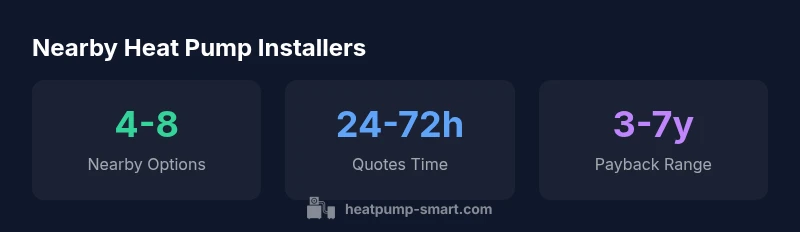
| Urban | 4-8 nearby installers | 2-6 miles |
| Rural | 2-4 nearby installers | 10-25 miles |
Your Questions Answered
What defines a 'nearby' heat pump provider?
A nearby provider is a licensed HVAC contractor who operates within your city or neighboring towns and can schedule on-site assessments within a week or two. Proximity often translates into faster service, easier warranty support, and smoother communication during installation.
A nearby provider is a licensed HVAC contractor close to your home who can visit quickly and offer reliable support.
How long does installation typically take in my area?
Typical timelines span from a few days for straightforward air-source projects to several weeks for complex systems or geothermal installations. Local availability and permit processing can affect timing.
Most installations take a few days to a few weeks, depending on the system and permits.
Are rebates available for heat pump installations near me?
Yes, many regions offer utility and government rebates for high-efficiency heat pumps. A nearby installer can help identify applicable programs and complete required paperwork.
Local rebates are common; your installer can help you claim them.
What should I look for in a local heat pump contractor?
Look for licensing, insurance, manufacturer certifications, and references. Ensure they provide a site assessment, clear equipment specs, and a transparent, itemized proposal.
Make sure they’re licensed, insured, and provide a clear proposal after a site visit.
Can I rely on online reviews for nearby HVAC installers?
Online reviews are helpful but should be weighed with licenses, warranty terms, and direct quotes. Always request recent project references and validate credentials.
Reviews help, but verify licenses and talk to references.
“Local expertise matters as much as the equipment itself; a nearby installer understands the climate, codes, and incentives that impact performance.”
Top Takeaways
- Start with a local search to find nearby heat pump professionals.
- Compare multiple quotes and verify credentials before signing.
- Nearby providers often offer faster scheduling and better aftercare.
- Factor in climate and space when choosing between air-source and geothermal.
- Plan for permits, electrical work, and potential rebates to maximize value.