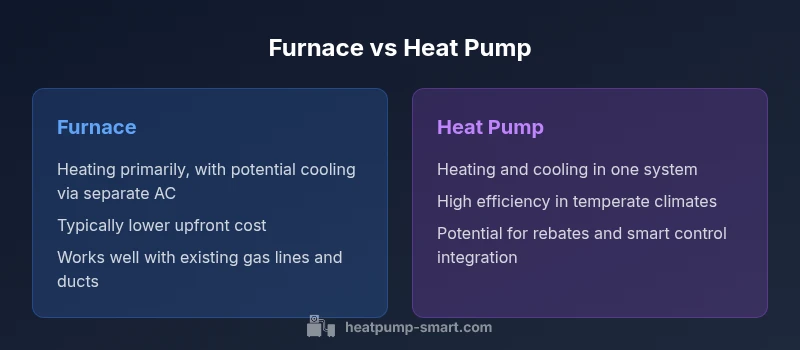
Furnace vs Heat Pump: A Practical Guide for 2026
A thorough comparison of furnace and heat pump options for home heating and cooling. Learn how each system works, climate suitability, costs, installation considerations, and practical guidance from Heatpump Smart.


For most homes in temperate climates, a heat pump offers superior efficiency and year-round comfort when paired with proper insulation. A furnace remains a robust option in regions with very cold winters or when gas infrastructure is already in place. The Heatpump Smart team emphasizes evaluating climate, insulation, and energy costs to decide which path fits best, noting heat pumps excel in milder winters and furnaces in extreme cold.
What furnace vs heat pump means for home comfort
Understanding the furnace vs heat pump decision starts with what each system is designed to do. In most homes, the choice hinges on climate, thermostat expectations, and how you use your space. According to Heatpump Smart, the most meaningful factor is whether you need year-round cooling in addition to heating, because heat pumps can deliver both, whereas most furnaces provide only heating. The contrast isn’t just about temperature; it’s about humidity, comfort consistency, and responsiveness to outdoor conditions. Home comfort also depends on insulation quality, duct integrity, and the size of the living area. For homeowners evaluating comfort, it helps to imagine daily routines—evening chill, morning activity, and nighttime cooling needs. A well-chosen system stabilizes indoor climate with fewer temperature swings and less humidity fluctuation, which translates into perceived comfort and better sleep quality.
A lot rides on availability of space, airflow, and the existing infrastructure. If you already have a modern duct system and a gas line, the replacement choice can hinge on cost and reliability rather than basic capability. The Heatpump Smart team encourages weighing not just upfront purchase price but ongoing energy costs and maintenance. In practice, many households find the heat pump a compelling temporary upgrade when installed with efficient insulation and proper sizing, especially if cooling capabilities are desired in the same system.
Finally, consider future needs such as smart thermostats and integration with home energy management. Heat pumps often pair cleanly with cooling systems and can simplify upgrades in smart homes. Across climates, the decision should align with daily living patterns, energy prices, and the long-term value of a single system handling both heating and cooling.
How a furnace works
A furnace, typically powered by natural gas, oil, or electricity, generates heat in a combustion chamber or electric heating elements. The produced heat is distributed through ducts via a blower, circulating warm air throughout living spaces. For those relying on gas, a furnace may include venting and a heat exchanger to safely exhaust combustion byproducts. A central furnace often interfaces with an air handler or an integrated furnace with a coil for air conditioning compatibility, though the AC component is separate in most setups.
A traditional gas furnace delivers consistent heat and familiar operation. Repairs are generally straightforward and parts are widely available, which can translate into lower service costs and quicker turnarounds in many markets. Replacement timelines tend to be predictable, driven by wear on burners, filters, and the heat exchanger. One practical advantage of furnaces—especially in older homes—is the established ductwork already in place, which can simplify retrofits and minimize disruption during installation.
From a maintenance perspective, furnaces require regular filter changes, annual servicing, and attention to exhaust and combustion safety. Modern high-efficiency furnaces also optimize fuel usage but still depend on efficient duct performance and minimal air leakage to achieve best results. In summary, furnaces are dependable for heating with straightforward operation, provided the climate and fuel source support their ongoing efficiency goals.
How a heat pump works
A heat pump transfers heat rather than generating it, moving warmth from outdoors to indoors in heating mode and performing the reverse for cooling. In warmer months, it operates as an air conditioner, using refrigerant cycles to remove heat from indoor air. In heating mode, even when outdoor temperatures dip, heat pumps extract available outdoor heat and deliver it inside through a network of evaporators, condensers, and fans. The system’s efficiency is often measured by heating seasonal performance factors and coefficient of performance, reflecting the amount of heat delivered per unit of electricity used.
Heat pumps come in several configurations: air-source, geothermal (ground-source), and ducted or ductless variants. Air-source heat pumps are the most common for residential use and pair well with existing ductwork in many homes. Geothermal systems require more extensive ground installation but can offer very high efficiency due to stable underground temperatures. A key practical point is that heat pumps can also provide cooling, which means a single system handles year-round climate control, simplifying maintenance and potentially reducing space needs.
A primary strength of heat pumps is their overall efficiency advantage in moderate climates with lower heating demand. However, in very cold climates, some models rely on auxiliary heat sources to maintain comfort, which can impact operating costs. When selecting a heat pump, consider climate zone, insulation quality, and the availability of backup heating options to maintain consistent warmth during colder periods.
Efficiency and energy use: key differences
Efficiency differences between furnaces and heat pumps are often framed around how they convert energy into usable heat. Furnaces tend to deliver reliable warmth with predictable energy consumption, particularly in homes with solid duct systems. High-efficiency gas furnaces maximize fuel use, but their efficiency gains still depend on air distribution and duct integrity. Heat pumps rely on electrical energy to move heat rather than burn fuel, which typically yields superior efficiency in moderate climates.
In practice, the annual energy use and operating cost depend on climate, insulation, and usage patterns. In milder winter zones, heat pumps can outperform furnaces by a meaningful margin, thanks to the “heat moved, not generated” design. In very cold regions, heat pumps may require supplemental heating during peak cold spells, which can affect overall efficiency. The Heatpump Smart team highlights that the most meaningful comparison is the system’s performance in typical daily cycles: morning warmth, daytime occupancy, and evening comfort, factoring in humidity control as well as temperature stability.
Another facet is the combined heating and cooling capability of heat pumps, which can deliver broader energy savings when cooling needs are present. A furnace, by contrast, focuses on heat production and may require a separate cooling solution. Across scenarios, the optimal choice balances climate realities, energy prices, and comfort expectations. Heat pump efficiency continues to rise with new refrigerants and advanced compressors, while furnace efficiency improves with better heat exchangers and venting practices.
Climate alignment: where each shines
Climate clearly shapes the furnace vs heat pump decision. In regions with long, severe winters, furnaces often provide reliable warmth with stable performance when outdoor temperatures plummet. The infrastructure for gas heating is mature in many neighborhoods, and upgrading to a modern gas furnace can be straightforward, with predictable fuel costs and service availability. In contrast, heat pumps excel in temperate to moderately cold climates where heating demand is moderate and cooling is desirable. The dual role of heat pumps reduces system complexity and can lower total energy use when temperatures stay within a range where the unit operates efficiently.
Another climate factor is humidity management. Heat pumps can actively dehumidify indoor air in heating mode and provide dehumidification alongside cooling, which benefits comfort in humid markets. In dry interiors or hot climates, heat pumps can preserve comfort with lower energy consumption than separate cooling and heating solutions. For very cold climates, you might consider a hybrid approach, using a heat pump as the primary heat source with a backup furnace for extreme cold days, thereby balancing efficiency and reliability.
Ultimately, the climate match informs long-term reliability and the expected lifecycle costs. Heat pumps are favored for energy-conscious homes in mixed climates, while furnaces remain strong contenders where winter demand is intense and gas is accessible. Homeowners should model a few typical months to estimate energy expenditures under each system with their specific insulation and duct design.
Installation, sizing, and integration considerations
Choosing between a furnace and a heat pump often starts with sizing and installation realities. Proper sizing ensures comfort without oversizing, which can waste energy and increase wear. Heat pumps require adequate electrical capacity and, for some homes, upgrades to electrical panels or wiring. In older houses, retrofitting for a heat pump might involve upgrading the outdoor unit location, ensuring proper clearances for heat exchange, and confirming that ductwork delivers balanced airflow. Furnaces typically involve less electrical overhaul, especially when retrofitting into existing gas lines and ducts, but they still benefit from duct sealing and filter upgrades.
Ductwork plays a significant role in performance. Leaky ducts can erode efficiency and create uneven heating. When installing any centralized system, assess attic or basement space for equipment and ensure airflow paths are optimized. For homes without existing ducts, a ductless heat pump or mini-split system may be an attractive option, though it changes cost structures and aesthetics. Engaging a professional with experience in both furnace and heat pump installations can help identify the most cost-effective and reliable configuration for your home.
The decision to install a heat pump or furnace should also consider future upgrades such as smart thermostats and energy storage. A heat pump integrates smoothly with modern home automation, enabling scheduling, occupancy-based control, and real-time efficiency monitoring. In contrast, a furnace-focused setup may require additional cooling solutions for year-round comfort, which adds another layer of integration to evaluate during planning.
Maintenance, reliability, and lifecycle costs
Maintenance profiles differ between furnaces and heat pumps. Furnaces emphasize regular burner inspection, vent cleaning, filter replacement, and checks on flame quality and heat exchangers. The reliability of gas systems, particularly mid-life components like burners and igniters, often hinges on service quality and regular maintenance. Heat pumps require refrigerant system checks, outdoor unit cleanliness, and coil maintenance. Filter changes are universal, but heat pumps may demand more frequent inspection during seasonal use, especially in dusty environments.
Lifecycle costs include upfront investment, energy consumption, and anticipated replacement cycles. Furnaces typically offer a straightforward path with predictable replacement intervals tied to fuel costs and duct efficiency. Heat pumps provide long-term energy savings but may involve higher initial investment and periodic refrigerant or compressor considerations. The Heatpump Smart team recommends evaluating total cost of ownership (TCO) over a 10–15 year horizon, factoring in anticipated energy prices, maintenance intervals, and potential incentives.
Reliability comes from proper sizing, quality installation, and routine maintenance. Both systems benefit from professional inspections and air-quality improvements, such as sealed ducts and upgraded filtration. Weather exposure and local climate will influence component wear, especially for outdoor heat pump units in harsher environments.
Noise, aesthetics, and space requirements
Space needs and noise profile are practical considerations that homeowners often overlook. Furnaces typically require a dedicated cabinet and adequate clearance for exhaust and combustion air, with room to access electrical and duct connections. Heat pumps, particularly air-source variants, involve outdoor units that require some external space and clearance to operate efficiently and to facilitate defrost cycles. Noise levels vary by model and installation; a well-chosen system places the outdoor unit away from living spaces and uses quiet-com forting design features to minimize disturbance.
Aesthetics can influence acceptance, especially in tight lots or for systems visible from living areas. Ducted systems integrate more discreetly into the home, whereas outdoor heat pump units may need shielding or landscaping to blend with the exterior. Plumbing, electrical, and building permits also shape where components can be placed, so design considerations during the planning phase help avoid compromises during installation. Proper placement improves performance, reduces vibration, and can contribute to longer equipment life.
Real-world decision paths: matching your home
Real-world homeowners often narrow choices by evaluating occupancy patterns, energy costs, and climate. In moderate climates with hot summers, a heat pump can deliver heating and cooling in a single, efficient package, which is appealing for year-round comfort and simplified maintenance. For homes in extreme winter zones or where gas is already used for heating, a furnace can deliver dependable warmth with familiar operation and potentially lower upfront costs. A hybrid approach—using a heat pump as the primary heat source and a furnace as a backup in very cold periods—offers a balance between efficiency and reliability.
Your decision should also consider future upgrades such as solar integration, time-of-use electricity pricing, and participation in rebates or tax incentives. An energy audit can reveal air leakage, insulation gaps, and opportunities to improve overall efficiency, which directly affects the value of either option. Finally, assess lifecycle costs, including maintenance, energy consumption, and potential price volatility in fuel sources, to determine the most economical long-term choice.
Looking ahead: smart controls and future-proofing
Smart controls and energy management are increasingly important in determining the long-term value of heating technology. Heat pumps tend to pair naturally with smart thermostats, occupancy sensors, and demand-response programs, enhancing efficiency and comfort through precise adjustments. Furnaces can also benefit from smart controls, but the synergy with cooling cycles is less inherent than with heat pumps. As building envelopes improve and insulation becomes more effective, the gap between the two options in terms of efficiency grows, particularly for homes in climate zones with moderate cold.
Future-proofing may involve selecting high-efficiency variants, planning for electrical upgrades, or choosing equipment with flexible ducting and compatible refrigerants. Rebates, tax incentives, and utility programs continue to evolve, so staying informed about local programs can add meaningful value. The Heatpump Smart team recommends evaluating not only cost but comfort expectations, control capabilities, and potential for integration with home-energy storage and load-shifting strategies.
Practical decision checklist: how to decide now
- Identify climate zone and typical winter conditions to assess whether a heat pump or furnace will maintain comfort reliably.
- Audit insulation, duct leakage, and air sealing to understand efficiency potential before installing either system.
- Consider whether cooling needs exist; if yes, heat pump offers a two-in-one solution.
- Review upfront costs versus long-term energy use and maintenance commitments.
- Check available rebates, tax credits, and utility incentives that can influence the total cost of ownership.
- Plan for professional sizing and installation to maximize performance and minimize disruption.
- Consider future upgrades such as smart thermostats and energy management integrations.
- Weigh existing gas infrastructure and willingness to switch energy sources when evaluating a hybrid approach.
Summary: balancing comfort, cost, and climate
Ultimately, furnace vs heat pump is not a one-size-fits-all choice. The optimal path balances climate realities, energy costs, and comfort priorities. In moderate climates with good insulation and cooling needs, heat pumps can offer superior efficiency and convenience. In regions with extreme cold or where gas heating is entrenched, a high-efficiency furnace—or a hybrid arrangement—may be the most sensible option. The Heatpump Smart team underscores the value of a professional assessment that weighs climate, ductwork, insulation, and energy pricing to deliver a tailored recommendation.
Comparison
| Feature | furnace | heat pump |
|---|---|---|
| Upfront cost | lower upfront cost | higher upfront cost |
| Operating cost (yearly) | potentially higher if gas prices rise | potentially lower with electricity in milder winters |
| Cold climate performance | reliable warmth in very cold weather | can require auxiliary heat in extreme cold |
| Heating + cooling | heating only in most cases | heating and cooling in one system |
| Noise level | varies by model; generally compact | outdoor unit noise considerations; can be quiet with modern design |
| Ductwork needs | works with existing ducts | may require ducting or outdoor unit placement |
| Reliability and service | strong, widely available service | more specialized service for refrigerant systems |
| Rebates/incentives | gas-heating incentives/local programs | high-efficiency heat pump rebates; possible tax credits |
Advantages
- Furnace offers reliable warmth in very cold climates and works well with existing gas systems
- Lower upfront installation costs can reduce initial project burden
- Broad service availability supports quick maintenance and repairs
- Heat pump provides heating and cooling in one system with strong energy efficiency
- Potential rebates and incentives for high-efficiency heat pumps can lower lifecycle costs
Disadvantages
- Fuel costs for furnaces depend on gas prices and can be volatile
- Ongoing fuel consumption generally higher than electricity for moderate climates
- Heat pumps require higher upfront investment and possible electrical upgrades
- Performance can drop in extreme cold without auxiliary heating
- Heat pumps may need supplemental heat or hybrid setups in harsh winter zones
Heat pumps win for most temperate climates; furnaces prevail in extreme cold or where gas infrastructure dictates the choice
In homes with moderate winters and cooling needs, heat pumps offer superior long-term energy efficiency and system simplification. In regions with very cold winters or existing gas heating, a high-efficiency furnace—or a hybrid approach—often provides the most reliable comfort and lowest lifecycle risk. The Heatpump Smart team recommends a climate-driven assessment and professional sizing to confirm the best path.
Your Questions Answered
What is the primary difference between a furnace and a heat pump?
The primary difference is how heat is produced: furnaces generate heat through combustion or electrical resistance, while heat pumps transfer heat from outside to inside. Heat pumps also provide cooling, offering a two-in-one solution in suitable climates. Both require proper sizing and ductwork to perform optimally.
Furnace uses burning or electric heat to warm your home, while a heat pump moves heat in or out for heating and cooling. Correct sizing is essential for good performance.
Can a heat pump be effective in very cold climates?
Some heat pumps perform well in cold weather, especially modern models designed for extreme temperatures, but many require auxiliary heating during very cold days. A hybrid approach—heat pump plus a supplementary furnace—often delivers reliable warmth in severe winters.
Heat pumps can work in cold weather, but you may need backup heat in very cold days.
Do heat pumps provide both heating and cooling?
Yes. Heat pumps provide heating in winter and cooling in summer, using the same refrigerant cycle. This makes them a consolidated solution for year-round climate control, especially when paired with a smart thermostat.
Heat pumps heat and cool with one system, which is convenient and efficient.
Is it more expensive to install a heat pump than a furnace?
Generally, heat pumps have higher upfront costs due to equipment and potential electrical upgrades. However, long-term energy savings and available incentives can offset the initial expense, depending on climate and utility pricing.
Heat pumps cost more upfront, but can save on energy bills over time with incentives.
What maintenance do these systems require?
Furnaces require regular burner/service checks, vent inspections, and filter changes. Heat pumps need refrigerant checks, coil and outdoor unit cleaning, and standard filter changes. Both benefit from duct sealing and annual professional inspections.
Regular servicing keeps both systems efficient: filters for all, plus periodic checks for burners or refrigerant.
Are rebates available for these systems?
Many regions offer rebates or tax incentives for high-efficiency furnaces and heat pumps. Availability varies by location and program, so check local utility offerings and government incentives for current options.
There are often rebates for efficient heating systems; check your area for current programs.
Top Takeaways
- Prioritize climate and insulation to choose heating vs cooling efficiency
- Heat pumps double as air conditioners, offering year-round comfort in milder climates
- Furnaces are often cheaper upfront and robust in extreme cold or with existing gas infrastructure
- Hybrid approaches can balance efficiency and reliability in transitional climates
- Professional sizing and ductwork assessment are essential for optimal performance