What is a Heat Pump vs Furnace? A Practical Guide
Compare heat pumps and furnaces to see which heating system fits your climate, budget, and energy goals. Learn how each works, costs, efficiency, and upgrade options in this in-depth guide.


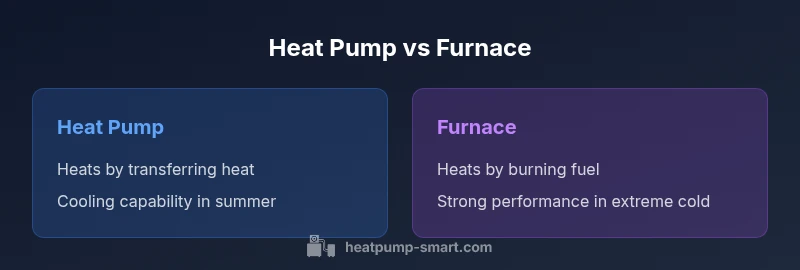
A heat pump transfers heat between indoors and outdoors using electricity, while a furnace generates heat by burning fuel. For most homes, heat pumps deliver efficient year-round comfort, with a hybrid approach often best in colder climates. This quick takeaway helps homeowners decide whether a heat pump, furnace, or dual-fuel setup fits their climate and energy goals.
What is a heat pump vs furnace?
What is a heat pump vs furnace? In practical terms, a heat pump moves heat rather than creates it. It draws warmth from outdoor air (or ground) and transfers it indoors, using electricity to run a compressor and refrigerant cycle. A furnace, by contrast, generates heat through combustion, burning gas, oil, or propane to produce warm air or hot water. The distinction matters for efficiency, emissions, and how each system responds to seasonal changes. According to Heatpump Smart, the most common path for homeowners is to use a heat pump for cooling and heating in temperate seasons and rely on supplemental or backup heat when temperatures drop. The Heatpump Smart team also notes that climate, electricity prices, and home insulation heavily influence long-term cost and comfort. This section sets the stage for a detailed, apples-to-apples comparison, so you can assess what is best for your home.
How heat pumps work
Heat pumps operate on a refrigeration cycle that moves heat rather than creates it. In heating mode, the outdoor unit extracts heat from the ambient air (even when it’s chilly) and concentrates it inside the home. An indoor air handler or hydronic system distributes the warmed air or water. Modern heat pumps come in air-source, ductless mini-split, and geothermal variants, each with different installation profiles and efficiency ranges. In cooling mode, the system reverses the cycle to remove heat from indoors. Efficiency is typically described by coefficients like COP or HSPF, and performance improves with better insulation and sealed ducts. Heat pumps can work primarily on electricity, reducing or eliminating fossil fuel use when compared to traditional furnaces. Heatpump Smart analysis shows that in milder climates with reasonable electricity costs, heat pumps consistently deliver lower operating costs over the life of the equipment, provided proper sizing and installation.
How furnaces work
Furnaces generate heat through combustion, typically using natural gas or propane, though oil furnaces exist in some markets. A blower distributes heated air through a duct system, and the efficiency measure is AFUE (Annual Fuel Utilization Efficiency). Higher AFUE means less wasted energy, but it doesn’t capture electricity use or cool-season heat loss. Furnaces are often paired with air conditioning via a shared duct system, enabling a comfortable year-round climate. In regions with cold winters or high electricity costs, a high-efficiency gas furnace can be a reliable, long-term heat source. The Heatpump Smart team emphasizes that while furnaces excel at producing heat, they won’t provide the same level of efficiency as modern heat pumps when electricity prices are favorable and insulation is good.
Efficiency and cost considerations
Efficiency and cost are central to choosing between heat pumps and furnaces. Heat pumps deliver heat by moving energy rather than burning fuel, which can translate into lower operating costs in many climates. Their efficiency is described by COP, SEER, and HSPF, and they may require electricity infrastructure upgrades or electrical service checks. Furnaces achieve high AFUE ratings, reflecting how effectively fuel is turned into heat; however, AFUE ignores cooling efficiency and electricity use. The long-term cost picture depends on local fuel prices, electricity rates, climate zone, and insulation quality. Heatpump Smart analysis shows that for moderate climates with reasonable electricity rates and well-sealed homes, heat pumps often outperform traditional furnaces in total cost of ownership, though dual-fuel setups can offer robust performance in cold extremes.
Climate performance and comfort
Cold-climate performance is a frequent concern. Air-source heat pumps can lose efficiency as outdoor temperatures fall, though modern models with low-temperature performance and supplemental electric resistance can maintain comfort. Geothermal heat pumps tend to perform consistently across climates but require more invasive installation. Furnaces supply rapid, high heat output and are less sensitive to outside temperatures, making them reliable in deep freezes. The choice often hinges on climate, energy mix, and comfort preferences. Heatpump Smart highlights that pairing a heat pump with a furnace or using a dual-fuel system can provide optimal comfort across seasons while managing operating costs.
Installation considerations and upfront costs
Installation is a critical factor that shapes both cost and performance. Heat pumps may require outdoor space for the condenser, proper refrigerant charge, and ductwork adjustments for central systems. Ductless mini-splits offer flexible installation without extensive ductwork for retrofit situations. Gas furnaces need combustion venting, fuel supply lines, and proper venting, which can add complexity in older homes. Upfront costs for heat pumps tend to be higher than low- to mid-range furnaces, but lifecycle costs can be lower where electricity is affordable and insulation is strong. Maintenance needs differ: heat pumps require refrigerant checks and electrical components inspection, while furnaces emphasize burner and venting maintenance. Heatpump Smart emphasizes getting a professional heat load calculation and a ductwork assessment to avoid over- or undersized systems.
Hybrid systems and backup heating options
A hybrid or dual-fuel system combines a heat pump with a gas furnace, switching between the two based on outdoor temperatures and energy pricing. This approach offers energy savings in milder weather with heat pumps and reliable peak heat delivery during cold snaps via the furnace. For homes with existing gas lines, a hybrid can minimize disruptions and provide a smooth transition to more efficient heating. In retrofit scenarios, the decision to add a dual-fuel system depends on current ductwork, electrical capacity, and the anticipated cost difference. Heatpump Smart recommends evaluating local incentives and utility tariffs to determine if a hybrid solution reduces total cost of ownership.
Maintenance and service planning
Regular maintenance extends the life of any heating system. Heat pumps require seasonal checks of refrigerant levels, electrical connections, and defrost functionality for outdoor units. Furnaces need annual burner and vent inspection, filter changes, and duct cleanliness to prevent performance losses. The maintenance plan should align with the system type and your climate; in colder regions, more frequent checks may be necessary for reliability. Heatpump Smart advises homeowners to keep up with filter changes, duct inspections, and thermostat calibration to maintain efficiency and comfort throughout the year.
Comparison
| Feature | Heat pump | Furnace |
|---|---|---|
| Heating method | Heat transfer via refrigerant cycle | Fuel combustion to generate heat |
| Typical efficiency metric | COP/HSPF (seasonal) | AFUE (fuel efficiency) |
| Best climate fit | Moderate to warm climates; with backup in cold seasons | Cold climates; consistent heat |
| Operating costs (general) | Lower in electricity-driven, especially with high efficiency and insulation | Dependent on fuel prices; can be high if fuel costs rise |
| Installation considerations | Outdoor unit, refrigerant lines, ducting could be complex; can be retrofitted with mini-splits | Venting, gas line, and duct system integration; potentially simpler in new construction |
| Backup heat options | Electric resistance or supplemental heat; sometimes a secondary heat source | Gas/oil backup heat depending on fuel supply |
| Maintenance needs | Refrigerant, electrical components, coil cleaning | Burner alignment, venting, filter changes |
| Lifespan considerations | Typically 15-20 years with proper service | Typically 15-25 years depending on install and maintenance |
| Noise and comfort | Often quieter indoors; outdoor unit noise depends on model | Noise primarily from blower and furnace operation; location matters |
| Incentives and rebates | Incentives for high-efficiency heat pumps vary by region | Fuel-related incentives depend on local markets and codes |
Advantages
- Lower emissions potential in electricity-rich regions
- Year-round comfort with cooling capability in some models
- Hybrid options for cold climates offer flexibility
- Potential long-term energy savings with proper sizing
Disadvantages
- Higher upfront costs for many models
- Performance can drop in very cold climates without supplemental heat
- Complexity of installation and ductwork changes
- Electricity price volatility can affect operating costs
Heat pumps are generally the better long-term option for temperate climates, with hybrids ideal for mixed seasons; furnaces remain strong where gas is inexpensive or winters are extreme.
For most homes in moderate climates, a heat pump or dual-fuel system offers better efficiency and lower emissions. In very cold regions, a furnace or hybrid approach often provides reliable peak heating and faster warm-up when needed.
Your Questions Answered
What is the main difference between a heat pump and a furnace?
The main difference is that a heat pump moves heat using electricity, while a furnace creates heat by burning fuel. Heat pumps can cool as well as heat, making them a dual-purpose system in many homes. Furnaces provide robust heat in extreme cold, especially when backup heat is needed.
Heat pumps move heat with electricity and can cool; furnaces burn fuel for heat and are reliable in very cold weather.
Can a heat pump replace a furnace in cold climates?
In many cold climates, a heat pump can replace a furnace, especially when paired with a supplemental heat source or an over-sized unit. In very cold regions, a dual-fuel system or a high-efficiency furnace may be the safer option for all-season comfort.
Yes, but in very cold areas you may still want backup heat or a dual-fuel setup.
What maintenance does a heat pump require?
Regular maintenance includes checking refrigerant levels, cleaning coils, ensuring proper airflow, and inspecting electrical connections. Annual professional service helps preserve efficiency and extend the life of the system.
Keep coils clean, check refrigerant and airflow, and schedule yearly professional service.
Are there incentives for upgrading to a heat pump?
Yes, many regions offer rebates, tax credits, or utility incentives for high-efficiency heat pumps. Availability varies by location, equipment type, and program rules, so check local programs before purchasing.
Check local rebates and incentives before buying to maximize savings.
What is a dual-fuel system?
A dual-fuel system combines a heat pump with a furnace to optimize performance across seasons. The system switches between heat pump and furnace based on outdoor temperature and energy costs, offering efficiency with reliable peak heating.
A hybrid that uses heat pump most of the time and furnace when it gets very cold.
How do installation costs compare?
Installation costs vary by home, existing ductwork, and local labor rates. Heat pumps can be more expensive upfront, especially with ductwork changes, but lifecycle costs may be lower in favorable electricity markets.
Upfront costs can be higher for heat pumps, but long-term savings can balance the investment.
Top Takeaways
- Assess climate and electricity prices before deciding
- Consider hybrid options for year-round comfort
- Get a professional heat load and duct assessment
- Factor in maintenance and potential rebates
- Plan for future energy costs and insulation improvements