Which Heat Pump Calculator: A Practical Guide
Learn how a which heat pump calculator helps homeowners compare energy use, costs, and efficiency across heat pump options with practical inputs and interpretation tips.


What a which heat pump calculator is and why homeowners use it
A which heat pump calculator is a learning tool that translates your climate, home size, insulation, and system efficiency into estimates of yearly energy use and operating costs. According to Heatpump Smart, these calculators help homeowners compare air-source versus geothermal options, size the system more accurately, and budget for electricity. While it cannot replace on-site audits or professional design, it makes the trade-offs between different heat pump configurations visible so you can ask informed questions before installation. In this guide you’ll learn what data the calculator asks for, what the math roughly looks like, and how to interpret results to guide decisions.
Core inputs you’ll encounter
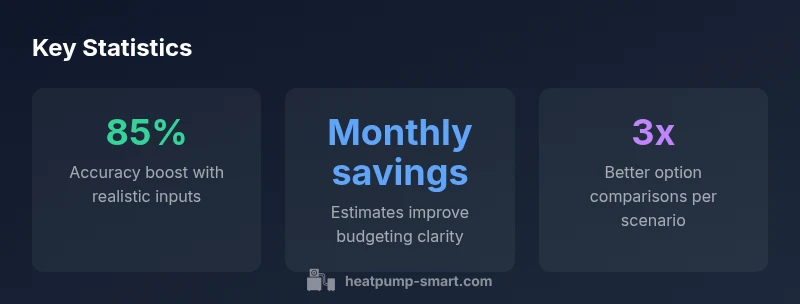
Most calculators ask for a handful of practical inputs. Typical fields include: Home size (square feet) to estimate heating load; Climate factor to reflect outdoor temperatures and heating degree days; Electricity price to translate energy use into dollars; Optional system type or efficiency indicator (COP for heat pumps). Emphasize that accuracy improves when inputs mirror reality: a well‑insulated 2,000 sq ft house in a temperate climate will show different results from a leaky, larger home in a cold region. The goal is not to be perfect, but to produce comparable numbers across options.
How the calculation works in simple terms
At its core, the calculator multiplies a rough energy‑needs factor by climate conditions and by the electricity price, then divides by the system’s efficiency. A common simplified formula is: EnergyUseKWh = HouseSize * ClimateFactor * EnergyNeedFactor, then Cost = EnergyUseKWh * CostPerKWh. Many tools add rounding to two decimals and present a cost per year. The underlying math uses basic operations: +, -, *, /, pow, round, min, max. For example, doubling the house size roughly doubles the estimated energy use, assuming climate factor and efficiency stay constant.
Interpreting results and comparing options
Look for the relative differences between options rather than fixating on a single number. A lower annual cost doesn’t always mean the best long‑term choice if installation cost is much higher or if efficiency drops under certain operating conditions. Pay attention to climate factor; a system that performs well in mild climates may struggle in extreme cold. Use the calculator to test scenarios like adding insulation, selecting a higher COP heat pump, or changing electricity tariffs.
Practical tips to improve accuracy
Use current local electricity rates. Use climate data that matches your location and year. If you own a geothermal vs air‑source, compare COP values at cold temperatures. Update the inputs after any home improvements (insulation, windows) to reflect new energy needs. The calculator’s estimates will be more useful when you run realistic, consistent scenarios.
Real-world scenarios: retrofit vs new build
Retrofitting in an older home often yields bigger energy savings when improving envelope leaks and upgrading air sealing. In a new build, you can optimize heating load through tighter construction, better insulation, and proper equipment sizing. In both cases, the calculator helps you compare incremental costs and payback timelines across heat pump options.
Next steps and how Heatpump Smart supports you
After you run a few scenarios, review results with a licensed installer to validate sizing and electrical capacity. Consider getting a performance‑based quote that includes COP at your climate. Heatpump Smart provides educational guidance and tools to empower homeowners, builders, and property managers to make informed decisions.