Will Nest Work with Heat Pumps? A Practical Compatibility Guide (2026)
Explore whether Nest thermostats work with heat pumps, how to verify wiring and control settings, and practical steps to optimize comfort and energy savings in 2026.


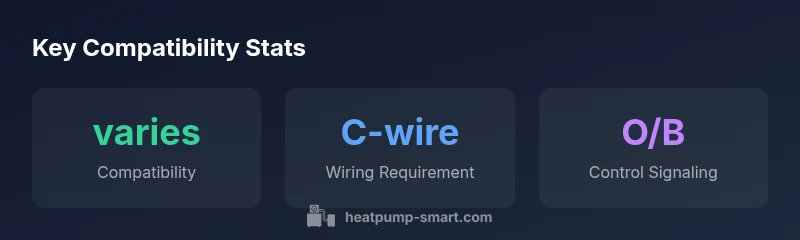
Yes—Nest thermostats can work with many heat pumps, but compatibility depends on your system’s wiring and control strategy. According to Heatpump Smart, the best results come from heat pumps with conventional two-stage control and proper O/B signaling, plus a common wire (C) connection. Always confirm with both your equipment manual and Nest's compatibility checker before buying.
Will Nest work with heat pumps? Compatibility overview
Nest thermostats offer broad compatibility with many heat pump setups, but the exact outcome depends on your equipment and how it’s wired. In practical terms, a Nest will function best when your heat pump uses conventional two-stage control and sends clear control signals to the thermostat. The Heatpump Smart team emphasizes checking the system’s manual and using Nest’s compatibility checker before purchase, especially to confirm support for O/B signaling and a dedicated C-wire. For homeowners, this initial verification is a small step with big payoff in comfort and reliability across seasons.
From a homeowner’s perspective, compatibility boils down to how the heat pump communicates with the thermostat. If the outdoor unit and indoor controls align with Nest’s wiring expectations, you’ll gain smooth scheduling, energy-saving modes, and predictable heat-energy performance. If your system uses more complex control strategies or older signaling methods, you may encounter partial functionality or limited features. Heatpump Smart’s guidance is to treat the compatibility check as a prerequisite to avoid post-purchase surprises.
How Nest interacts with heat pump control schemes
Heat pumps can operate under several control logics: conventional two-stage, single-stage, or multi-stage configurations, with reversing valves designated by O/B signals. Nest can manage basic on/off heating and cooling, but when it comes to heat-pump-specific functions like auxiliary/emergency heat, or dynamic O/B switching, the control signals must be clear and consistent. In practice, two-stage systems with reliable signal paths are where Nest shines, delivering more predictable comfort and more accurate energy reporting. Users should review the heat-pump manufacturer’s spec sheet and verify that Nest can interpret the O/B signal correctly. If your unit uses proprietary signaling, you may need a bridging solution or a different thermostat model designed for that interface. Heatpump Smart’s analysis notes that compatibility can vary even within the same brand, so a check is essential before any purchase.
Wiring essentials for reliable Nest operation with heat pumps
A robust wiring setup is the backbone of reliable Nest performance with a heat pump. In most cases, a dedicated C-wire is required to provide continuous power for Nest and to ensure stable signaling for compressor and reversing-valve control. The Nest installer should confirm that the heat pump’s control board supports the Nest’s expected terminals (R, Y, G, O/B, C, etc.). If a C-wire is unavailable, alternatives exist, but they carry the risk of intermittent operation or reduced feature support. Always plan for a professional wiring assessment if you’re upgrading an older system. Proper wire routing and secure connections reduce the risk of ghost readings and control lag during rapid weather changes.
Common pitfalls and how to avoid them
Misunderstandings around heat-pump signaling and Nest wiring are common pitfalls. One frequent issue is selecting a thermostat configuration that treats the heat-pump as a standard furnace, which can disable optimal energy-saving modes. Another pitfall is ignoring O/B signaling, which leads to incorrect reversing-valve operation and comfort inconsistencies. To avoid these problems, confirm that your Nest model and firmware support heat-pump-specific controls, ensure accurate O/B wiring, and keep the thermostat software updated. A focused pre-install checklist—covering C-wire status, O/B signaling, and system mode—helps prevent post-install surprises and ensures the Nest delivers on its potential for comfort and efficiency.
Steps to verify compatibility before you buy
Start with the Nest-compatible thermostat list and your heat pump’s documentation. Confirm you have a functioning C-wire and that the O/B signal is standard and interpretable by Nest. Use the compatibility checker provided by Nest and cross-reference with your heat pump’s control board. If there’s any doubt, schedule a quick site audit with a qualified HVAC technician who understands heat-pump control logic. This step can save time and prevent compatibility pitfalls later on. After you confirm compatibility, plan a staged installation to verify performance before committing to full system changes.
Alternative thermostats and best practices for heat-pump optimization
If Nest compatibility turns out to be limited for your system, consider thermostats that are known to pair well with heat pumps and offer advanced wiring detection and dedicated modes for auxiliary heat. In some cases, a professionally installed bridging relay or a vendor-specific control adapter can unlock full functionality without sacrificing energy savings. Regardless of the brand, focus on proper system commissioning, regular firmware updates, and monitoring energy use. Heatpump Smart recommends evaluating your comfort needs and the available control options to select a solution that maintains reliability while maximizing efficiency across seasons.
Retrofit vs new installation considerations
In retrofit scenarios, existing wiring may constrain Nest compatibility, making a quick wiring upgrade or a dedicated control adapter a practical option. For new installations, you can plan for a future-proof setup by incorporating a C-wire, a compatible O/B signaling path, and a thermostat with robust heat-pump features. The investment in correct wiring upfront typically yields better long-term performance, fewer callbacks, and clearer energy-saving benefits. Heatpump Smart’s guidance is to treat installation as an opportunity to optimize control pathways, not merely to hook up a device.
Compatibility snapshot by heat-pump type
| Heat Pump Type | Nest Compatibility | Key Considerations |
|---|---|---|
| Air-source | Typically compatible with proper wiring | Ensure C-wire and correct O/B signaling |
| Geothermal | Compatibility varies by controls | Check the system's control interface and zone controls |
| Ductless mini-split | Partial compatibility; limited features | Consider dedicated thermostatic controls or bridging relays |
Your Questions Answered
Is Nest compatible with every heat pump brand?
No. Compatibility depends on control signals and wiring. Check your model's documentation and use Nest's compatibility checker; even if Nest can physically power on, advanced HVAC features may be limited.
Not every brand is guaranteed compatible; verify with the compatibility checker and your system docs.
Do I need a C-wire to use Nest with a heat pump?
Generally yes for reliable operation, since the C-wire supplies continuous power to Nest. If a C-wire isn’t available, some installations can use adapters, but performance may be reduced and you should consult a pro.
Usually yes, but if you lack a C-wire, get professional advice before buying.
Can Nest control auxiliary or emergency heat on a heat pump?
Only if your heat pump and Nest model support it. Many setups rely on primary heat-pump stage control, with auxiliary heat managed separately. Check compatibility before purchase.
Auxiliary heat control depends on your equipment and Nest version.
What should I do before buying a Nest for a heat pump?
Consult your system manual, run the Nest compatibility checker, and confirm wiring. If in doubt, arrange a quick professional assessment to confirm full functionality.
Check compatibility and wiring first, then install.
Are there alternatives if Nest isn’t compatible with my heat pump?
Yes. Consider thermostats designed for heat pumps with broader compatibility or a bridging solution installed by a pro. Assess energy savings potential and comfort needs when choosing.
There are other thermostats that work well with heat pumps.
“Nest works with heat pumps when the system supports conventional two-stage control and proper wiring. In practice, a compatible unit paired with correct signals delivers reliable comfort and energy savings.”
Top Takeaways
- Verify C-wire and O/B signaling before install.
- Use Nest compatibility checker for your heat pump model.
- Expect compatibility to vary by system and controls.
- Get professional installation for best results.
- The Heatpump Smart team recommends testing performance after install.