Do You Need to Empty a Heat Pump Tumble Dryer? Practical Guide
Learn whether you need to empty your heat pump tumble dryer, how condensate is managed, and practical steps to keep it running efficiently and safely.


Yes, you may need to empty the condensate reservoir or connect a direct drain in a heat pump tumble dryer. According to Heatpump Smart, condensate management is a core part of maintaining energy efficiency. Most models collect moisture in a condensate tank or via a drain hose. Check your user manual, look for an indicator, and empty the tank when full to prevent overflow.
Condensate management in heat pump tumble dryers
Do you need to empty a heat pump tumble dryer? Many homeowners ask this question, and the answer depends on your model. Heat pump dryers remove moisture from clothes and store it as condensate, which has to go somewhere. In most designs, moisture is collected either in a removable condensate tank or directed to a drain hose connected to a sink, bucket, or floor drain. According to Heatpump Smart, condensate handling is a core part of maintaining energy efficiency and long-term reliability. If you ignore condensate management, you risk overflow, water spills, mold growth, and sensor warnings that interrupt cycles. Start by locating how your unit handles condensate. Look for a side panel near the lint filter, a bottom drawer, or a removable tray behind the front plinth. Some machines include a bright indicator light that shows the tank is full or a warning message on the display. Regardless of method, keeping the condensate pathway clear and either emptying or draining as required will help maintain drying performance, reduce cycle interruptions, and extend the appliance’s life. Regular checks after peak loads are wise for busy households.
Direct drainage vs. tank-based systems
Many heat pump dryers offer two condensate paths: a removable tank and a direct drain option. Tanks are simple to use; you physically pull the tank out, empty, and reinsert. Direct drainage pushes condensate away through a hose into a sink, standpipe, or floor drain, removing the need for manual emptying. Heatpump Smart analysis shows that direct drainage minimizes user intervention and can improve cycle consistency in homes with heavy daily usage. If your model supports a drain hose, ensure the hose has a gentle slope away from the dryer and ends above the trap to prevent backflow. If your unit relies on a tank, set a routine to check and empty it after each drying session to avoid overflow or odor buildup. Some customers opt to connect the drain permanently via a lipped adaptor; consult the installation guide to avoid leaks or warranty issues.
Tools & Materials
- Water collection container (bucket or bowl)(Use if your model uses a tank and you prefer to pour water away)
- Cleaning cloth or towel(Mop up any spills and dry hands)
- Towel or mat to place under the tank(Catches spills during tank removal)
- Flashlight(Illuminates tight spaces behind the appliance)
- Screwdriver (if access panel needs removal)(Use only if manual indicates panel removal)
Steps
Estimated time: 15-25 minutes
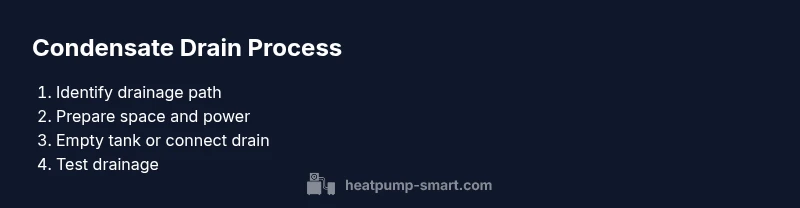
- 1
Identify drainage path for condensate
Turn off and unplug the dryer, then locate whether your unit uses a condensate tank or a direct drain. Reference the manual for your model's drainage arrangement and inspect the back or bottom panel for hoses or tanks.
Tip: Use the manual and look for a tank full indicator before starting. - 2
Prepare the workspace and power down
Clear the area, place a towel or tray to catch spills, and unplug the appliance. This prevents electrical hazards and protects your floor.
Tip: Keep a dry area around the unit to avoid slips. - 3
Access and remove the condensate tank (if present)
Carefully slide out the condensate tank from its housing, take it to a sink, and prepare to empty. If your model uses a fixed drain, skip to the hose step.
Tip: Support the tank to avoid spills. - 4
Empty the condensate tank
Pour the collected water into the sink or drain, then wipe the interior with a dry cloth. Do not reuse the tank unless fully dry.
Tip: Pour slowly to avoid splashes and spills. - 5
Clean and reseat the tank or attach the drain hose
If you use a tank, reinsert it firmly with the cap closed. If using direct drainage, ensure the hose is connected and not kinked.
Tip: Check seals for wear and replace if needed. - 6
Run a short test cycle
Plug in and run a brief drying cycle with a small load to confirm there are no leaks and that condensate is draining correctly.
Tip: Stand by to address any unexpected leaks immediately. - 7
Document maintenance and set reminders
Note the date of the emptying and set a schedule (e.g., after every 2–3 cycles) to maintain performance.
Tip: Use a calendar reminder or app notification.
Your Questions Answered
Do all heat pump tumble dryers require emptying?
Most heat pump dryers use a condensate tank or a direct drain. Check your model’s drainage path and indicator. If unsure, consult the manual or Heatpump Smart guidance.
Most models have a tank or direct drain; check your unit and follow the manual.
How often should I empty the condensate tank?
Empty according to the indicator or after a set number of cycles. Frequency depends on usage and the size of the condensate tank.
Empty when the indicator shows full or after several cycles, depending on how often you dry clothes.
Can I connect my dryer to a drain?
Many models support direct drainage via a hose. Ensure proper slope, secure connections, and confirm capacity of the external drain.
Yes, if your model supports it, use the drain hose with correct slope.
What happens if I forget to empty the tank?
Overflow can spill water onto the floor, risking slips and potential damage. Stop the cycle and empty promptly.
If you forget, water can overflow; stop the cycle and empty the tank.
Is it safe to tilt the dryer to drain?
Avoid tilting during operation. Unplug, wait for the drum to cool, and follow the manual for safe access.
Don’t tilt while it’s running; unplug first and follow the manual.
My indicator shows empty but water remains?
The indicator may be faulty or blocked. Check the manual for codes and consider contacting support if the issue persists.
If the indicator seems off, consult the manual and contact support if needed.
Watch Video
Top Takeaways
- Identify your drainage method before starting.
- Empty or drain condensate regularly to maintain efficiency.
- Choose direct drainage when possible to reduce manual steps.
- Safety first: unplug, dry surroundings, and inspect seals after maintenance.