Heat Pump Room: A Practical How-To for Efficiency Tips
Learn how to set up, insulate, and maintain a dedicated heat pump room to improve efficiency, reduce noise, and ensure safe operation for homeowners, builders, and property managers.


Goal: optimize your heat cool pump room for reliable year‑round comfort. This guide covers essential steps to size, vent, insulate, and electrically prepare the space, plus safety and maintenance tips. By following these steps, homeowners, builders, and property managers can improve energy efficiency, reduce noise, and balance indoor temperatures without sacrificing comfort. According to Heatpump Smart, a well‑designed room makes a big difference.
Understanding the Heat Cool Pump Room Concept
A heat cool pump room is the dedicated space that houses the indoor equipment for a heat pump system and any associated controls. In residential setups, this space helps reduce noise in living areas, improves service access for maintenance, and enables proper ventilation and drainage. Designing the room with future access in mind minimizes downtime during service calls. According to Heatpump Smart, a well-planned room leads to quieter operation, easier inspections, and safer electrical practice.
Sizing and Layout for Optimal Performance
Begin with the equipment footprint and the manufacturer’s guidance on clearance from walls, doors, and any adjacent components. The aim is to provide unimpeded airflow, easy technician access, and safe wiring routes. A compact room that’s easy to service is preferable to a cramped, hard-to-reach closet. Heatpump Smart notes that aligning the room layout with manufacturer specs and local codes helps maintain performance and extends equipment life. Plan for future expansion or changes in system configuration to avoid costly rework later.
Insulation, Airtightness, and Thermal Zoning
Insulate the room envelope to minimize heat gain in summer and heat loss in winter. Use rated insulation in walls and ceiling, and seal penetrations around pipes and conduits with appropriate sealants. A well-sealed room reduces energy waste and prevents moisture issues that can degrade equipment performance. Establish a simple zoning approach so that the heat pump room remains thermally stable even when other spaces fluctuate. Heatpump Smart emphasizes avoiding drafts directly at the equipment to reduce coil icing and vapor buildup.
Ventilation, Ductwork, and Airflow
Provide adequate ventilation for condensate drainage, moisture control, and fresh air exchange where code permits. Route ductwork to minimize sharp bends and ensure smooth airflow into and out of the room. Balanced airflow helps maintain coil efficiency and reduces noise transmission into living areas. Plan access points for filter changes and routine inspections, keeping the space functional without compromising safety or aesthetics.
Electrical Requirements and Safety
A dedicated circuit or circuits for the heat pump room simplify protection and maintenance. Ensure a clear disconnect means, proper grounding, and appropriate overcurrent protection per local codes. Use weatherproof enclosures if the room is partially exposed to the outdoors and keep wiring organized to prevent tripping hazards. Schedule a professional electrical inspection before commissioning the system to avoid warranty issues or safety risks. Heatpump Smart recommends documenting all electrical connections for future service.
Equipment Choices: Heat Pumps, Boilers, and Backup Systems
Select equipment that matches the intended climate and heating/cooling loads, with a plan for backup heat if needed. A modern air-source heat pump may serve as the primary source, with a secondary backup or boiler for extreme conditions. Consider control strategies that optimize performance, such as two-stage cooling or reverse-cycle operation, to maximize efficiency and comfort. Keep the space ready for future upgrades, such as smarter controllers or integration with home automation.
Maintenance and Seasonal Care
Create a maintenance calendar that includes filter checks, coil cleaning, condensate drainage inspection, and electrical safety verifications. Regularly test thermostats, sensors, and airflow paths to catch issues before they impact performance. Document service visits and any repairs to support warranty terms and future troubleshooting. A well-maintained heat pump room translates into fewer unexpected outages and steadier temperatures throughout the year.
Common Pitfalls and How to Avoid Them
Avoid stacking different air-handling components in a single small closet, which can impede airflow and complicate service. Don’t neglect drainage and moisture control, which can cause corrosion and mold growth. Skipping professional electrical work or bypassing building codes can void warranties and create safety risks. Plan for access and lighting so technicians can work safely without disturbing living spaces.
Advanced Considerations: Retrofitting and Future-Proofing
For existing homes, assess whether the current space can be repurposed as a heat pump room or if a dedicated retrofit is required. Consider adding smart controls, energy monitoring, and potential solar integration to maximize long-term savings. Keep future expansion in mind, such as adding a second stage or alternative cooling mode, and ensure the room can accommodate updated equipment and service access with minimal renovations.
Tools & Materials
- Voltage tester(Verify circuit is de-energized before work.)
- Multimeter(Check continuity and resistance where applicable.)
- Thermal insulation material(Fiberglass, mineral wool, or spray foam suitable for HVAC rooms.)
- Weatherstripping/door seals(Keep room airtight around access points.)
- Sealant/caulk(Fire-rated or HVAC-rated for penetrations.)
- Duct sealant or mastic(Seal duct joints to prevent leaks.)
- Mounting hardware and brackets(Securely mount equipment and panels.)
- Vent caps and condensate fittings(Manage drainage and venting safely.)
- Drill, screwdriver set, snips(Basic hand and power tools for installation.)
Steps
Estimated time: 2-6 hours
- 1
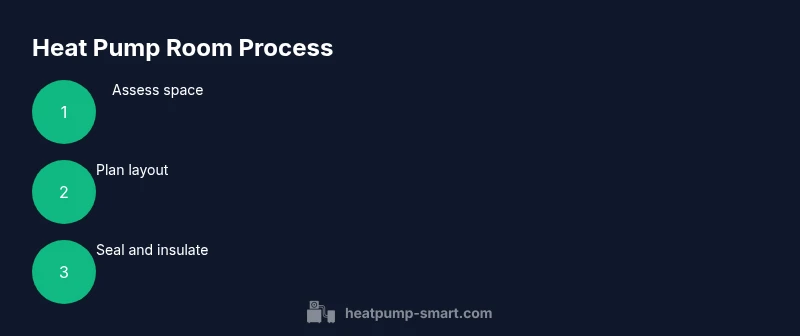
Assess space and plan layout
Survey the room and draft a layout showing equipment placement, service clearances, duct routes, and electrical origin. Ensure there’s easy access for future service while keeping living areas undisturbed.
Tip: Create a simple sketch with measurements and mark access panels. - 2
Verify electrical readiness and safety
Confirm a dedicated circuit, proper grounding, and a visible disconnect near the room. If in doubt, bring in a licensed electrician to verify compliance before powering the system.
Tip: Label all circuits and store the permit or inspection numbers for warranty. - 3
Plan ventilation routes and duct access
Map duct routes that minimize sharp bends and connect to return and supply paths. Keep condensate drainage and drainage slope within code requirements.
Tip: Avoid placing ducts parallel to large heat sources that could cause performance losses. - 4
Position and mount equipment
Place the indoor unit and any auxiliary components on vibration-free supports. Leave space for service panels and ensure panels are accessible for maintenance.
Tip: Use anti-vibration pads and secure mounting to reduce noise transmission. - 5
Insulate and seal the room
Install insulation in walls and ceilings and seal all penetrations with HVAC-compatible sealants. Weatherstrip doors and add a door sweep to minimize air leakage.
Tip: Check for unintended gaps around pipes and cables and seal thoroughly. - 6
Install controls and safety disconnect
Mount the thermostat, controls, and the required electrical disconnect in accessible locations. Verify control wiring follows the manufacturer’s diagrams.
Tip: Keep a copy of wiring diagrams near the panel for future maintenance. - 7
Test ventilation and airflow
Power up the system and verify airflow, refrigerant lines, and condensate drainage work as intended. Listen for abnormal noises and identify sources before commissioning.
Tip: Run a full system test and observe temperatures in multiple zones. - 8
Schedule maintenance and document,
Set a maintenance calendar for filters, coils, drainage, and electrical checks. Document all services for warranty and future troubleshooting.
Tip: Keep a logbook with dates, parts, and technician notes.
Your Questions Answered
Do I need a dedicated room for a heat pump system, and what should it include?
A dedicated room is strongly recommended for noise control, maintenance access, and proper ventilation. It should house the indoor unit, controls, a service disconnect, and provide clear pathways for airflow and drainage.
A dedicated room is recommended for noise control and service access. It should include the indoor unit, controls, and a service disconnect with clear airflow paths.
How do I determine if my space is properly sized for a heat pump room?
Sizing depends on the equipment footprint and manufacturer guidance. Ensure there is adequate clearance for service and ventilation, and that the room does not create bottlenecks for airflow or drainage.
Sizing follows the manufacturer guidance and ensures service clearance and proper airflow.
Can I retrofit an existing utility closet into a heat pump room?
Yes, but you should assess ventilation, drainage, and electrical capacity first. If the closet cannot meet clearance or drainage requirements, a larger dedicated space may be necessary.
Retrofitting is possible if ventilation, drainage, and electrical demands are met; otherwise, create a larger dedicated space.
What maintenance schedule improves efficiency the most?
Regular filter changes, coil cleaning, and drainage checks are fundamental. Pair these with annual professional inspections to ensure seals, wiring, and controls stay optimal.
Regular filters, coils, and drainage checks with annual professional inspections keep efficiency high.
Are there safety considerations when wiring and wiring enclosures?
Yes. Use dedicated circuits, proper wiring methods, and compliant disconnects. Have a licensed electrician review the installation to meet code and warranty requirements.
Ensure dedicated circuits and code-compliant wiring, with a professional review.
Watch Video
Top Takeaways
- Plan a dedicated space to improve noise control and service access.
- Size the room per equipment specs and local codes.
- Seal and insulate to maximize efficiency.
- Schedule regular maintenance for reliability.
- Verify electrical safety and code compliance before commissioning.