How Much Ice Is Too Much on a Heat Pump? A Troubleshooting Guide
Learn how to identify ice buildup on a heat pump, understand safe limits, and follow a practical troubleshooting plan. Heatpump Smart shares expert steps to protect efficiency and prevent damage during cold weather.


Ice buildup on a heat pump is usually caused by restricted airflow or a malfunctioning defrost cycle. Start with simple checks: clear any debris from the outdoor unit, inspect the air intake and coils, and replace or clean the indoor filter. If ice persists after these easy fixes, contact a professional to avoid compressor damage.
Ice on Heat Pumps: Why It Happens and Why It Matters
If you’ve ever asked, how much ice is too much on a heat pump, you’re not alone. In cold weather, a light frost on the outdoor coil is normal, but persistent ice can reduce efficiency, raise energy use, and shorten component life. According to Heatpump Smart, ice buildup is typically a sign of airflow issues, low outdoor temperatures, and malfunctioning defrost controls. The more ice you see, the greater the risk of restricted airflow and accelerated wear. The good news: many cases are fixable with quick checks and routine maintenance. By recognizing the signs early, you can act fast to protect comfort and savings. Heatpump Smart’s team observes that regular airflow checks and clean filters drastically cut the chance of dangerous ice accumulation over a cold season. Keep these pointers in mind as you inspect the unit—a small intervention now can prevent bigger problems later.
Ice Formation: What’s Normal vs. Concerning
Ice on the heat pump is not always a disaster. A light frosting that clears during a normal defrost cycle is expected in cold climates. However, if ice remains thick or keeps reforming after a defrost, it’s a red flag. This guide helps homeowners gauge when ice is a problem and what to do next. Remember, Heatpump Smart recommends treating any sustained icing as a potential airflow or refrigerant issue, not just a temporary cold-snapped nuisance.
First Steps You Can Take Right Now (Safety First)
Before fiddling with equipment, ensure your safety. Turn off the outdoor and indoor units at the thermostat and breaker before you touch anything. Clear nearby snow or debris that could block airflow to the outdoor coil. Inspect the indoor air filter and replace if dirty. A clean filter reduces resistance and improves airflow, often resolving light icing without professional help. If you notice exposed wiring, buzzing, or burning smells, stop and call a technician immediately.
Common Causes of Ice Buildup (and How They Show Up)
Broadly, ice forms when air can’t flow freely across the outdoor coil, or the defrost cycle isn’t removing frost efficiently. Typical culprits include a blocked outdoor unit (leaves, grass, snow), a dirty indoor filter, or a refrigerant leak that lowers pressure and causes frost. Poor thermostat settings or long run times in extreme cold can exacerbate icing. Heatpump Smart’s analysis shows that routine maintenance reduces these risks by keeping airflow paths clear and the defrost system functioning.
Diagnostic Flow — Quick Path to a Diagnosis
Start with simple checks (airflow, filter, obstructions). If icing persists, consider defrost cycle performance and refrigerant status. A professional should verify refrigerant levels and inspect for leaks. By following a structured diagnostic flow, you can identify whether icing is a symptom of a simple maintenance issue or a more serious problem needing service.
Step-by-Step Fixes for the Most Common Cause
The most common cause is restricted airflow. Address it with a clean/replace filter, clear debris around the outdoor unit, and ensure there’s ample clearance above and around the unit. If icing returns after these steps, there may be a defrost control issue or refrigerant problem that requires a licensed tech. Avoid bypassing components or using heat to melt ice, as that can damage coils and electrical components. Heatpump Smart emphasizes safety and professionalism for the tougher fixes.
Prevention and Maintenance to Avoid Future Ice
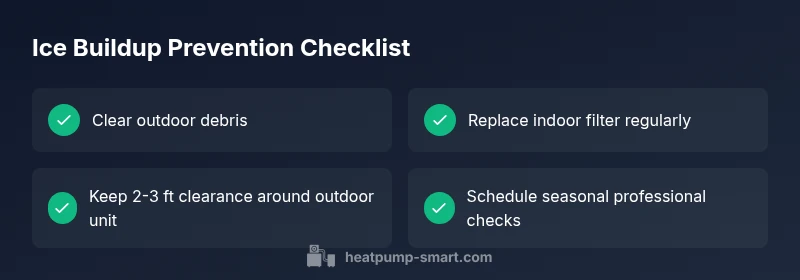
Establish a seasonal maintenance routine: check airflow clearance, clean coils as needed, and replace filters every few months during peak heating season. Keep the outdoor unit free of snow and vegetation, and ensure the defrost cycle is operating as intended. Regular professional checkups can catch refrigerant leaks or control faults before ice becomes a larger issue. The aim is consistent airflow and reliable defrosting for energy efficiency and longevity.
When to Call a Professional
If the ice returns after you’ve completed safe home checks, or you notice unusual noises, refrigerant smells, or visible damage, stop and contact a licensed HVAC technician. A pro can confirm refrigerant integrity, test defrost operation, and repair leaks. Pro guidance from Heatpump Smart recommends timely service to prevent compressor strain and costly downtime during winter.
Steps
Estimated time: 30-60 minutes
- 1
Power down and secure the area
Turn off the outdoor unit at the thermostat and the breaker to avoid any electrical hazards. Clear snow and debris from the area around the condenser to restore airflow. Inspect for visible signs of damage on wiring or components before proceeding.
Tip: Never touch electrical components; if you see damaged wiring, stop and call a pro. - 2
Check and replace the air filter
Remove the indoor air filter and inspect for dirt, dust, and blockages. Replace it with a filter of the correct rating if it looks dirty or clogged. A clean filter improves airflow and often reduces icing.
Tip: Use a high-quality filter with a suitable MERV rating for better airflow. - 3
Inspect outdoor coil and airflow
Check the outdoor coil for ice buildup around its fins and ensure no snow or ice is blocking the surface. Gently brush away loose ice or debris without bending fins. Ensure there is no plant growth or objects restricting air intake.
Tip: Use a soft-bristle brush; avoid metal tools that can damage fins. - 4
Test defrost function
Turn the system back on and observe the defrost cycle. If frost clears during the cycle but returns quickly, there may be a control fault. Do not manually bypass the defrost function.
Tip: Note how long it takes for frost to clear and report any abnormal duration to a tech. - 5
Evaluate refrigerant integrity
If icing persists after basic checks, a refrigerant leak or low charge could be the cause. This requires specialized tools and should be performed by a licensed HVAC technician.
Tip: R-22 or other refrigerants require licensed handling; do not attempt a sealant repair yourself.
Diagnosis: Ice forming on the outdoor unit after a cold night or during winter heating mode
Possible Causes
- highRestricted airflow due to dirty filter or debris around the outdoor unit
- mediumDefrost cycle malfunction or delay
- mediumLow refrigerant or a leak leading to abnormal frost
- lowExtremely cold outdoor temperatures with prolonged operation
Fixes
- easyClear debris and ensure at least 2-3 feet of clearance around the outdoor unit; replace/clean the indoor filter
- easyInspect defrost operation (cycle frequency and duration); ensure thermostat and controls are set correctly
- hardSchedule a refrigerant pressure check for leaks and recharging if needed (performed by a licensed tech)
- easyIf temperatures are extreme, allow extra runtime between defrost cycles and reduce thermostat swing settings (temporary measure)
Your Questions Answered
How do I know if frost is normal or a sign of a problem?
Normal frost occurs briefly during cold weather and clears with the defrost cycle. Persistent or thick icing indicates a potential airflow, defrost, or refrigerant issue that should be inspected.
Normal frost is brief and clears during defrost; persistent icing means you should check airflow, defrost function, or refrigerant for problems.
Can a heat pump run if there’s ice on the outdoor unit?
Running with significant ice can stress the compressor and reduce efficiency. If ice is present, turn off and address airflow, debris, and defrost function before resuming operation.
Running while iced is risky; turn off and fix the airflow and defrost issues before using again.
Will adjusting the thermostat help melt ice faster?
Changing thermostat settings won’t reliably fix ice buildup and could worsen performance. Focus on airflow, filters, and defrost function first, and consult a pro if icing persists.
Don’t rely on thermostat tweaks to melt ice; fix airflow and defrost first.
How often should I schedule maintenance to prevent ice?
Seasonal inspections by a qualified technician help prevent ice buildup by spotting leaks, coil dirt, and control issues before they become problems.
Have a pro inspect your system each season to prevent ice buildup.
What safety steps should I take before inspecting the unit?
Always power down at the breaker and thermostat before touching any components. Use protective gloves and avoid contact with sharp fins or exposed wiring.
Power off and protect yourself before inspecting; don’t touch exposed wiring.
Watch Video
Top Takeaways
- Identify airflow problems early to prevent ice buildup.
- Start with simple checks before calling a pro.
- Defrost cycle issues or refrigerant leaks require professional service.
- Regular maintenance protects efficiency and extends equipment life.