How to Get Ice Out of a Heat Pump: A Step-by-Step Guide
Learn how to safely remove ice from your heat pump, prevent frost buildup, and protect efficiency with Heatpump Smart's expert guidance. Practical steps, safety tips, and maintenance practices for homeowners and pros.


This guide shows you how to safely remove ice from your heat pump, diagnose common frost causes, and prevent future icing. You'll learn when to act, how to thaw the unit without damage, and how to adjust settings for winter operation. Follow these steps to maintain efficiency, extend equipment life, and avoid costly repairs, injuries, or service calls.
Why ice forms on heat pumps
Ice buildup on outdoor heat pump coils happens when humidity freezes on contact with cold weather. This is common in late fall and winter, especially when winds blow across the outdoor unit. According to Heatpump Smart, frost can occur during normal operation when temperatures hover near freezing and the heat pump cycles frequently. Frost increases airflow resistance, reduces heat transfer, and can trigger longer defrost cycles that waste energy. If you notice frost forming, you should act promptly to avoid icing that can damage the coil fins or block airflow. Understanding the frost process helps you identify whether simple thawing will solve the issue or if a service call is needed. Regular winter checks can prevent repeated frosting and keep your system running efficiently.
Common frost patterns and what they mean
Frost on a heat pump can take several forms: a thin, uniform layer across the outdoor coil, a patchy buildup around the fan area, or a crescent-shaped frosting along the bottom of the coil. Each pattern tells a slightly different story about airflow, defrost cycles, and moisture in the air. The Heatpump Smart team found that persistent icing in one area often indicates restricted airflow or blocked vents rather than a failing compressor. Quick visuals—checking for blocked grilles, bent fins, or debris—can help you distinguish a simple frost from a symptom of a larger issue. Recognizing patterns saves time and reduces the risk of over-thawing or misdiagnosis.
Before you start: safety first
Safety should be your first concern. Turn off power to the outdoor unit at the breaker or disconnect box before touching any components. Wear protective gloves and safety glasses; ice can be sharp, and metal tools can scrape fins. Clear surrounding snow or ice to create safe access, and never work alone if you feel unsure. If your unit is mounted on a roof or elevated platform, use stable footing and a harness if needed. Never slam doors, strike the coil with metal tools, or use high-pressure jets. These precautions protect you and prevent damage to coils and wiring.
Diagnose the frost cause
Begin by inspecting the outdoor unit for obvious issues: blocked airflow, debris on the coils, damaged fins, or ice covering wiring areas. Check that the fan is turning freely when powered (with the power off, inspect for obstructions). Frost that forms near the bottom of the coil can indicate drainage problems, while ice along the top can point to blocked defrost sensors. If the frost recurs after a brief thaw, there may be a deeper problem with refrigerant or a control board that requires professional attention. A clear diagnosis helps choose the right thaw method and prevents repeated icing.
Quick thaw methods you can safely use
Use gentle methods to melt ice without harming coils or wiring. Start by turning off power, then apply warm but not hot water around the edges of the ice buildup with a spray bottle or sponge. Do not pour boiling water or use a heat gun directly on the fins. A soft plastic scraper can lift loose ice without bending the fins. Allow time (5–15 minutes) for the ice to loosen before removing it carefully. Keep towels handy to absorb meltwater and prevent slip hazards. If frost re-forms quickly, reassess airflow and moisture sources, as repeated icing signals a maintenance need.
When to call a professional
If you see cracks in the coil fins, refrigerant lines exposed, or persistent icing despite careful thawing, contact a licensed HVAC technician. Do not attempt to repair refrigerant leaks or electrical components yourself. Professionals can test refrigerant pressures, inspect defrost controls, and check for sensor malfunctions that could cause recurring ice buildup. In winter climates, routine seasonal servicing can prevent frost-related efficiency losses and prolong the life of the unit.
Preventing future icing: maintenance and best practices
Prevention is more effective than repeated thawing. Schedule seasonal checks focused on outdoor coil cleanliness, airflow pathways, and proper defrost cycling. Keep nearby vegetation trimmed, remove snow buildup around the unit, and ensure the unit is level so drainage works correctly. The Heatpump Smart analysis shows that maintaining clear airflow and clean coils significantly reduces frost formation and energy waste. Consider installing a timed defrost feature if your model supports it, and confirm that thermostats and sensors are calibrated for winter operation. Consistent maintenance saves energy and reduces repair costs over time.
Winter operation settings and efficiency tips
Operate the heat pump using the auto defrost setting if your equipment supports it, and avoid manual defrost interventions that could impact efficiency. Keep the outdoor unit free of snow and ice by clearing a 3-foot radius of space. In very cold climates, supplement heating with supplemental indoor comfort strategies to reduce cycling, which can minimize frost formation. Ensure insulation around exposed refrigerant lines and refrigerant piping to reduce heat loss to the outdoors. These practices help your system warm spaces efficiently while minimizing ice buildup.
Tools & Materials
- Safety gear (gloves, eye protection)(Heat-resistant gloves recommended; protect hands from sharp ice and metal edges.)
- Soft plastic scraper(Use to lift ice without bending coil fins; avoid metal tools.)
- Spray bottle of warm water(Use warm—not hot—water; apply around edges of ice buildup.)
- Non-abrasive towel or absorbent rags(Mop up meltwater and keep the area dry to prevent slips.)
- Monitor or thermometer (optional)(Useful for tracking outdoor temperature during thaw attempts.)
Steps
Estimated time: Total time: 20-40 minutes depending on ice amount and access
- 1
Power down and secure
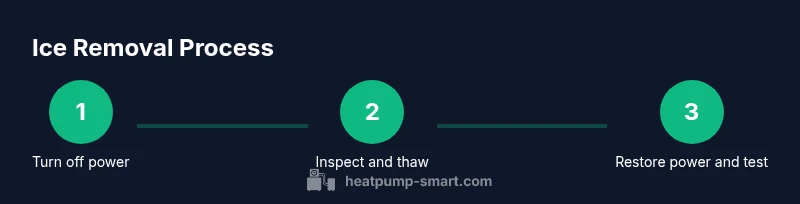
Switch off the outdoor unit at the thermostat and then at the main breaker if accessible. This prevents any electrical hazards while you inspect and thaw. Ensure the area around the unit is clear and stable.
Tip: Never touch live components; wait for all power to be fully disconnected before approaching the coils. - 2
Inspect the unit and clear debris
With the power off, look for objects blocking airflow, such as leaves or snow. Gently remove debris that could impede the condenser. Check for obvious bent fins or ice that looks loose but may still be attached.
Tip: Use a soft brush for debris and a plastic scraper for ice; avoid metal tools that can scratch fins. - 3
Apply safe thawing methods
Slowly apply warm water around the ice edges or use a hair dryer on a low setting at a distance to melt the ice. Do not spray directly into electrical enclosures or onto wiring. Allow ice to loosen before removing with the plastic scraper.
Tip: Do not use hot water, open flames, or high-heat devices; rapid warming can damage coatings and seals. - 4
Remove ice and dry the area
Gently lift the loosened ice with the scraper and wipe away meltwater. Ensure the coil surface is dry and free of leftover ice fragments that could refreeze. Restore a safe clearance around the unit before power is restored.
Tip: Keep a dry cloth handy to ensure no water sits on electrical components. - 5
Reconnect power and test operation
Turn power back on at the breaker and then at the thermostat. Listen for normal fan operation and observe that frost isn’t forming immediately. If you see continued icing, stop and seek professional help.
Tip: Monitor for a full defrost cycle and even airflow before leaving the unit unattended. - 6
Review settings and schedule maintenance
Ensure the auto defrost setting is active if available. Schedule a seasonal check with a professional to verify sensors, defrost controls, and refrigerant levels are in good condition.
Tip: Document any frost events and share with your HVAC technician during service.
Your Questions Answered
Is it safe to pour warm water on ice around the outdoor unit?
Yes, gently applying warm water to melt ice around the edges is generally safe if you avoid direct contact with electrical components and outlets. Do not use boiling water or spray water directly into the electrical box. If in doubt, consult a professional before proceeding.
You can use warm water around the edge of the ice, but avoid the electrical box. If unsure, contact a professional.
Why does ice form on heat pumps in winter?
Ice forms when humidity meets cold outdoor temperatures and moisture freezes on the coils. Poor airflow, dirty coils, and malfunctioning defrost controls can worsen icing. Regular maintenance helps limit frost buildup.
Frost happens when humidity freezes on the outdoor coils in cold weather; good airflow and clean coils help prevent it.
Can I use a hair dryer to melt ice on a heat pump?
A hair dryer can be used cautiously to warm small ice patches, but avoid directing heat at electrical connections or wiring. It’s safer to use warm water and a plastic scraper, and call a pro if ice recurs.
A hair dryer can help a little, but avoid electrical parts and don’t rely on it for large ice deposits.
How often should I schedule professional maintenance to prevent icing?
Most systems benefit from professional winter maintenance once per year, ideally before the cold season begins. The technician checks defrost sensors, refrigerant levels, and coil cleanliness to prevent icing.
Annual winter maintenance is a good rule of thumb to keep icing at bay.
Will icing affect energy efficiency?
Yes. Ice adds thermal resistance, causing the unit to work harder and use more energy. Keeping coils clean and reducing frost reduces energy waste and improves performance.
Ice makes the system work harder and use more energy; keep the coils clean.
What are the signs icing indicates a larger problem?
Persistent icing after thawing, unusual noises, ice on wiring, or reduced airflow can signal sensor, defrost, or refrigerant issues that warrant professional inspection.
If icing keeps coming back after thawing, get a professional check.
Watch Video
Top Takeaways
- Power down before thawing any outdoor components
- Use gentle thawing methods to protect fins and wiring
- Regular maintenance reduces icing risk and energy waste
- Call a pro if frost persists after safe thawing